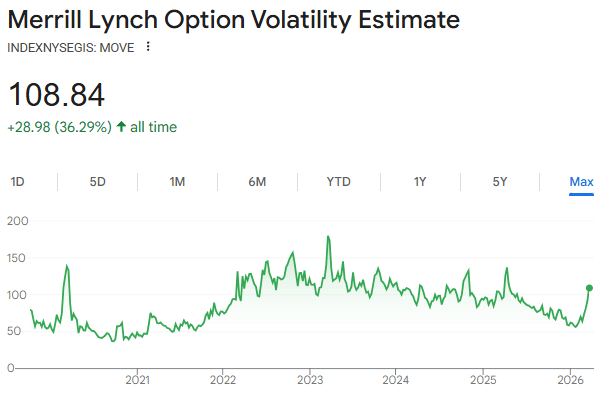
A big part of the bond market volatility, even with underlying weakness in the economic data: bonds initially rallied following the cooler PCE report and much weaker jobs report, but those gains have evaporated.
It’s unclear why, but one possibility is Japan. They are the largest foreign holder of our debt, and they’re dealing with a weakening currency. The weaker it gets, the more expensive imports become, and they import a lot.
The other challenge, which we saw a few years ago when rates touched 8%, is the mortgage spread: the difference between the 30-year fixed rate and the 10-year Treasury yield. The wider the spread, the more volatility and risk the market is pricing in.
Part of the reasoning is that borrowers with high rates will refinance as soon as they can. Investors holding those mortgage bonds get paid back early, losing the high interest they were counting on, so they demand a higher return up front to make up for it.
How to Tackle High Interest Rates
A $100K loan at 6.25% has a principal and interest payment of about $615. At 7.5%, that payment is $699.
The question: How much smaller does the loan need to be at 7.5% to keep the payment at $615? About $88K. That’s a $12K reduction per $100K borrowed.
Scale that up: the payment on a $500K loan at 6.25% is the same as on a $440K loan at 7.5%, a $60K difference. It’s very likely that the home you looked at last spring is $60K less today.
If you want to have your cake and eat it too, with a lower home price and lower rates, you might be waiting a long time. Shift your mindset just a bit: focus on the total payment, not just the rate.