The bond market is holding steady. After last week’s big move, investors appear to be shifting some money out of safe-haven bonds and back into riskier stocks. Normally, that would push rates higher.
The bond market may have already priced that in, along with the inflation numbers expected this week. That could be why rates haven’t moved much despite the shift.
For now, we’re holding steady but watching cautiously.
This week brings the ADP jobs report and new inflation data, and either one could move rates. I’ll keep you posted.
Anthropic Goes Public Today: Why Mortgage Watchers Are Paying Attention
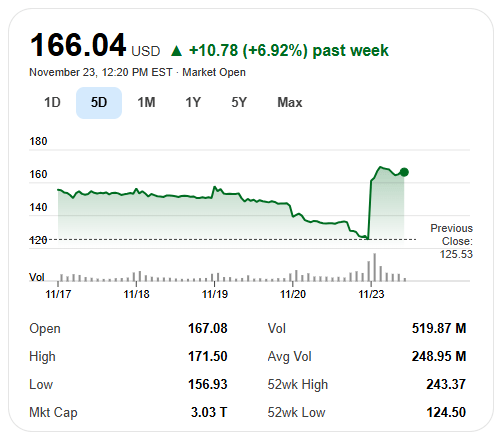
Anthropic’s IPO is today, and we’re on guard once ANT starts trading. As I mentioned yesterday, most investment money sits in either the stock market or the bond market, so a deal this big can pull money one way or the other. We’re watching the traders closely.
Foreign buyers are stepping up. Treasury released its TIC data for September. It tracks global cross-border money flows and who holds U.S. securities. The bottom line is that foreign nations were net buyers, led by Japan and China. That’s a big deal. Steady foreign demand for U.S. bonds helps keep mortgage rates stable.
Rents are climbing. Rents rose 2.3% in September, the biggest jump since June 2025. That’s most likely a lingering effect of higher rates over the past eight months. When buying gets harder, more people keep renting, and rents go up.
Pending sales hit a record low. Pending home sales fell 4.7% in October to the lowest level on record, going back to 2001. Pending sales are contracts signed but not yet closed, so they give a forward look at sales. Expect a sluggish Q4.
My take: Life moves on. There’s good news and bad news every day, but the world keeps spinning. Let’s be careful not to drive looking through the rear view mirror.
If the prediction markets are right, control of both the House and the Senate could shift to the Democrats. Why might the bond market like that?
It’s not about which party wins. It’s about divided government. With a Republican president and a Democratic Congress, big new bills become much harder to pass. Large spending packages and tax cuts tend to stall when each side can block the other.
Bond investors often see that gridlock as a positive. Less new spending can mean less new borrowing, which means fewer Treasury bonds flooding the market. Remember the house handing out full-size candy bars: when there’s less supply and steady demand, bond prices hold up, yields stay lower, and mortgage rates benefit.
Of course, prediction markets aren’t always right, and Washington rarely goes exactly as planned. But if the outcome is a divided government, the bond market may welcome it.
The first jobs report from JOLT came in stronger than expected but ADP and BLS come in later this week. Lets see what happens.
My take: Life moves on, and this too shall pass. Elections, headlines and market swings always feel bigger in the moment than they turn out to be. It’s rarely as good or as bad as it seems.
Housing has worked through elections, rate cycles and plenty of uncertainty before, and people keep buying homes because their lives keep moving. Families grow, jobs change, and kids head off to school. So focus on what you can control: your budget, your pre-approval and your plan. The noise will settle, and the people who are prepared will be ready when it does.
Tech stocks took a beating last week, and buyers saw an opportunity this morning, so the sector is bouncing back a bit.
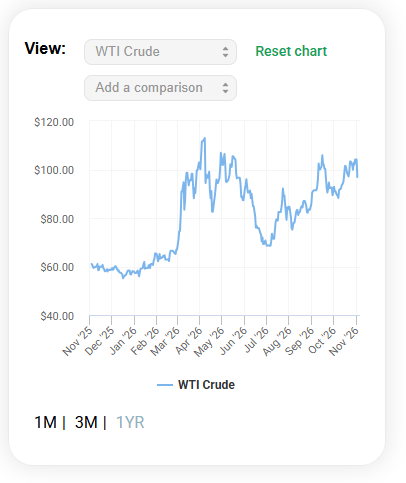
Signs of diplomatic progress on the Iran conflict are also easing oil prices and helping the bond market.
On top of that, a proposed trade deal with Canada includes the Keystone XL pipeline.
Jobs data this week is critical. The Fed seems comfortable with the current “low hire, low fire” environment, even though recent jobs numbers haven’t been stellar. Forecasts call for about 65,000 jobs created in October. My number is 52,000. We’ll find out by the end of the week who’s right.
My take: Everything points to a soft landing with lower rates, lower oil prices and a little breathing room. The election’s impact is less about who wins and more about removing the unknowns.
Get ready for a stellar 2027. Get your house in order and get pre-approved for a mortgage: www.YourApplicationOnline.com
If you let the market be the market, it reacts in a fairly predictable manner. The trouble is that somebody always wants to “help.”
Here’s the setup: for the first time in a generation, investors can get genuinely attractive yields in the bond market. After years of bonds paying roughly what a savings account pays in lint, this is the equivalent of the all-you-can-eat buffet finally opening back up.
And what happens when word gets out about a good buffet? People show up. More buyers means more competition, and more competition means bond prices get bid up. When bond prices rise, yields fall, and when yields fall, mortgage rates follow.
Let me say that again because this is the key take-away:
When bond prices rise, yields fall, and when yields fall, mortgage rates follow.
In other words, high yields are the cure for high yields. It’s the one economic cycle that actually works the way the textbook says, as long as nobody grabs the steering wheel. Markets are like cats: leave them alone and they’ll eventually come around. Chase them with a rate hike and everything ends up under the couch.
So take a breath. The same high rates that are making your monthly payment look like a ransom note are also luring in the buyers who push those rates back down. Patience isn’t just a virtue here, it’s a strategy.
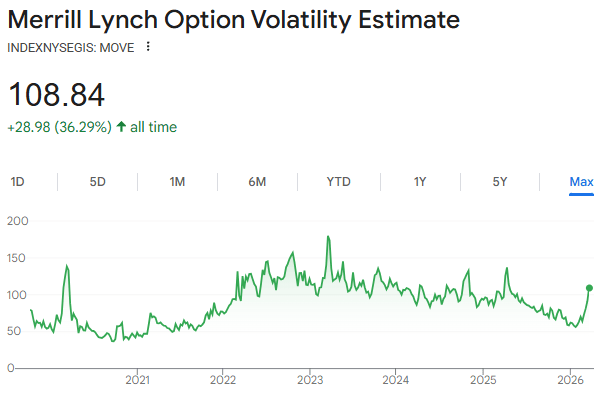
A big part of the bond market volatility, even with underlying weakness in the economic data: bonds initially rallied following the cooler PCE report and much weaker jobs report, but those gains have evaporated.
It’s unclear why, but one possibility is Japan. They are the largest foreign holder of our debt, and they’re dealing with a weakening currency. The weaker it gets, the more expensive imports become, and they import a lot.
The other challenge, which we saw a few years ago when rates touched 8%, is the mortgage spread: the difference between the 30-year fixed rate and the 10-year Treasury yield. The wider the spread, the more volatility and risk the market is pricing in.
Part of the reasoning is that borrowers with high rates will refinance as soon as they can. Investors holding those mortgage bonds get paid back early, losing the high interest they were counting on, so they demand a higher return up front to make up for it.
How to Tackle High Interest Rates
A $100K loan at 6.25% has a principal and interest payment of about $615. At 7.5%, that payment is $699.
The question: How much smaller does the loan need to be at 7.5% to keep the payment at $615? About $88K. That’s a $12K reduction per $100K borrowed.
Scale that up: the payment on a $500K loan at 6.25% is the same as on a $440K loan at 7.5%, a $60K difference. It’s very likely that the home you looked at last spring is $60K less today.
If you want to have your cake and eat it too, with a lower home price and lower rates, you might be waiting a long time. Shift your mindset just a bit: focus on the total payment, not just the rate.
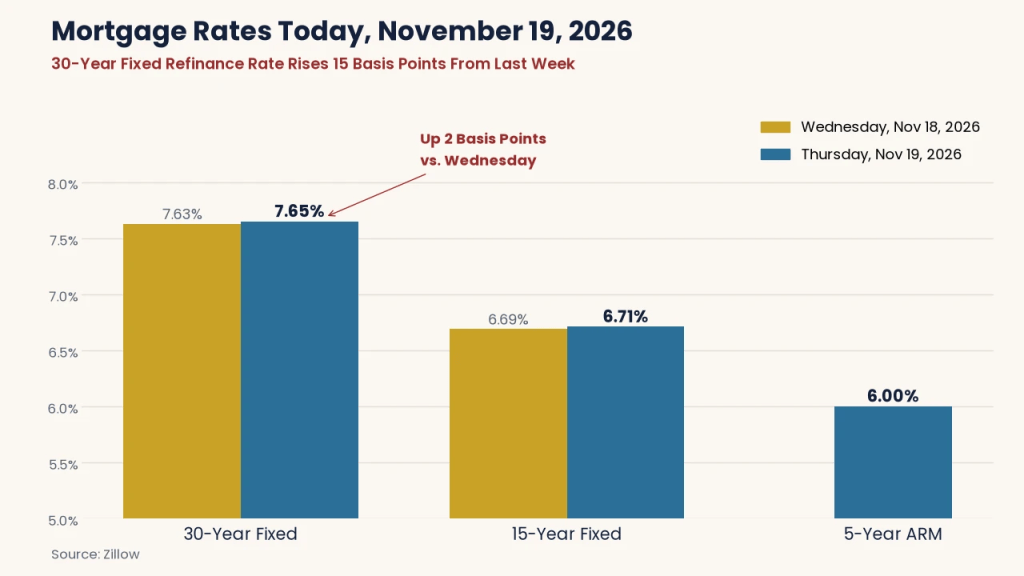
Mortgage Bonds are continuing lower, with yields higher, meaning mortgage rates keep climbing.
The housing market is stable for now, the way a Jenga tower is stable right before someone pulls the wrong piece. Rising rates mean shrinking approval amounts, and that pressure has to land somewhere, namely home values, as buying power quietly evaporates.
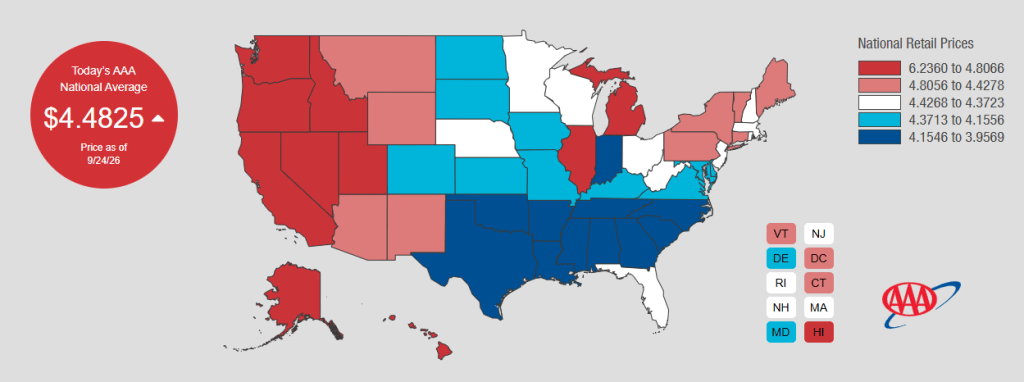
Until tariffs are removed, the Iran conflict ends, and fuel prices drop, we’re stuck standing on a chair missing a leg. Something has to give. Or everything does, all at once, which is the outcome nobody wants.
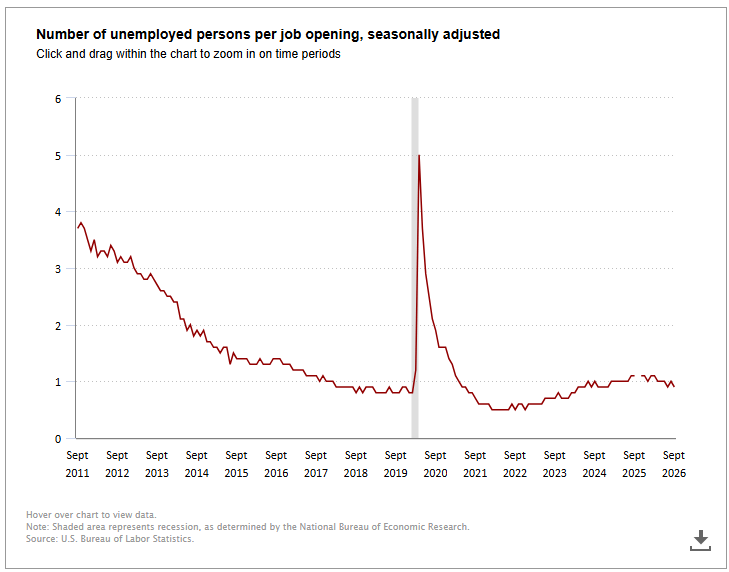
Job openings in August fell 256,000 to 7.08 million, missing estimates of 7.23 million. The labor market, politely declining to cooperate.
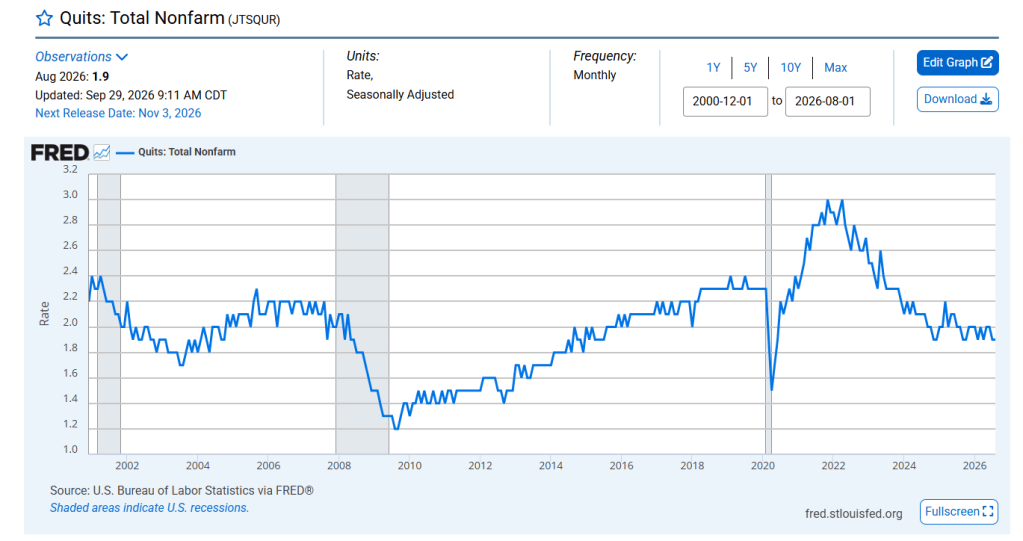
The telling number is the quits rate, still stuck at 1.9%, a measure of people confident enough to voluntarily change jobs. This low, it’s basically everyone deciding to sit very still, a strong signal of a weak job market.
The S&P Global Manufacturing report showed the economy running hotter than expected, triggering expectations for more policy tightening.
Comments on inflation regarding average input costs for goods and services, which surged higher (oil) hit their highest level since 2022.
Comments from Iran’s President at the UN, which were inflammatory.
Fed Governor Michael Barr also contributed to the bond selloff, stating that further rate hikes are likely to be needed.
Suffice to say, it was a bad day yesterday, and today is shaping up to be the same.
Some good news: New Home Sales, signed contracts on new homes rose 6.4% in August, with an annualized rate of 684,000, much stronger than the 620,000 estimate.
Part of this may be due to builders incentivizing buyers with massive rate buydowns and lower prices to move inventory.
If rates remain high, a lot of buyers will stay on the sidelines. Inventory is up, and most markets are softening, meaning there are opportunities to snag a great home at a fantastic price, which can help offset higher interest rates.
Mortgage rates are cyclical, a roller coaster ride. We’ve seen that firsthand over the last year.
Not long ago, the national average 30-year mortgage rate was around 8%. Just a few months ago, it dipped to approximately 5.99%. Today, it’s sitting just under 6.5%.
That’s a significant swing in a relatively short period of time.
I recently came across a Wall Street Journal article claiming homebuyers are losing tens of billions of dollars because they’re overpaying for their mortgages. While it’s an attention-grabbing headline, it oversimplifies how mortgage pricing actually works.
Here’s the nuance.
For the most part, lenders are buying from the same capital markets. The difference isn’t simply who has the “lowest rate.” It’s how that rate is structured and whether it’s the right loan for the borrower.
Some lenders operate with very lean overhead and may advertise lower rates, but they may not have the infrastructure, underwriting support, or operational capacity to consistently meet aggressive closing deadlines.
More importantly, very few borrowers fit into a perfect box.
Some have lower credit scores. Others are self-employed, have limited down payments, investment properties, asset depletion income, or unique qualifying scenarios. Some borrowers expect to refinance within a year, while others plan to keep the loan for decades.
Those differences matter.
A borrower planning to refinance in 12 months may choose a slightly higher rate with little or no upfront cost rather than paying thousands of dollars in discount points to obtain the lowest possible rate.
Another borrower may require a specialty investor whose pricing is slightly higher because the loan carries more risk or falls outside standard agency guidelines.
The lowest advertised rate isn’t always the lowest-cost loan.
The real question isn’t, “Who has the lowest interest rate?”
It’s “Which loan structure saves this borrower the most money over the time they expect to keep the loan?”
That’s the conversation every borrower should be having.
As for the article…it’s behind a paywall. Kind of ironic for a story about overpaying.
Let’s take a closer look at the relevant provisions:
Permanent extension of the 2017 (Tax Cuts and Jobs Act) personal income tax rates, which were scheduled to sunsetafter 2025.The highest marginal tax rate will remain at 37%, with inflation adjustments (protecting more income from taxes) for the 10%, 12% and 22% brackets. The standard deduction was also permanently increased (nearly doubled!) to $15,750 for single filers and $31,500 for joint filers. There is an additional $6,000 deduction for seniors through 2028.
Permanent protection for mortgage interest deduction. This significant tax benefit for homeowners (especially in the early years of a mortgage), is now unassailable. The maximum mortgage debt (on which all mortgage interest is deductible) remains set at $750,000.
A temporary (5-year) quadrupling of State and Local Tax (“SALT”) deductions. The previous SALT deduction was $10,000. Now most people will be able to use up to $40,000 of state and local taxes paid to reduce federal taxable income. If you own a big home in a state/municipality with high property tax rates, this could be a major benefit.
Permanent protection for 1031 exchanges. These ‘like kind’ exchanges – used extensively by property investors – allow for the deferral of capital gains taxes on properties sold, if a home of equal or greater value is purchased within a few months of the sale date.
Permanent enhancement of the Low-Income Housing Tax Credit. The LIHTC program encourages private-sector investment in affordable housing by offering a 10-year stream of tax credits, reducing reliance on government-financed construction. Under the OBBBA, the total amount of tax credits available was significantly expanded.
Permanent protection for qualified business income deductions. Small business owners, gig workers and real estate agents can continue to deduct up to 20% of their ‘qualified business income’ from federally taxable income. This deduction was set to expire after 2025. Now it’s permanent.