-
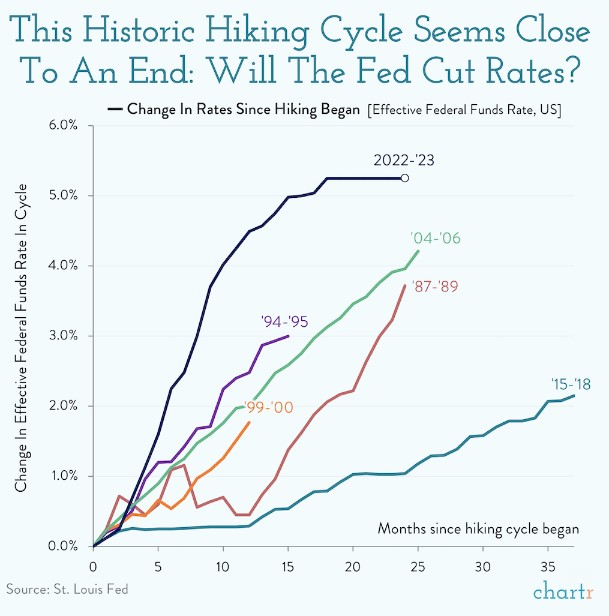
Are the Hikes over?
The graph below offers an interesting perspective on the last six FED rate hikes. While we were aware that the FEDs were aggressive, seeing it visually in this format amplifies its impact.”
The bond market has favored the FEDs’ rate hold this week, following a decline last week and earlier this week.
-
Compensation or Concession, do you know the difference?
com·pen·sa·tion /ˌkämpənˈsāSH(ə)n/ noun
as by rewarding someone for service or by making up for someone’s loss, damage, or injury by giving the injured party.con·ces·sion /kənˈseSH(ə)n/ noun
a thing that is granted, especially in response to demands; a thing conceded.Compensation is essentially another term for commissions. It represents the contractual obligation of either the seller or buyer to pay the listing agent and/or buyer’s agent. This obligation is outlined within the sales contract or buyer-agent agreement.
Concession, on the other hand, refers to the act of the seller giving up or offering a monetary sum to the buyer, typically for covering closing costs, which can sometimes include compensation for the buyer’s agent.
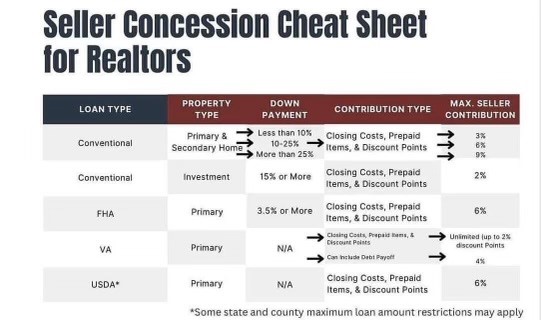
It’s crucial to note that once concession is involved, specific loan type rules come into play, see image below. Government loans, for instance, do not permit seller concessions to be used for paying the buyer’s agent’s compensation. Furthermore, VA loans strictly prohibit any form of buyer compensation to the buyer’s agent, regardless of the funding source.
-
NAR ruling and Lenders
Not a flashy tagline, but let’s dive in.
The National Association of Realtors (NAR) commission ruling from Missouri has several key details that we are still trying to grasp.
At the heart of the decision, filed back in 2019, is the matter of commissions and how agents are compensated, and how this information is presented (or not) on MLS listing services.
From a lender’s perspective, it raises the question: How do buyers pay for their agent? Do they have a buyer’s agent agreement in place? Is the buyer’s agent insisting on cash payment or seller commissions?
Here’s the rules:
Under federal regulation 1026.37(g)(4), if the mortgage loan originator is aware of any “other” costs related to the real estate transaction, they should clearly be disclosed on the LE.
Under federal regulation 1026.38 (j)(2)(v): “General seller credits. When the consumer receives a generalized credit from the seller for closing costs or where the seller (typically a builder) is making an allowance to the consumer for items to purchase separately, the amount of the credit must be disclosed.
If you’re an agent, please talk to us before drafting your contract. If you’re a buyer, please speak with us before signing any contracts. If you’re a seller, firstly, thank you for providing inventory, and secondly, please have your agent speak with a lender.
Finally a calming image to take the stress out of the day…

-
If it’s Not Impossible, all you need to do Now is figure out how to do it.
We tend to be our own harshest critics. Many things in life are achievable; it’s just a matter of figuring out how.
I often speak with first-time homebuyers and I can sense their trepidation. Perhaps they are the first in their family to buy a home, or maybe they feel they’re the last. In any case, it can be overwhelming.
Interest rates are what they are. The trend in inflation is moving in the right direction, unemployment is below 4%, and there is a wide array of sellers ready to make deals.
The NAHB Housing Market Index (builder confidence) has risen 3 points to 51, its highest level in 8 months. Sales confidence, future expectations, and buyer traffic are all on the rise, indicating an expansion mode.
The housing market and inventory will turn the corner; it’s not an impossible dream. Rates will stabilize.
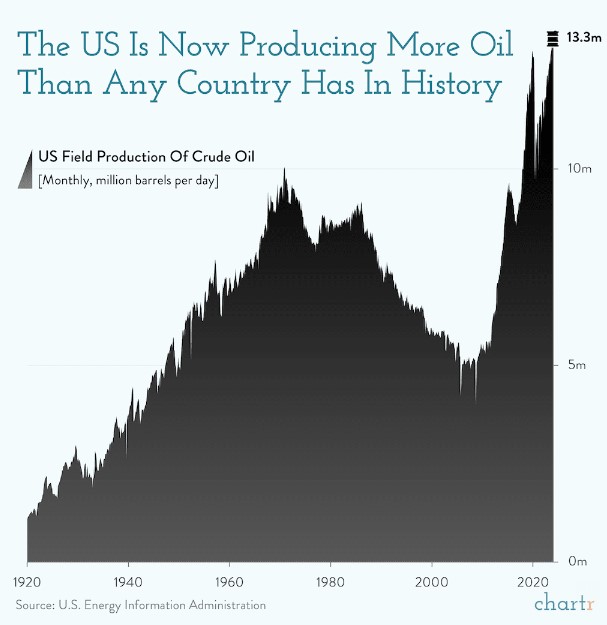
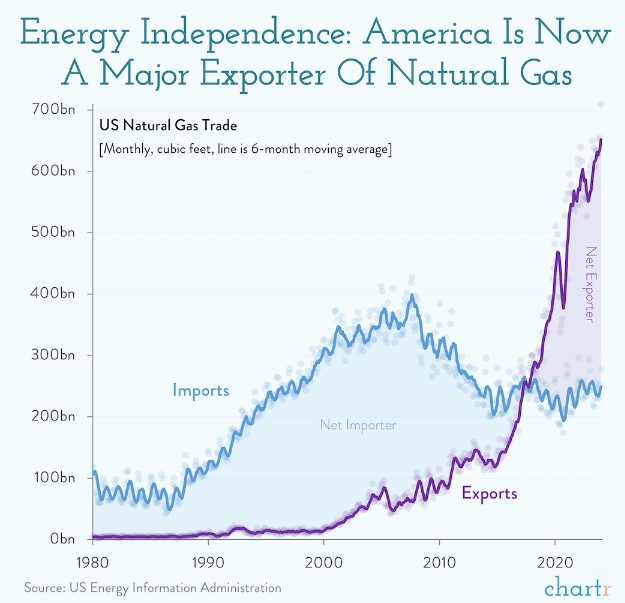
Two interesting graphs I ran across this weekend. Oil and Gas prices are a big component of inflation.
-
Spring Has Sprung, Sellers are hungry… Ok that did not rhyme
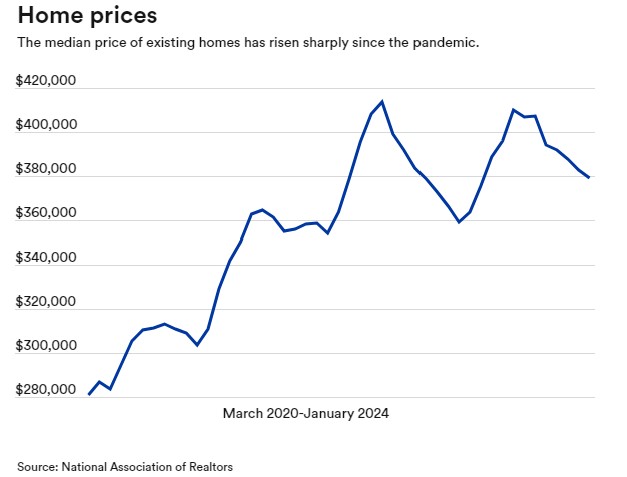
More homeowners are gearing up to sell their homes this spring, and depending on their market, they are pricing their properties more aggressively.
According to Realtor.com, 14.6% of US homes listed for sale had their prices lowered, up from 13.2% last year.
The percentage of homes with lowered list prices has shown a slight increase month by month since 2017.
While the trend is subtle, it serves as motivation for both sellers and buyers to move from the sidelines and actively engage in the market.
-
Algorithmic Amplification
By consistently ranking certain content higher, algorithms can amplify some messages while reducing the visibility of others.
In our industry, we are hyper-focused on rates. Our level of happiness for the day can be dictated by a drop or swift rise.
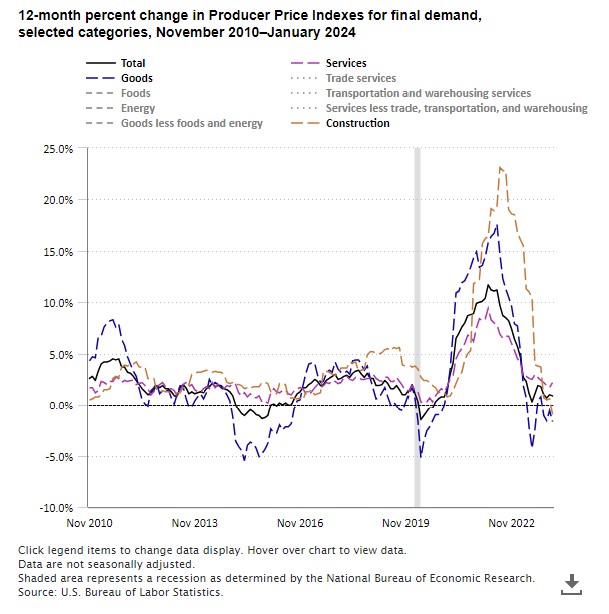
With that said, the Producer Price Index (PPI) report, which measures wholesale, i.e., producer inflation, rose by 0.6% in February. This figure is double the market estimates.
We anticipated the year-over-year numbers to increase from 1.0% to 1.1%, but they rose to 1.6%. While it remains a relatively low figure, it is nonetheless concerning.
Stay steady my friend, there is a light at the end of the tunnel. FEDs may pause a bit longer but yes they will eventually start lowering their rate.
-
Cat hanging on by it’s finger nails
Consumer Price Index (CPI) as we heard yesterday, was slightly higher but overall flat. Tomorrow, the Producer Price Index (PPI) will be released. PPI measures their cost for goods and services.
The expectation is a rise of 0.3% and a year over year reading from 0.9% to 1.1%. Core reading is expected to rise 0.2% with the year over year expected to fall from 2% to 1.9%.
Personal Consumption Expenditures -PCE is out at the end of the month.
What this means: It’s a little good mixed with a little bad. It’s not the nudge we need for the FEDs to step up their rate drop.
Rates are hanging on by their finger nails. Great improvement the last few weeks.
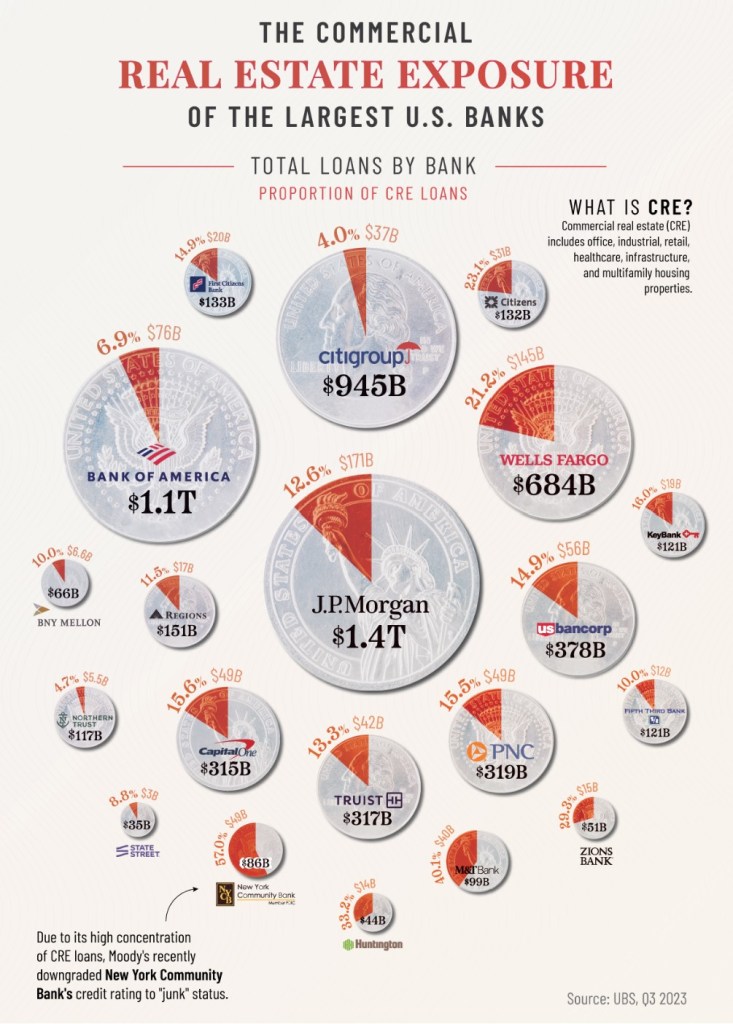
With Commercial Banks in the News, I thought I would share this interesting graph of bank exposure.
-
CPI “milquetoast” despite headlines
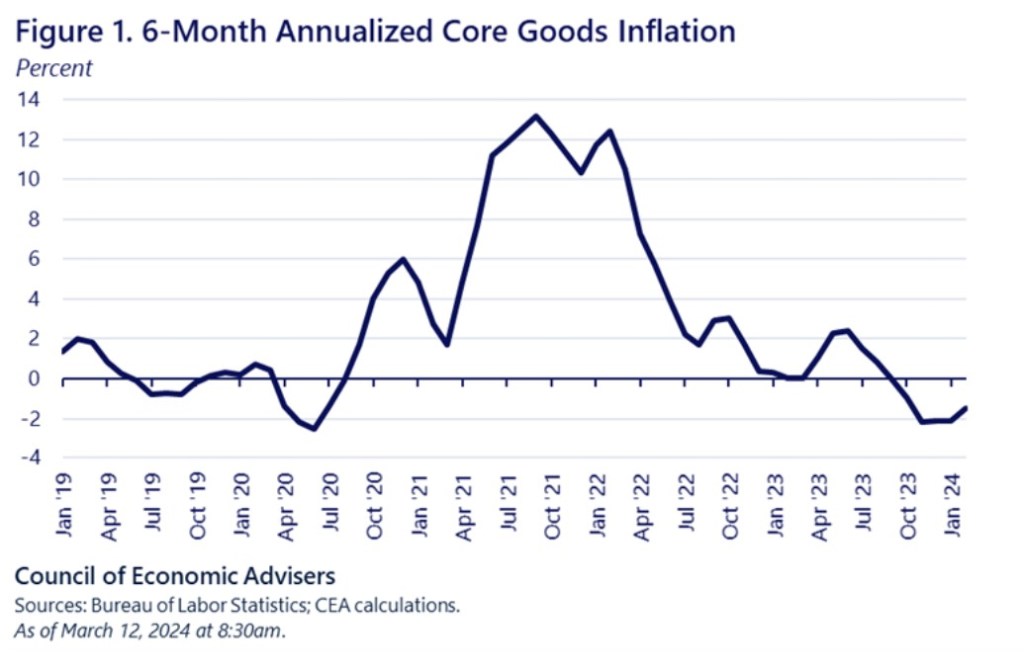
The February Consumer Price Index (CPI) report showed overall inflation rose 0.44% last month, in line with estimates. The Year over Year numbers increased from 3.1% to 3.2%, hotter than expected.
But, the Core rate that strips out food and energy prices, increased by 0.36% hotter than expected, but the Core CPI decreased from 3.8% to 3.7%.
Overall, the inflation rate is just stubborn. Up a bit but core down a bit. This makes the FEDs think twice about June rate cuts.
The Bond Market has basically baked in this news and has a fairly flat response. We are still holding onto the last week’s rate improvement.
-
imputed – /imˈpyo͞odəd/ (of a value) assigned to something by inference
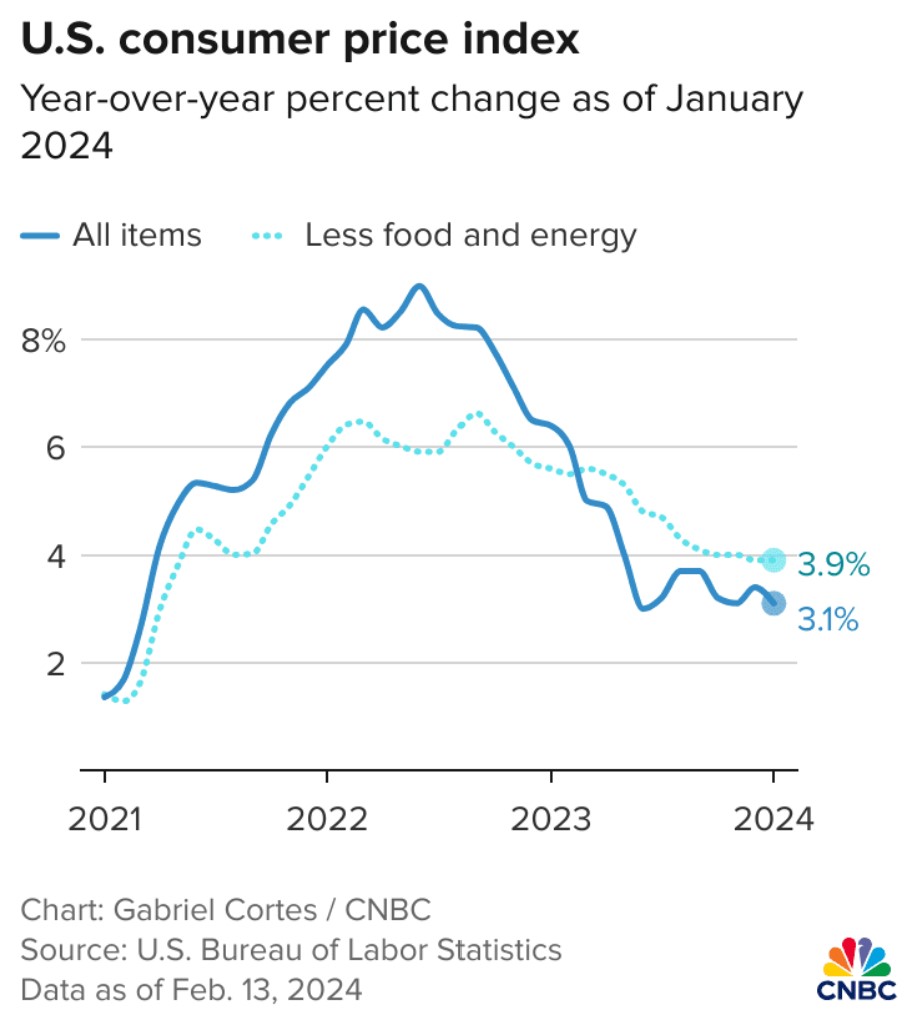
One of the biggest challenges for the Consumer Price Index is how its weighted.
Owner Equivelant Rent is a great example. Owner are asked what they think they could rent their home for.
Its a guess but 1/3 of the Core CPI relies on their response.
Rates continue to improve on gains from last week.
-
25 Months under 4% Unemployment
The BLS report showed an increase of 275,000 jobs in the month of February. The expectation was 200,000. The Unemployment rate inched up to 3.9% from 3.7%.
Weekly earnings up 0.4% for the month and up 3.7% year over year.
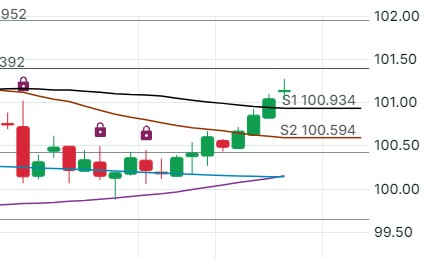
How does this affect the Bond market? See graph below. UP is LOWER rates.
Rate Improvement helps get buyers and sellers off the couch.
-
Subscribe
Subscribed
Have a WordPress.com account? Log in now.

