-
Progress not Perfection – Inflation behaving itself
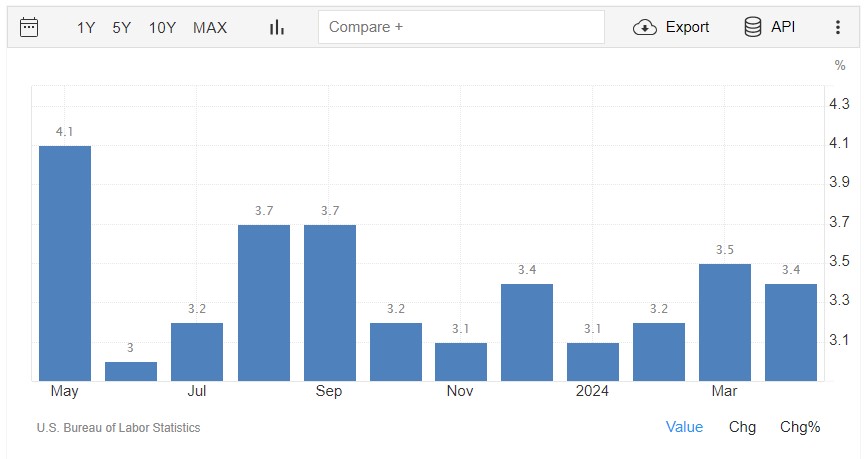
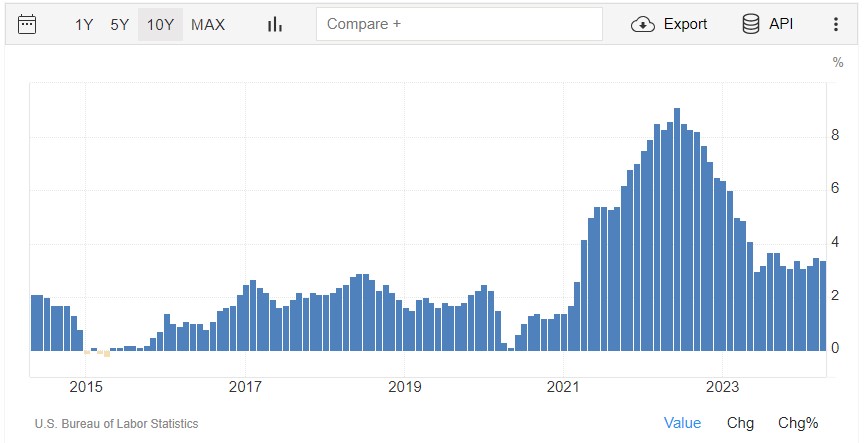
The Consumer Price Index (CPI) for March showed inflation rose by 0.3%, which is cooler than the estimated 0.4%. Year-over-year inflation decreased from 3.5% to 3.4%.
The core rate, which strips out food and energy, increased by 0.3%, as expected.
Here are the numbers:
- Energy prices rose by 1.1%
- Gasoline prices increased by 2.8%
- Auto insurance rose by 1.8%, up 23% year-over-year
- Used car prices fell by 1.4%, and new car prices dropped by 0.4%
- Shelter costs, which make up 45% of the CPI, rose by 0.4% but declined from 5.7% to 5.5% year-over-year
- Rents, similar to shelter, declined year-over-year from 5.7% to 5.4%
- Retail sales were flat, compared to an expected 0.4% increase.
The market is pricing in two rate cuts by the end of the year. These numbers strongly indicate that inflation is dropping and that the dreaded word “stagflation” will not rear its head.
-
It’s Hot in here, Oops sorry BLS report revisions.
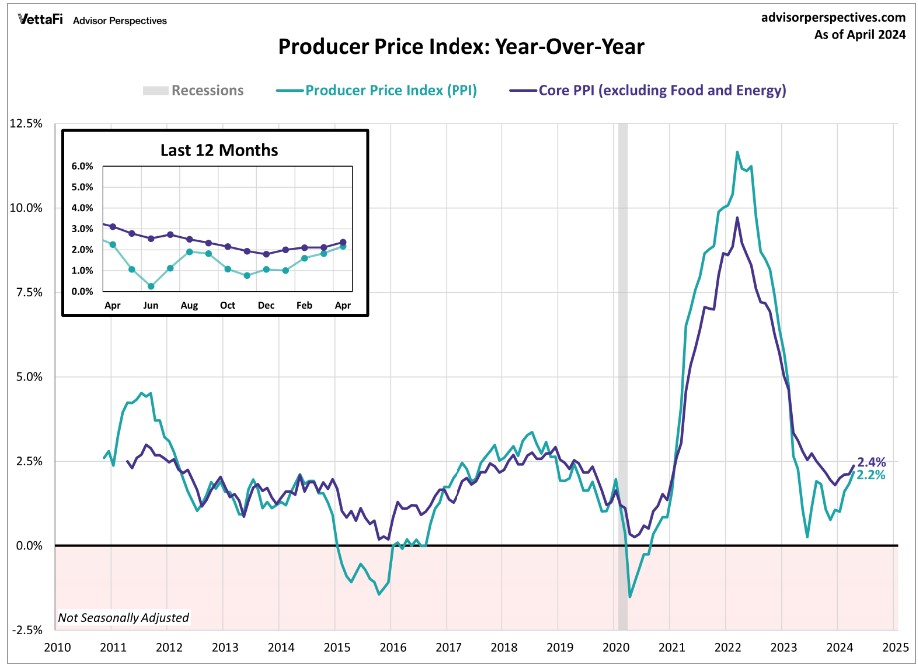
It’s all about inflation, and when the Bureau of Labor Statistics (BLS) makes revisions, like they did in March, it becomes difficult to determine the true inflation figures.
The Producer Price Index (PPI) report, which measures wholesale or producer inflation, rose by 0.5% in April. That is a much hotter number than the expected 0.4%.
The reason for this disparity lies in how these numbers are calculated. Inflation is based on a comparison of previous data, either from the last month or the last year as an example. Remember Inflation is the change in pricing from a previous data point.
Tomorrow’s Consumer Price Index (CPI) should shed some light on inflation, as it is a more crucial data point than the PPI.
What this means is the Feds should start thinking rate cut starting in June and potentially cutting mid summer. This is a positive outlook for interest rates.
-
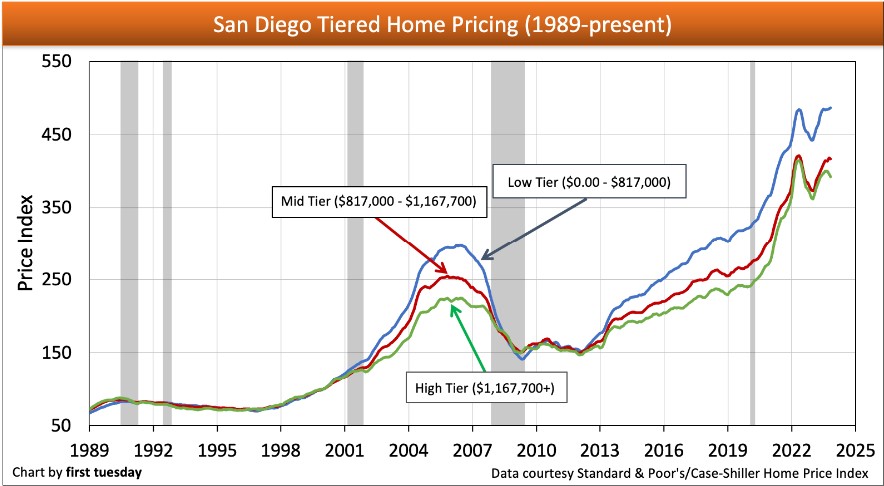
Home Values Continue to Rise.
CoreLogic Home Price and Black Knight HPI both show strong home prices.
CoreLogic reported home prices rose 1.2% in March. This is showing an acceleration from 0.7% in February. Year over year, home prices are now up 5.3% CoreLogic has bumped up their forecast for next month to 0.8%.
Black Knight reported prices rose 1.2% in March and 5.6% year over year.
Real estate remains a robust investment option, even with current rates surpassing those of two years ago. Concurrently, home values continue to climb, making it an opportune time to invest.
Inflation has a fight on its hands. We have seen inflation stall but there is hope on the horizon.
The NY Fed Supply Chain Pressure Index fell from -0.3% to -0.85% in April. this is the lowest figures since August of last year when we saw great progress on inflation.
Oil prices have a big influence on core readings but over the last few weeks, we have seen oil prices decline by roughly 11%.
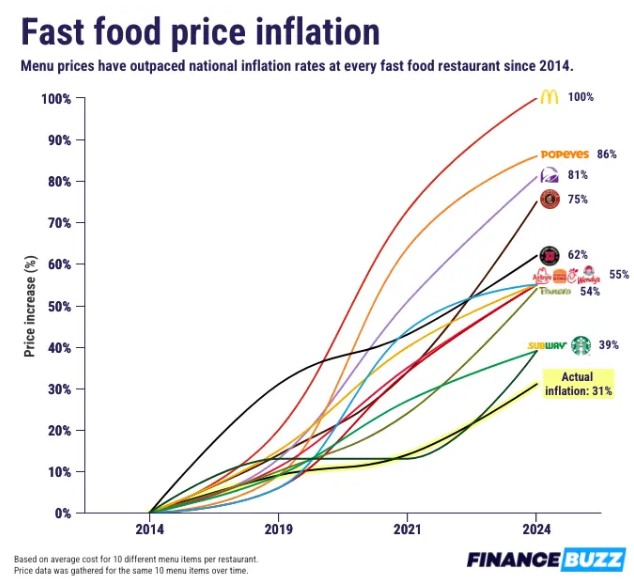
Stay resilient; I anticipate a significant drop in inflation, driven not only by the factors mentioned above but also by major players in the food industry, such as McDonald’s, scaling back on their historically aggressive stances in recent years.
-
4,094 People are relying on you. Don’t mess this up.
In order to be born you needed:
- 2 Parents
- 4 Grandparents
- 8 Great-Grandparents
- 16 Second Great-Grandparents
- 32 Third Great-Grandparents
- 64 Fourth Great-Grandparents
- 128 Fifth Great-Grandparents
- 256 Sixth Great-Grandparents
- 512 Seventh Great-Grandparents
- 1,024 Eight Great-Grandparents
- 2,048 Ninth Great-Grandparents
For you to be bon today from 12 previous generations, you needed a total of 4,094 ancestors over the past 400 years.
Think for a moment about how many struggles, how many battles, how much sadness, happiness, love stories, and hope for the future that you ancestors had to undergo for you to exist in this present moment. –Nathalie Anna
Interest rates are rebounding. Get out there and get to getting…

-
BLS and ADP who is correct. Both lower than expectations. Unemployment 3.9%
Here’s an interesting twist to the Bureau of Labor and Statistics (BLS) report of 175,000 jobs created. If we look at the Birth/Death or online vs offline company starts and fails, the jobs report would have been -188,000.
Not trying to be a downer in all this but the reality of the job market became much clearer this morning despite the best efforts of those reporting the numbers this past year.
The Federal Reserve relies heavily on accurate data for decision-making, and uncertain data requires time for analysis.
By the numbers:
- Jobs Created 175,000 expected 243,000
- Unemployment was 3.8% now 3.9%
- Hourly earnings rose 0.2% expected 0.3%
- Weekly hours worked decreased from 34.4 to 34.3
These figures suggest a weakening job market, which could influence interest rate decisions. There’s pressure on the Federal Reserve to consider a rate cut in September rather than waiting until November.

-
Hedonic Treadmill -what goes up must come down.
An individual’s level of happiness tends to return to its baseline after experiencing either positive or negative life events, a phenomenon known as the Hedonic Treadmill.
Consumer Confidence, gauged by factors such as job availability, difficulty in finding employment, and expectations for future job prospects, has recently shown a decrease in the perceived availability of jobs (a 1.5-point drop), an increase in the perceived difficulty of obtaining jobs (a 2.7-point rise), and a decrease in expectations for future job opportunities (a 2.6-point drop).
However, these indicators contradict the current unemployment rate at 3.8%.
Getting into the weeds but lets take a deeper look. There are two key Census readings. 12M entities with the Census and 700k in the BLS report. Census data shows 192,000 job losses vs the BLS showing 521,000 job gains.
The Feds lean into the BLS report.

-
What should You do today that “You” Tomorrow would be happy You did?
In our lives, we craft meticulous five-year plans and set ambitious New Year’s resolutions, envisioning a future filled with growth and achievement. Despite our best intentions and careful planning, life has a remarkable ability to throw unexpected curveballs our way.
This unpredictability extends to mortgages and real estate. Families often find themselves navigating through shifting landscapes and unforeseen circumstances. It’s easy to become complacent or overly comfortable with our current situation, failing to anticipate the dynamic nature of the market and the ever-evolving needs of our lives.
Be prepared. Do today what you might put off for tomorrow. If you are thinking about selling your home, call your agent and start the conversation. If you don’t know if you are qualified for a mortgage, find out today not tomorrow.
Think about you tomorrow.

-
Egg McMuffin, Hashbrowns and Coffee please. It’s how much???
Let’s get the business stuff out of the way first.
Personal Consumption Expenditures (PCE) rose by 0.3%, which is about what we expected. The core rate rose as well, though it remained in line.
Personal income went up by 0.5%, but we are spending more than we make, and our credit cards and savings are feeling the pinch.
Have you been to a fast-food restaurant lately? I was a bit shocked. I am not giving companies like Nestle, Walmart, Tyson, and other food and beverage companies a pass for taking advantage of an inflationary atmosphere.
Take a look at their balance sheets. In 2023, Nestle’s profit was up by 17.3%. McDonald’s reported a 52% operating profit margin in 2023.
There is a wolf in sheep’s clothing.

-
Should I Stay or Should I Go – Clash 1982
On Tuesday, the US Federal Trade Commission voted 3-to-2 in favor of a near-total ban on non-compete agreements, the contract stipulations that prevent millions of employees — from bankers to biochemists to bartenders — from finding new work or starting businesses in their field after leaving their jobs.
I have presented these numbers throughout the last year, but graphically, you can see who is in control: the employee or the employer.
The health of an economy can be reflected in the differentials. Look at 2001 compared to 2004, the drop after 2008, the rise after COVID, and now the dramatic drop in job switchers today.
What does this mean? Although the unemployment numbers are historically low, there is a crack in the foundation. The Fed is waiting for more data that I believe is already staring them in the face.

-
Would you Like you, if you Met you?
I am going to be confusing right off the start…
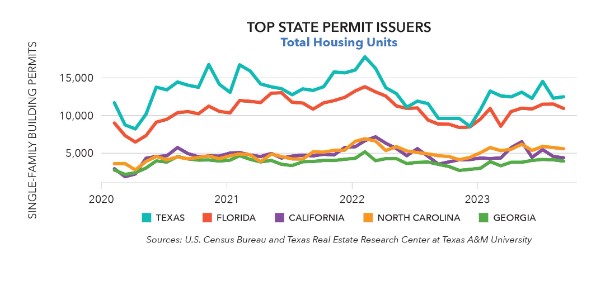
New Home Sales, which measures signed contracts on new homes rose 8.8% in March. Big number but here is the confusing part.
There were 477,000 new homes for sale in March. That is an 8.3 month’s supply, slightly lower than previous month.
However, only 89,000 homes are completed. When we look at the pace of sales vs completed homes, the supply is only 1.53 months.
Bottom line, I want to be a builder.
Builders know this and are cutting incentives and home prices to attract buyers.
-
Subscribe
Subscribed
Have a WordPress.com account? Log in now.

