-
I’ve Trimmed the branches and the limbs, now it’s time to hit the trunk.
As economic data continues to suggest a soft landing and no recession, we have effectively trimmed the branches and limbs.
Now it’s time to tackle the core issue of interest rates. Our problem lies with the high Federal Reserve rate.
Prolonged high borrowing rates for businesses result in increased costs for borrowing and expansion. Ultimately, it’s the consumer who bears these costs.
At this point, the cure is worse than the disease.
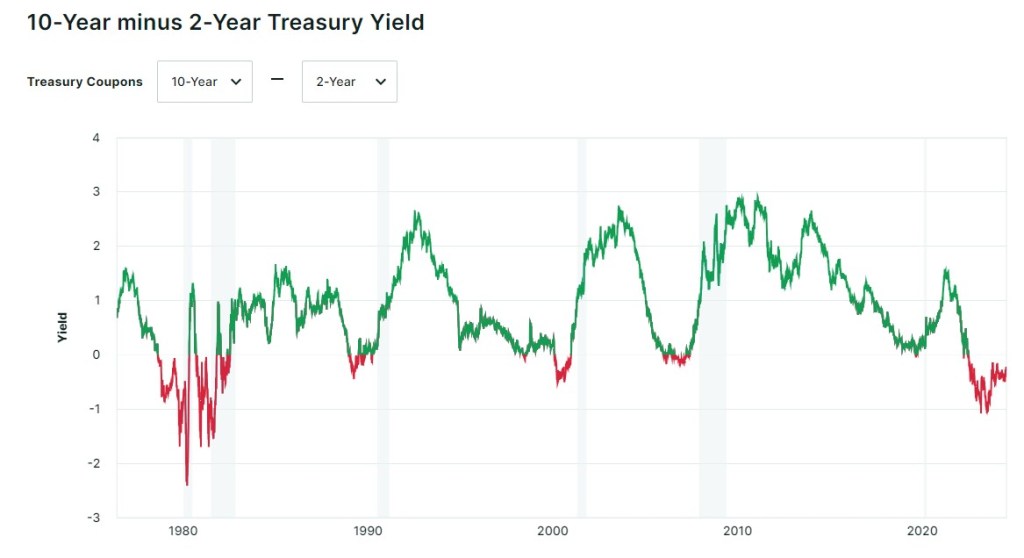
The graph below demonstrates the differential between the 10-year and 2-year yields. Currently, the 2-year yield is higher than the 10-year yield, an unusual situation that is evident in every recession.
However, in our case, we are moving in the right direction, as indicated by the green trend. This is another sign of potentially lower interest rates in the near future.
-
Get Ready for the Refinance avalanche
Looking at loans originated between 2022 and 2024:
- 2M with rates between 6% and 6.5%
- 2M with rates between 6.625% and 7%
- 2M with rates above 7%
We are advising clients to hold until there is a 1-point drop in their current rate. However, even a 0.5% rate drop might take only 12 months to recover the associated costs.
As we get closer to borrowers’ past low rates, the potential for either refinancing or selling and buying increases significantly. The pool of borrowers is much larger:
- 5.5%: 9.5 million borrowers with rates of 4.5% or higher
- 6.125%: 7.5 million borrowers with rates of 5.125% or higher
- 6.625%: 5.5 million borrowers with rates of 5.625% or higher
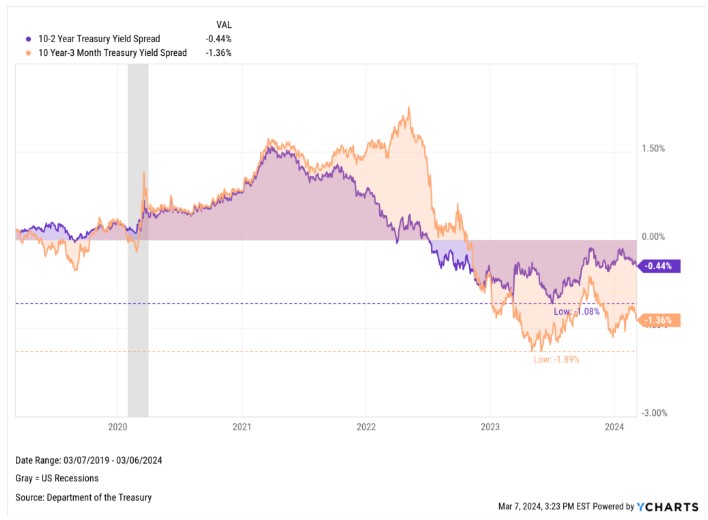
Once the Fed starts cutting rates, short-term rates will fall, and the inverted yield curve (where the 2-year yield is higher than the 10-year yield) will revert. This means ARM loans will become more favorable.
Bottom line: a wave of opportunity is coming. Get ready by getting pre-approved, dusting off those W-2s and pay stubs, and preparing to act.
-
Unemployment by the numbers
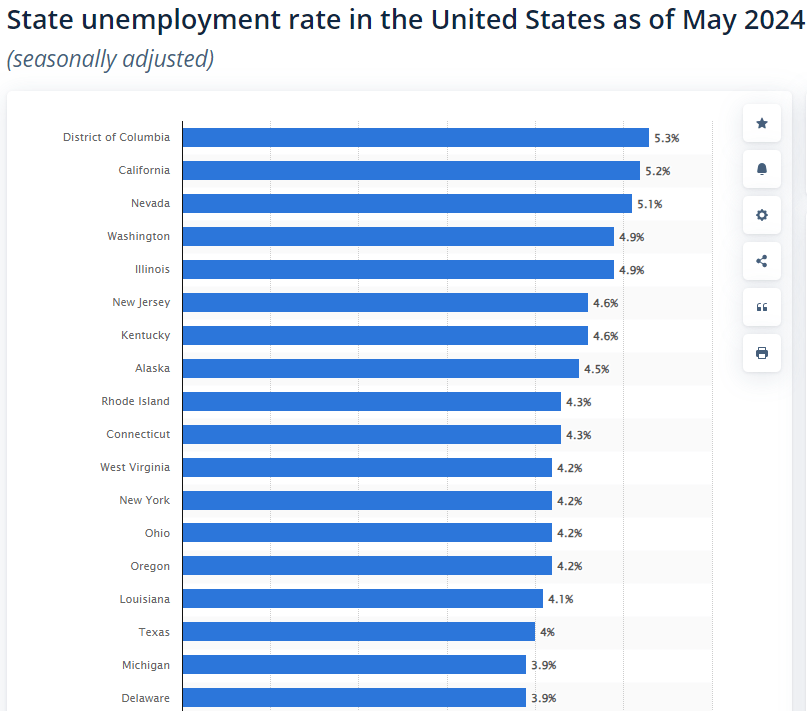
Jobless claims are rising nationwide. When examined on a state-by-state basis, 24 states, accounting for half of the population, have higher year-over-year claims. In contrast, in June, only 11 states, representing 22% of the population, had higher year-over-year claims.
This trend is worth noting. The Leading Economic Index, which helps predict future economic trends, has been negative for 26 of the last 27 months. However, it has become less negative, indicating a slow recovery with US GDP growth expected to fall to 1% in Q3.
This is another data point suggesting that the Federal Reserve may need to lower interest rates.
Have a fantastic weekend, and always feel free to reach out this weekend if you have any questions.
-
Sometimes you need someone else to help you do things on your own.
The online world has given us a sense of unprecedented power. But therein lies the danger—we start to believe we can handle everything on our own, armed with just enough knowledge to be dangerous.
Lean on us, lean on the expertise of real estate agents. Ask questions and know that we are here for you when you’re ready.
Now back to our channel… Powell Spoke at the Economics Club of Washington DC and as we anticipated, he is looking more dovish(good) regarding rate cuts in September.
He was asked the question “what keeps you up at night” his response was “cutting rates too soon and inflation coming back vs cutting to late and causing a recession”.
The Feds are so Data Dependent, they may not see the forest through the trees until its too late. Looking for Cuts in September.

-
Comparison is the Thief of Joy. Holding onto rate gains.
The University of Michigan has released its Consumer Sentiment Index, showing a decline in consumer confidence from 68.2% to 66%. This marks the fourth consecutive drop.
Inflation expectations have decreased slightly from 3% to 2.9%, and the employment outlook remains weak. Additionally, spending intentions across various categories have also declined.
This trend indicates that consumers are becoming more discerning about their spending habits. The Consumer Price Index (CPI) has been adjusted from 2.5% to 1.4%, and import prices have been revised from 3.8% to 1%.
These are promising indicators that the Federal Reserve (FED) is monitoring closely ahead of potential rate cuts.
Though rates are far from their lows a few years ago, they are very much inline historically. Green is lower rate movement.
-
Go to the Light… Please
The Feds given yesterdays Soft Consumer Price Index inflation report, are starting to see the light and in favor of cutting rates sooner than later.
Today we see more rate improvement even from yesterdays big move.
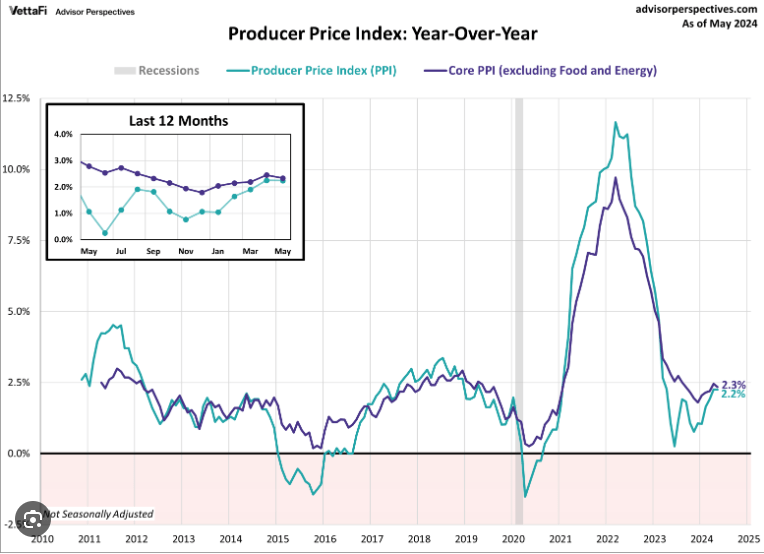
The Producer Price Index (PPI), which measures wholesale or producer inflation, rose by 0.4% in June, surpassing the expected 0.1%. Year-over-year, producer inflation increased from 2.4% to 2.6%.
The reasons behind this increase are not entirely clear and have raised some concerns. One theory is that as producers slow production, their suppliers are earning less and may be raising their prices, passing the additional costs on to the producers.
Bottom line is we are moving in the right direction regardless of the bumps in the road.
Have a fantastic weekend.
-
Rates, Rates, Rates That’s what I’m talking about.
The Consumer Price Index (CPI), which measures inflation from the consumer’s perspective, decreased by 0.1%. This marks the first significant drop in two years, contrary to expectations of a 0.1% rise.
Initial Jobless Claims, which represent individuals filing for unemployment benefits for the first time, fell to 222,000 from last week’s 239,000. Continuing Claims also decreased slightly to 1.852 million from 1.856 million.
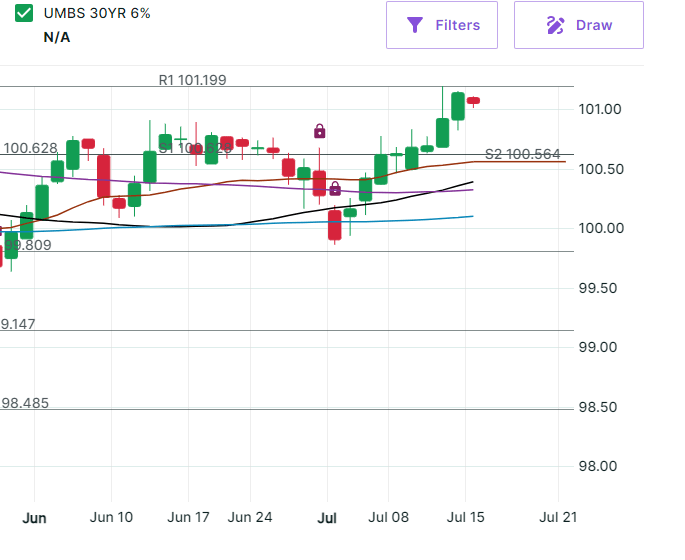
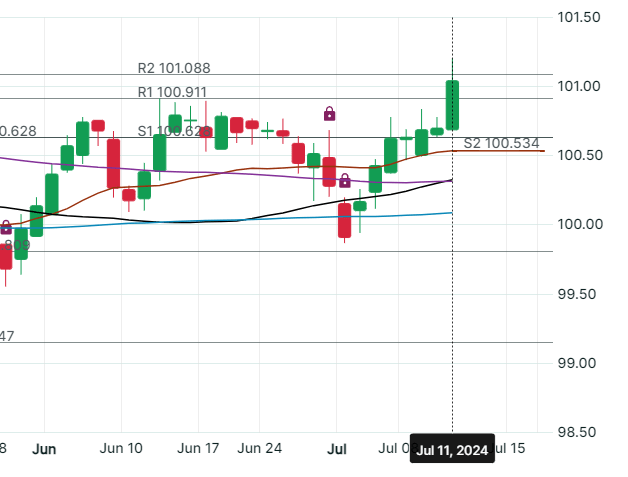
The chart below shows the movement of the UMBS 30-year Bond. An upward movement indicates lower rates. The difference between the red lower candlestick and the July 11th green candlestick reflects a 3/8th point decrease in interest rates.
For every $100,000 borrowed, a 3/8th point drop translates to a $45 lower payment. This reduction can be significant, especially when purchasing a million-dollar home.
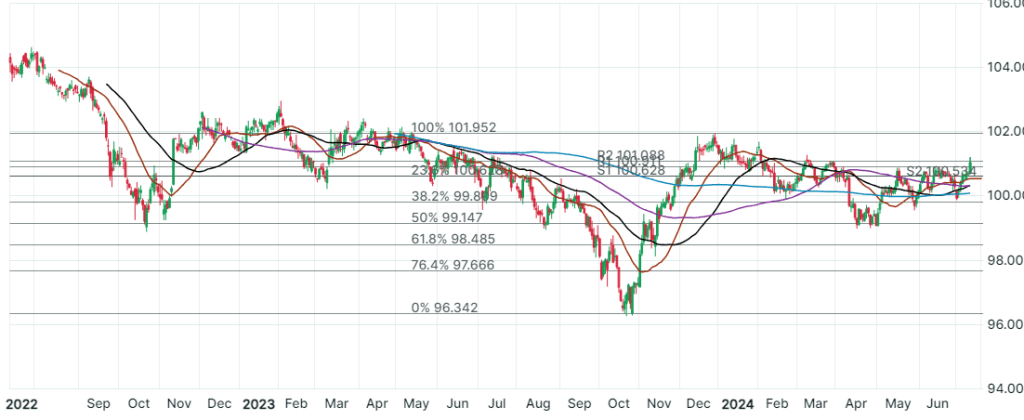
The second graph provides a two-year view for perspective.
-
Rate Cut in September??? and more about Powell and the FEDs
There is a dichotomy between Hawks and Doves, especially a shift towards a more Dovish approach concerning potential rate cuts as early as September.
Yesterday, Powell addressed the Senate and is set to testify before the House today. He acknowledged the slowing economy, rising unemployment, and downward revisions in GDP estimates.
Another significant indicator is the increase in Corporate Bankruptcies. June saw 75 new filings, surpassing pre-pandemic levels. This year has recorded 346 filings so far, marking a 13-year high. It’s worth noting that the BLS Jobs Report heavily incorporates the Birth/Death model, which tracks business startups and closures. However, recent Jobs Reports have consistently exceeded actual employment figures.
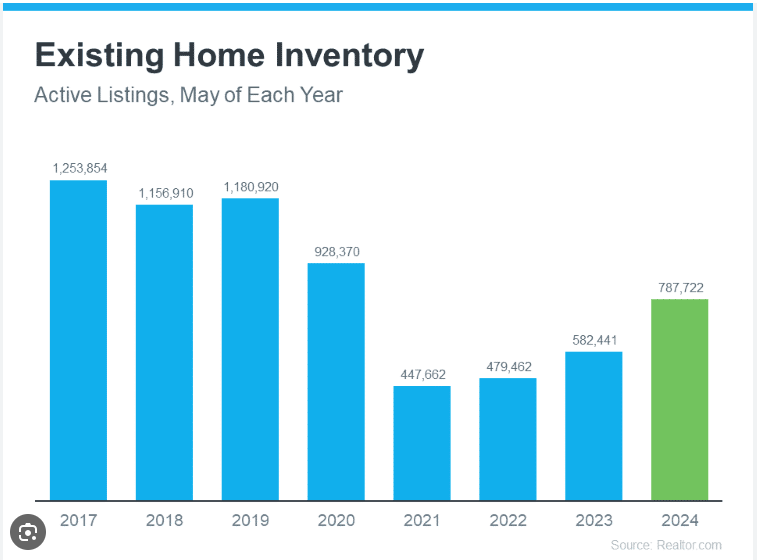
Shifting gears, lets talk Housing Inventory and why its important to look under the covers to see what is really going on.
Inventory has risen 6.7% in June and is up 37% from last year. Wow you say, well if the inventory is low to begin with, a small change can amplify reality. Also two-thirds of this rise is from two states, Florida and Texas.
Comparatively, the Midwest is 49% below pre-pandemic levels, while the Northeast is 57% below.
-
The Feds, CPI and Inflation expectations. Should be interesting
There’s speculation that this week could hold more significance than initially anticipated.
The Consumer Price Index (CPI) is forecasted to show a 0.1% monthly decrease, potentially lowering year-over-year inflation from 3.3% to 3.1%.
Key events include:
Tuesday: Small Business Optimism Index
Wednesday: Mortgage Applications, 10-Year Bond Auction, and Powell’s testimony before the House
Thursday: Consumer Price Index (CPI) and Jobless Claims
Friday: Producer Price Index (PPI), which indicates producers’ costs of goods sold and serves as a leading indicator for potential future inflation declines.
-
Put away your Driver, Your 5 Wood will do. Accuracy over Distance.
The Federal Reserve is shifting focus from inflation to the job market. Sustained high interest rates contribute their own inflationary pressures due to increased business costs.
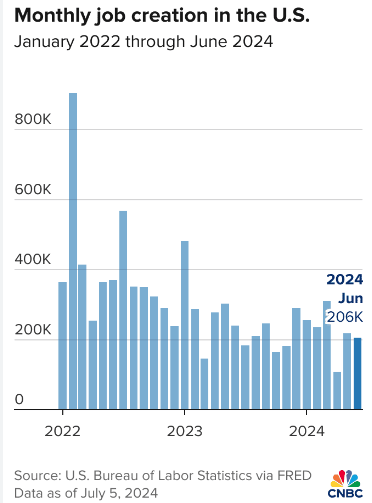
According to the Bureau of Labor Statistics (BLS), 206,000 jobs were added, meeting expectations. However, given the BLS’s tendency for revisions, April and May saw 111,000 fewer jobs combined. It is anticipated that June’s figures will also be revised downwards.
Here are my thoughts: The Federal Reserve is beginning to indicate a move towards rate cuts, which is positive news. I’ve spoken with several clients who are becoming anxious about rising competition as rates decrease and more buyers enter the market. This trend is promising because it should also benefit sellers.
Have a fantastic weekend! Feel free to reach out via call, email, or text anytime—I’m here to assist.
-
Subscribe
Subscribed
Have a WordPress.com account? Log in now.

