-
Let’s Start Paying Attention to 10-year Treasury Note Auctions – seriously
Sometimes, it’s important to step back and pay attention—specifically to the 10-year Treasury’s monthly auctions.
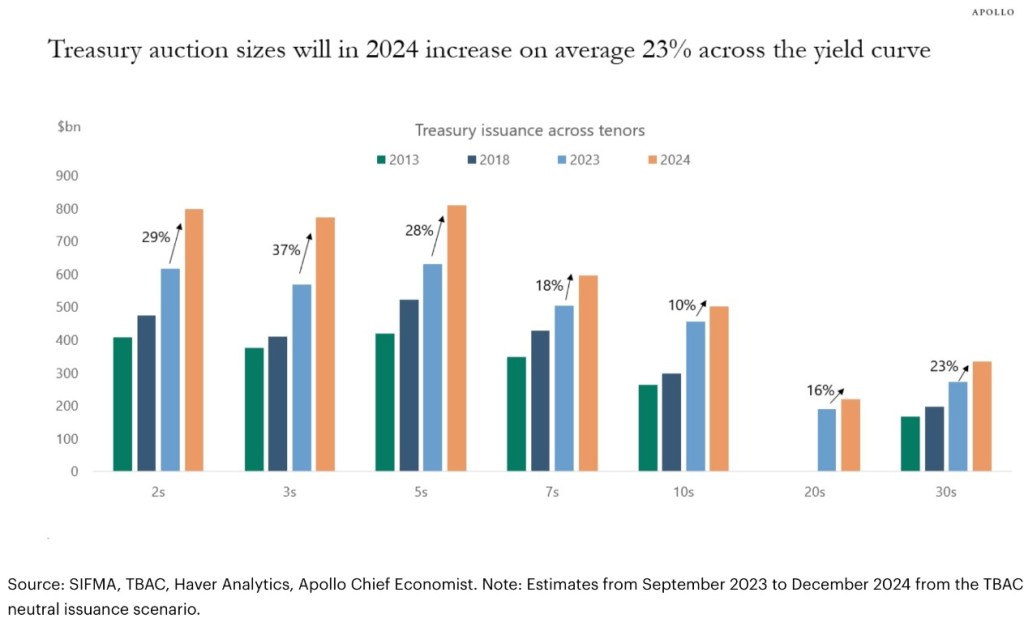
Why, you ask? Here’s why: if you’re an investor expecting yields to continue rising, holding off on buying bonds would seem prudent. However, bond managers who took that approach were caught off guard last month.
Yesterday, demand for bonds surged, proving them wrong.
Producer Price Index, which measures wholesale/Producer inflation rose 0.2% in August. Slightly higher than expected but going in a downward direction from 2.1 to 1.7%. Part of this drop in inflation was due to lower energy prices.
Initial Jobless Claims changed little and inline with expectations.
CoreLogic Equity Insights reported homeowners with mortgages saw an equity rise 8% year over year. 62% of all properties have a mortgage attached.
Interesting Stats:
- 136M total households in the US
- 91M homes owned – 67% homeownership rate
- 56.5M homes currently have a Mortgage – 62%
- 34.5M owned free and clear – 38%
- 45M homes rented – 33%
Time to tune up your financials for a new purchase or refinance. www.YourApplicationOnline.com
-
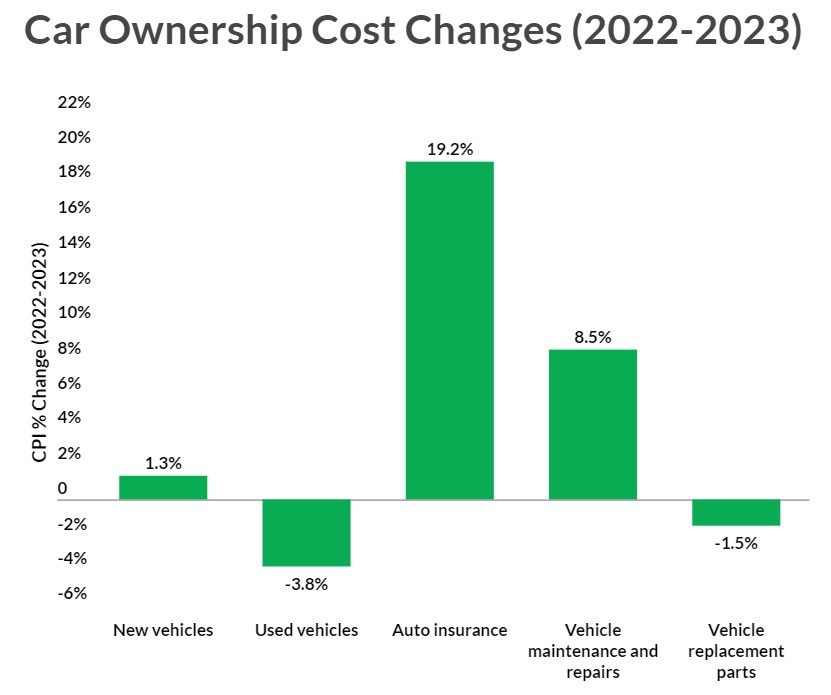
89% of inflation in August was Car Insurance and Rent. But Inflation still dropped from 2.9% to 2.5%.
That’s a remarkable percentage and calculation for the Federal Reserve to consider when making a rate cut decision.
The Consumer Price Index (CPI) report showed overall inflation rose by 0.2% in August, aligning with expectations.
Housing, airfare, and car insurance saw increases, with airfare alone jumping 3.6% last month. While inflation has decreased to 2.5%, 89% of August’s figure was driven by just two key components. Notably, shelter or rent contributes 45.7% to the CPI.
On a year-over-year basis, auto insurance costs fell from 18.6% to 16.5%, making me curious about the profit margins of auto and home insurance companies.
Overall, this was a positive report and provides the Fed with more justification to begin cutting rates.
-
History’s rhythm weaves a captivating melody
In our industry, we are intensely focused on data and the story it tells. At times, it shouts loudly, while other times, it only whispers.
We closely monitor technical indicators, particularly the 10-year and 2-year Treasury Notes. Until this week, the 2-year Treasury yield had been higher than the 10-year for an unusually extended period—longer than at any point in history.
If you’re holding a bond for a longer term, you’d typically expect higher yields as compensation. However, over the past two years, we’ve seen an inverted yield curve, with the 2-year bond offering higher yields than longer-term bonds.
With regards to the September 18th Fed meeting:
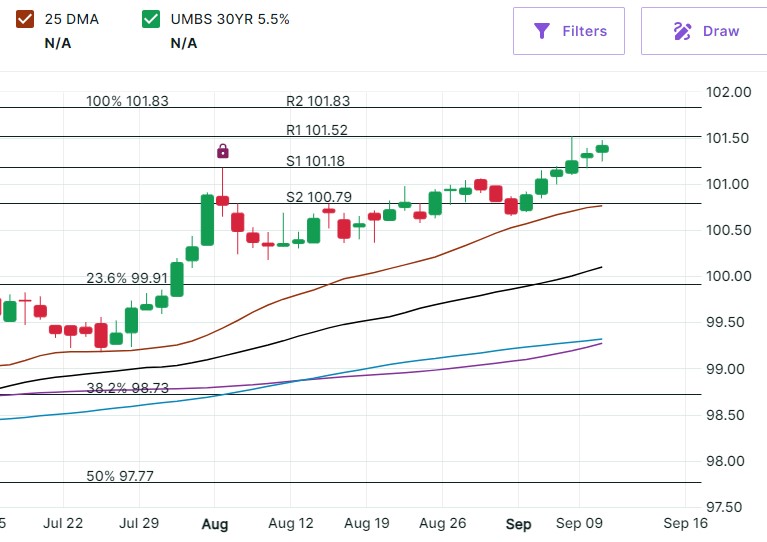
Yields goes down on average of 1.5% from the first Fed cut to the last. This would optimistically bring the 10-year bond down to 2.2% from its current 3.7%.
Below is the Bond activity over the last two months. Up or Green is lower rates. We expect this to continue through next week.
-
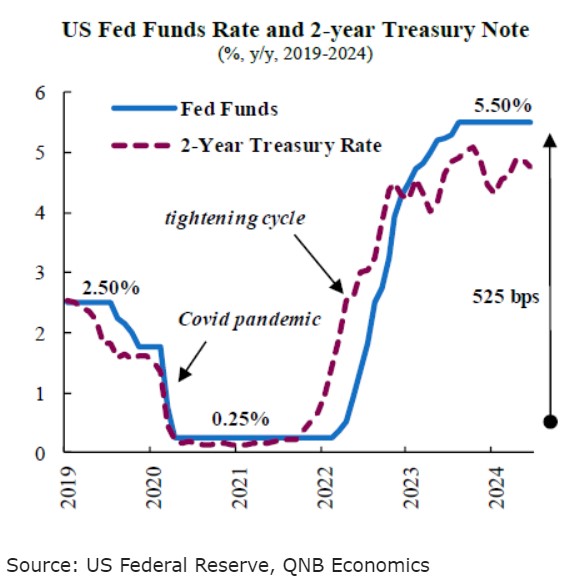
The Differential Argument of the 2-year bond and the Fed rate.
The question I get asked every day is: when and by how much will rates drop?
There’s a compelling case that rates will not only fall, but do so sooner than expected.
If we look at the differential between the 2-year Treasury and the Fed Funds rate, the Treasury is about 1.6% lower. This is a Large gap. Large enough that we have to go back to the 2007 gap.
The Fed aggressively cut interest rates, but ultimately lagged behind the curve, leading to the onset of the 2008 recession.
The Fed is significantly behind the curve and once again needs to take aggressive action to prevent a recession.
The Federal Reserve Meets September 18th.
-
BLS Report is Finally in and…the Bond market responds.
The Bureau of Labor and Statistics (BLS) reported 142,000 Jobs created in August, below the estimates of 160,000.
There were also negative revisions to the previous months as well. This means that 20% of the Jobs originally reported, never existed.
- Average weekly hours increased from 34.2 to 34.3.
- Average weekly earnings rose 0.7%.
- Household Survey showed 168,000 job gains.
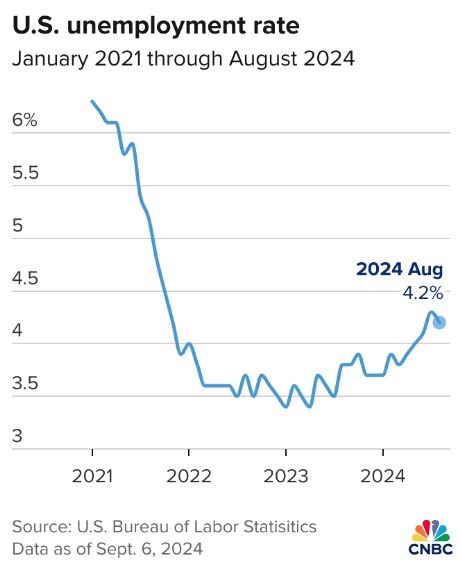
- Unemployment rate fell from 4.3% to 4.2%.
Bottom line is it’s incredibly difficult to work with numbers that are constantly revised and getting different conflicting data from independent sources.
The solution is: Watch where the dog is going not how it’s wagging it’s tail.
Rates continue their improvement leading up the the September 18th Fed Meeting.
-
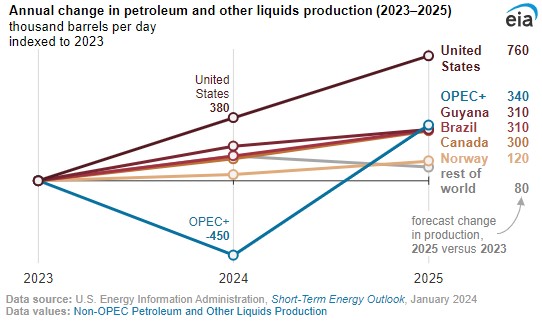
Oil Prices Drop below $70 per Barrel. Deflationary and helpful to rates.
ADP Employment Report for August showed only 99,0000 jobs created. Most with companies with 50 or more employees. This is another datapoint for the Feds September 18th meeting.
We are holding our clients locks until Tomorrow’s Jobs Report.
Now getting back to Oil.
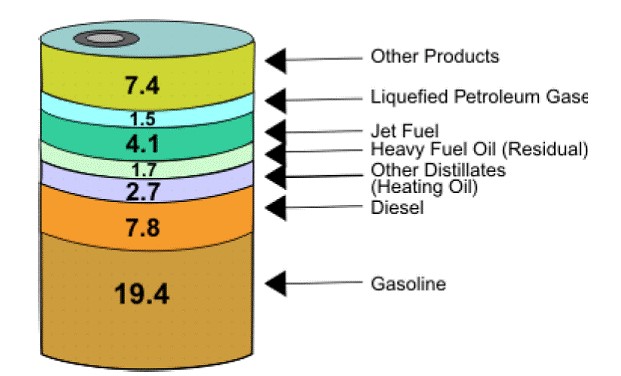
When oil production began, there was no standard container for oil, so oil and petroleum products were stored and transported in barrels of different shapes and sizes. Some of these barrels would originally have been used for other products, such as beer, fish, molasses, or turpentine.
-
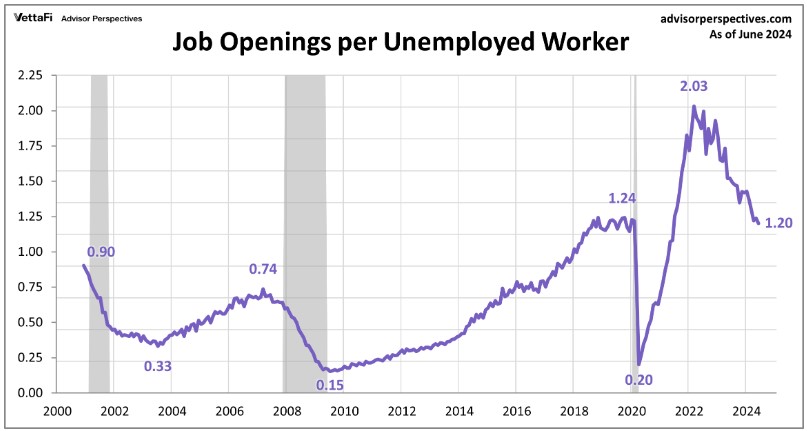
Job Openings drop lower than expected.
JOLTS (Job Openings and Labor Turnover Survey) came in lower than expected, with numbers falling from the anticipated 8.1M to 7.7M.
At some point, actual jobs will be affected. Remember, this is the Job Openings number—another datapoint the Fed is closely watching.
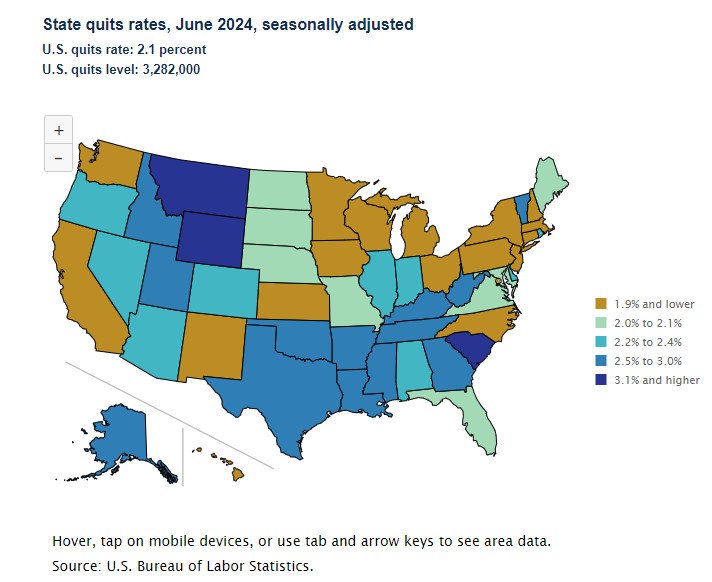
The quit rate was reported at 2.1%, the same as last month and the lowest level since 2018 (excluding COVID data).
ADP Employment and Initial Jobless Claims are set to be released tomorrow, with the BLS Jobs Report coming out on Friday. Friday’s report could be the deciding factor that pushes the Fed towards a 50 basis point cut on the 18th.
That’s just my perspective, but it’s what we’re expecting.
Mortgage bonds have reacted positively this week, and we expect this trend to continue.
Remember, our team offers a soft credit pull. Let’s get your application tuned up and ready for a refinance or purchase.
-
Tomorrow, Tomorrow, I love you Tomorrow… JOLTS report
With a short week in front of us, its all about Jobs report. JOTLS which measures Job Openings for July is expected to fall slightly to 8.1M.
The hiring rate fell to 3.4% which is the lowest since 2013. This does not include Covid which was 3.1%. Another indication of a slowing jobs market.
There is other data point within the JOLTS report, the Quit rate. The June report showed the Quit rate fall to 2.1%.
Rates continue to improve and with the jobs report ahead of the Fed meeting September 18th, we are set for a minimum 25bp cut and potentially a 50bp cut.
Historically, September has often been a challenging month for the stock market. The market consists of both stocks and bonds. When investors sell stocks, the proceeds typically don’t remain idle; instead, they are often reinvested in short-term bonds. This shift can be beneficial for mortgage rates.
-
The Happiest people don’t Have the best of everything, they just make the Best of Everything -Richard C share.
Year over Year inflation remains at 2.5%, the expectation was 2.6%. The Core rate which strips out food and energy costs which the Feds are highly focused shows a core inflation rate at 1.93 Feds wanted just 2.0%.
This is all good news though nothing earth shattering. It keeps us on pace for the Feds September meeting to cut rates.
We have a fantastic Refinance program for conventional loans where we buy your rate down an extra point for a year for FREE.
Very cool program that can have a huge impact on your mortgage. Every $100k loan you have and a 1 point drop is $792 a year savings.
$500k loan that’s over $3960. The first year we drop the rate another point with another $3,960 saved.
Soft Credit pull so simple to apply and run numbers. http://www.YourApplicationOnline.com
-
Bend the Steel when its Hot.
Applied metaphorically, the phrase means taking action at the right moment—when circumstances are most favorable. It suggests that you should seize opportunities when they arise, especially when the situation is “hot” or optimal for making a change.
Now let’s look at the market. Rates are dropping, the 2-year and 10-year bonds this morning are not inverted again. this is another sign rates will continue to drop.
The housing market is starting to heat up, and those “3-percenters,” as I like to call them, are beginning to take notice. Do they really want to stay in the house they felt almost forced to buy a few years ago?
I have clients in that exact situation today. Whether it’s because of the neighbors, the commute, a growing family, or other life events, they’re starting to reconsider their options.
Initial Jobless Claims was reported at 231,000 claims last week. slight decrease but inline with expectations.
Gross Domestic Product (GDP) second quarter came in at 3% we expected 2.8%. Still within expectations.

-
Subscribe
Subscribed
Have a WordPress.com account? Log in now.

