-
Demand Destruction and Slowdown component of Tariffs more than Inflationary impact.
Tariffs are a double-edged sword. On one hand, they can generate revenue to help reduce the U.S. deficit and lower interest rates.
On the other hand, tariffs can significantly weaken consumer demand, increasing the risk of a recession and a deflationary environment.
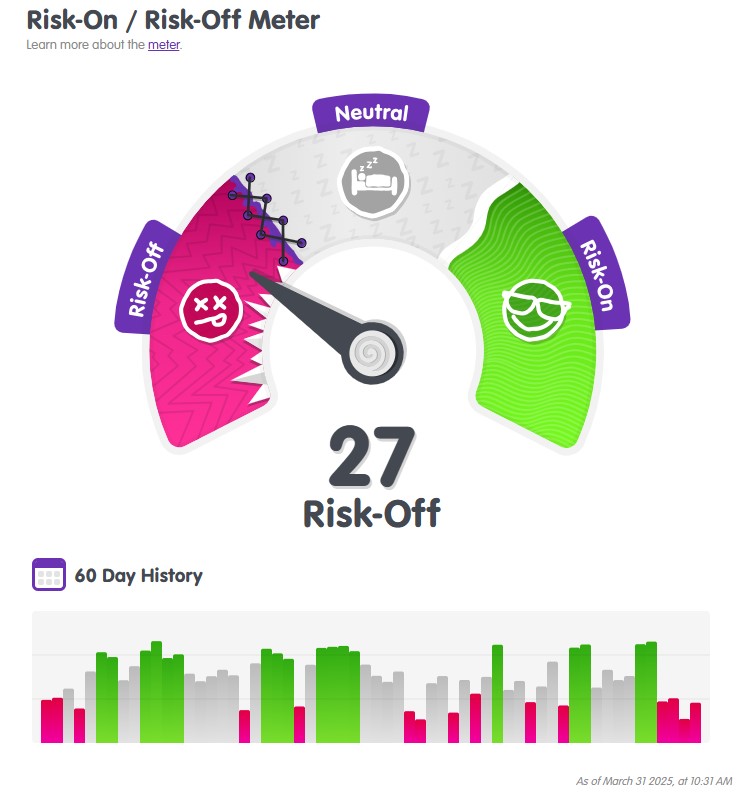
I’ve previously mentioned Risk-Off Trading, but it’s worth revisiting. Capital primarily moves between two markets: stocks and bonds. The markets are reacting strongly to the effects of tariffs, with money shifting between these assets based on risk and reward dynamics.
In the current high-risk environment, investors are pulling money out of riskier assets and seeking safety in bonds.
This week its all about jobs. JOLTS, ADP, Employment Report, and Fridays BLS Jobs Report.
The expectation is unemployment rate rising from 4.1% to 4.2%. The 10-Year bond should react in a rate positive direction.
http://www.YourApplicationOnline.com
-
12 month 2.8%, 6 month3.0% and 3 month 3.5%. inflation going in the wrong direction.
Here’s the weird part—remember stagflation? That’s when shoppers pump the brakes on spending, forcing businesses to freeze or even drop prices.
As inflation rises, buyers are starting to take control of their wallets.
Personal Consumption Expenditures – PCE only rose 0.4% and a revision downward for February. Spending numbers across several reports show weakness. Consumers have a heavy debt loan with 9.7 million individuals behind on their student loans.
Q1 GDP Estimate has been revised lower from -1.8% to -2.8%.
On one hand, inflation is rising, which usually pushes mortgage rates higher. But on the other, consumers are tightening their wallets, which helps cool inflation down. It’s like the economy is playing tug-of-war with itself!
Rates are down today and expected to continue through the end of Spring. I am headed out to see the sights in Chicago and will see you Monday.
http://www.YourApplicationOnline.com

-
GDP = C+I + (X-M) Consumption + Investment + Government Spending + (Exports-Imports)
I bet you didn’t expect to do math this morning!
Consumer spending, which accounts for 68% of GDP, plays a major role in the economy. Later today, we’ll receive the latest Q1 GDP estimate, with expectations of little to no growth.
In February, Durable Goods orders increased by 0.9%, despite forecasts predicting a 1% decline—largely driven by Defense Spending.
Meanwhile, Core Shipments, along with exports and imports, also rose 0.9%, surpassing expectations. This surge was primarily due to shipments being pushed forward ahead of upcoming tariffs.
What does this all mean to me/you? We don’t exactly know. Uncertainty restricts growth.
Why build a plant if you don’t know if you need it. Tariffs are a double edge sward. If they are put in place will they get yanked a month later. If a business owner is relying on those tariffs they may wait before they spend capital on a new building.
Bottom line is Mortgage rates are headed in the right direction. Home Values are up and unemployment is steady.
http://www.YourApplicationOnline.com

-
Bend the Steel when it’s hot.
Steel bends easily when hot. Likewise, in life and business, acting at the right time brings the best results. Success comes from timing, decisiveness, and action.
Case-Shiller and FHFA Appreciation Reports for January, showed home prices rose 0.6%. Year over Year up 4.1%.
The year over year for the Federal Housing Finance Agency -FHFA are up 4.8% higher by 0.1% than expectations.
Home Prices continue to rise on average 4% year after year.
New home sales are up 5.1%
Mortgage Bonds are struggling a bit with the Tariff uncertainty with rates rising for the first time in two weeks. Not much but still a change in the wrong direction.
I’m headed to the windy City Thursday but will make sure to post a few pics.
http://www.YourApplicationOnline.com

-
You’re the boss when you drive a car—until the carburetor breaks. Then, you’re not the boss anymore.
Tariffs, tariffs everywhere, but not a drop to drink. The erratic, on-again, off-again nature of tariff announcements creates a nightmare for money managers.
Money flows in two directions: the stock market and the bond market. A surge in one pulls from the other, shifting the balance constantly.
Mortgage rates are directly linked to Mortgage-Backed Securities (MBS) bonds. Homebuilders closely monitor rate trends, as their projects typically take 6 to 18 months from groundbreaking to occupancy.
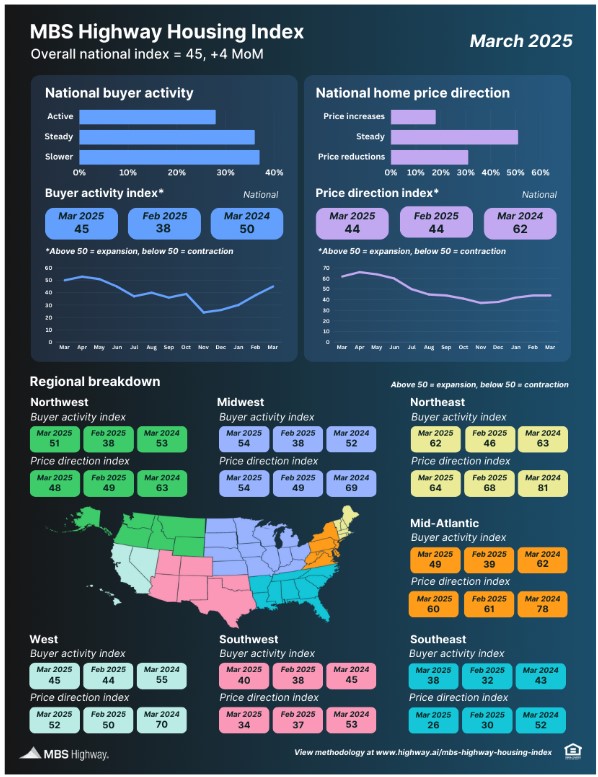
Buyer activity is directly tied to interest rates—we see it every day. Lower rates drive more applications, more offers, and more contracts, creating a win for everyone. That is, until rates rise again.
The long-term trend points to lower rates. Focus on the bigger picture, not the short-term fluctuations, and we’ll all be fine. Watch the dog not its tail.
http://www.YourApplicationOnline.com
-
“If you’re a dog, it’s either time to walk or sniff.” – Goolsbee, Fed President.
I listened to Austan Goolsbee this morning, and he shared a powerful analogy. He said the Fed is like someone constantly reading data and sniffing everything out, but eventually, you have to start walking—taking action.
He also touched on the concept of transitory – one month of change isn’t the same as four months. He was referring to tariffs and their ongoing impact on inflation, suggesting that short-term shifts don’t always stay temporary.
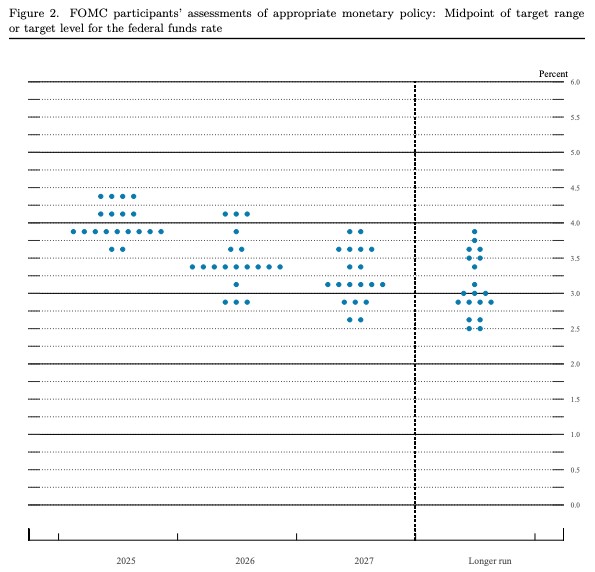
The Dot Plot below represents the The Federal Open Market Committee FOMC 12 members. The trend is lower Fed rates, lower Mortgage rates.
http://www.YourApplicationOnline.com
-
When your Roof is Leaking, you will fix it.
We all have a tendency to delay things that may be critically important. Every now and then, it’s worth looking up to check the ceiling before a leak appears.
From a mortgage standpoint, we encourage our clients to get fully approved through underwriting before purchasing or refinancing. Rates are starting to move in the right direction, and once they shift significantly, the rush will be on. Being prepared now can put you ahead of the curve!
Now lets get to the data:
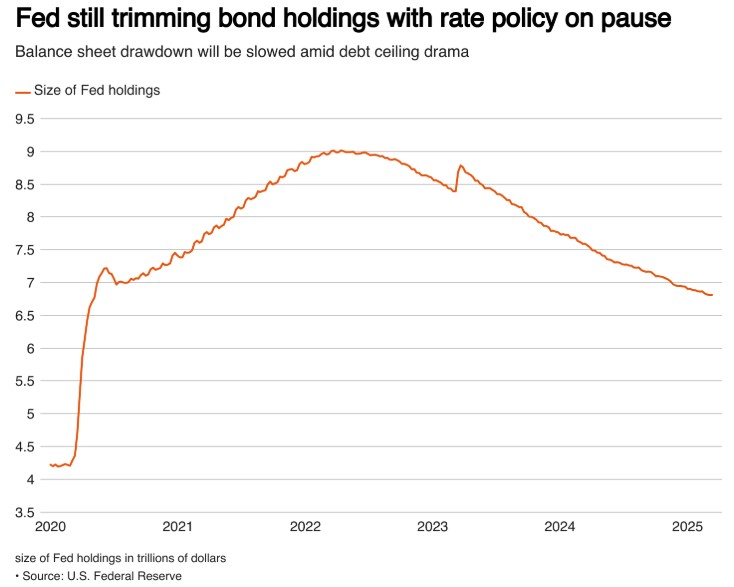
The Fed kept rates unchanged, as expected, and made key adjustments to their balance sheet runoff. Previously, they allowed $25B in bonds to mature and be paid back instead of reinvesting. Now, they’re making changes to this process by re-investing. which could impact the market.
Simply put, Quantitative Tightening (QT) means reducing the Fed’s balance sheet by letting bonds mature without reinvesting. Quantitative Easing (QE) is the opposite—it involves reinvesting those funds to keep money flowing in the economy.
These are all signs of future lower Fed rate and Mortgage rates.
get pre-approved today. http://www.YourApplicationOnline.com
-
At 11AM (PST), the FED releases its SEP…
The Summary of Economic Projections (SEP) provides insight into where the 19 Federal Reserve members anticipate key economic indicators, including the unemployment rate, GDP growth, core PCE inflation, and the direction of the Fed Funds Rate.
Let’s take a look back at the last SEP report from December 18th:
- Unemployment Rate: 4.3%
- GDP Growth: 2.1%
- Core PCE Inflation: 2.5%
- Fed Funds Rate Projection: 2 cuts
Current Expectations:
- Unemployment Rate: 4.1%
- GDP Growth: -1.8%
- Core PCE Inflation: Trending lower
- Fed Funds Rate: No clear guidance
Additionally, the Fed may announce an end to its balance sheet runoff, which involves selling bonds. If this happens, there’s a strong possibility they will begin reinvesting approximately $40 billion per month back into Treasuries (Bonds)—a move that could provide positive momentum for mortgage rates.
lets get you qualified http://www.YourApplicationOnline.com
-
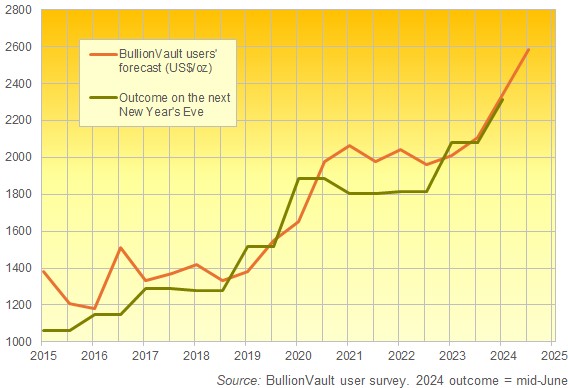
Lets talk Gold. It’s the Cannery in the Coal mine.
Gold has a unique and complex relationship with GDP. Let’s break it down.
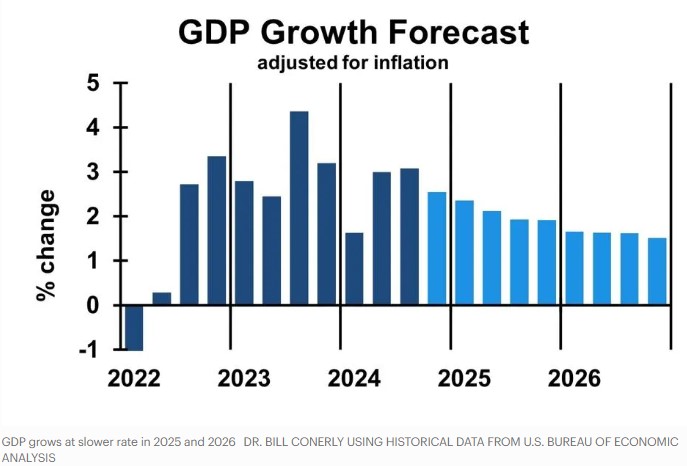
The latest Q1 2025 GDP estimate from the Atlanta Fed sits at -2.1%. However, when factoring in gold, the adjusted GDP figure moves closer to zero. Next report scheduled for release Thursday, March 27th.
Here’s why: Strong GDP growth often leads to higher interest rates, which can reduce demand for gold. On the other hand, economic uncertainty or a weakening economy tends to push investors toward gold as a safe-haven asset, influencing the overall economic landscape.
The Feds are paying attention. They are wrapping up their meeting tomorrow afternoon. At that point we will compare their projections on Fed Funds Rate, inflation, unemployment and the DDP from their last meeting.
Why do mortgage rates change? The answer is complex. It’s like looking through a peephole—catching only glimpses of the full picture and making educated guesses as the image gradually comes into focus.
My take on this: Rates are trending downward. As always, be ready—especially if you’re considering refinancing. When the shift happens, things will move quickly, and you’ll want to be prepared.
http://www.YourApplicationOnline.com
-
Feds to conclude their Meeting Wednesday. Hold rates? or Drop.
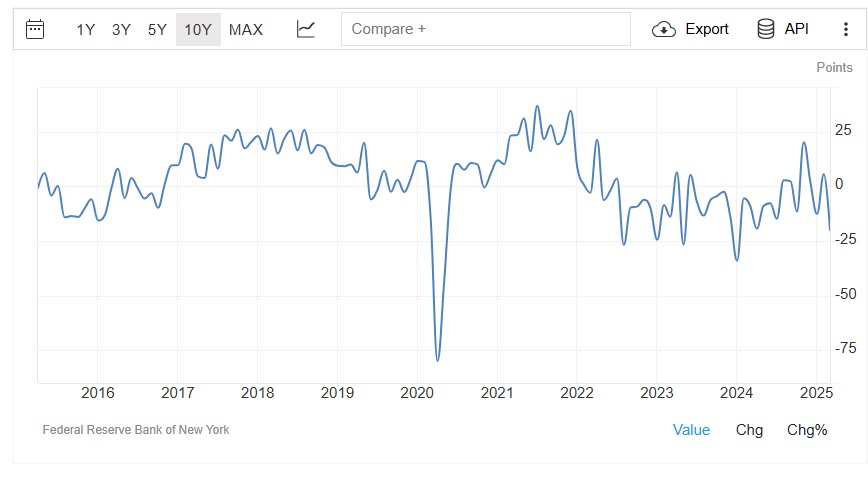
The Empire State Manufacturing Index dropped to -20, significantly weaker than the expected -1. New orders index also dropped 14.9 as well as shipments index to -8.5.
Looking at the long-term trend in the graph, it’s clear that this index has been quite volatile. Let’s take a closer look to determine whether this decline is a serious concern.
Inventory continues to grow. This is concerning. Business optimism continues to decline while prices rose at the fastest pace in two years.
The Fed must consider whether to cut rates sooner rather than later or risk falling into analysis paralysis.
Inflation declines when consumers opt for chicken over beef and brew their own coffee instead of buying Starbucks. Supply and Demand.
The case for lower interest rates is stronger today than it was yesterday. Now is the time to get your mortgage paperwork in order—let’s get you pre-qualified for your purchase or refinance!
http://www.YourApplicationOnline.com
-
Subscribe
Subscribed
Have a WordPress.com account? Log in now.

