-
Consumer Confidence fell from 92.9 to 86. But lets look historically.
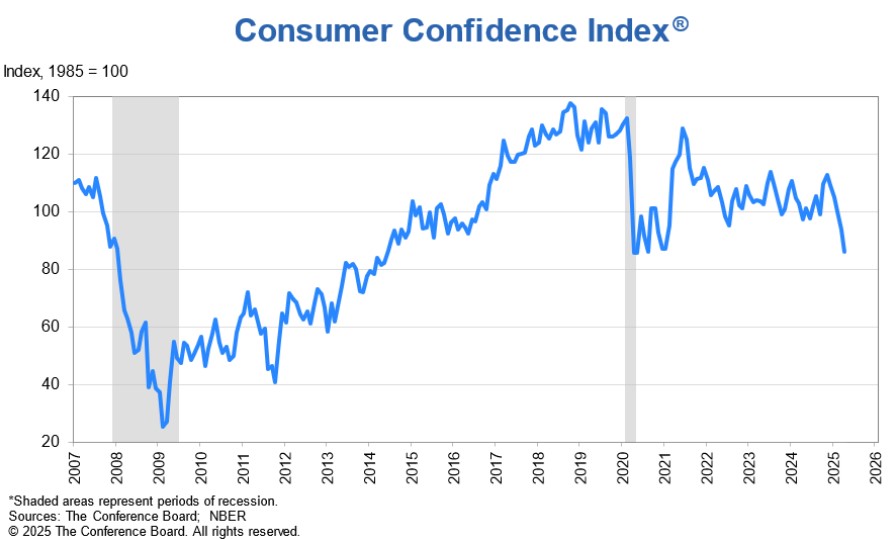
But what does this really mean? The last time we saw this level was between 2020 and 2022. This figure is heavily influenced by business conditions, employment prospects, and expectations for future income.
Historically, recessions are typically marked by readings below 80.
The March JOLTS report shows job openings declined from 7.49 million to 7.19 million, indicating clear signs of weakness in the labor market. Additionally, the quits rate — which reflects the number of people voluntarily changing jobs — remains at its lowest level since 2015.
Year-over-year, home prices have increased by 3.9%. While some regions have experienced slight declines, the overall housing market remains strong and resilient.
We anticipate continued improvement in interest rates, making this an excellent opportunity for buyers to enter the market before conditions shift.
http://www.YourApplicationOnline.com soft credit pull Nation wide.
-
How long does it take for a Ship to travel from China to the US? 60 days…

When will the impact of tariffs start to show? Mother’s Day (happy early Mother’s Day this Sunday!) marks the 60-day point.
It wasn’t that long ago that we began stockpiling toilet paper and paper towels. Why those two items resonated so strongly with consumers isn’t entirely clear — perhaps because they are some of the most personal essentials we use daily.
While the supply chain impact likely won’t be as severe as it was during COVID, it could still affect container unloading, transportation, and manufacturing. This disruption could also lead to a rise in the unemployment rate.
The Federal Reserve remains focused on inflation, and this situation adds to their concerns. However, on the other hand, lower rents are starting to be reflected in both the CPI and PCE reports, providing some balance.
lets get you or your clients pre-approved, Soft credit pull
http://www.YourApplicationOnline.com
-
When Negative is Positive (But Not for Everyone) A Poem for Your Friday Morning
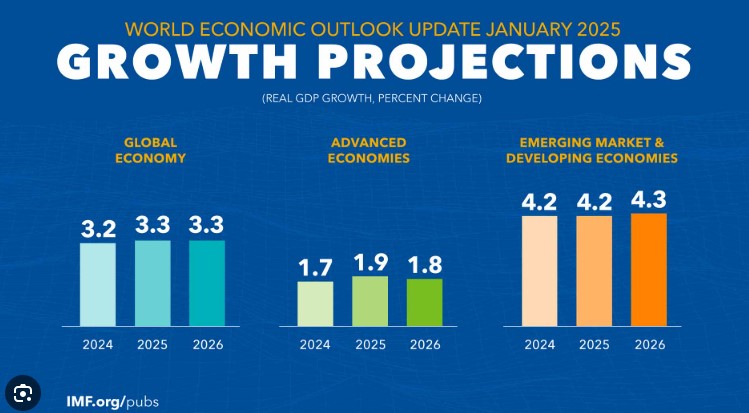
Let’s Talk Q1 GDP
The street says growth, but just a trace,
Point four percent—a sluggish pace.
Atlanta Fed? A different view,
Negative four—they say it’s true.
A downturn looms, the signs align,
We’ll know for sure come Wednesday’s time.PCE Arrives Next Week
March numbers land, but here’s the twist,
No tariffs yet in this data list.
Inflation’s pace is set to slide,
To two-point-two on the headline side.Jobs in Focus: A Labor Round
JOLTS and ADP come around.
The BLS report will also show
If jobless trends begin to grow.
April’s the frame, with DOGE in play,
And tariffs felt in the laborway.
Unemployment may hold the line,
At four-point-two—or worse this time.What’s bad for him may good things do,
A downturn comes—what’s that to you?
Recession stirs a fearful flight,
To bonds where money sleeps at night.When markets shake and yields are sought,
The bond world warms, the rates grow not.
So while the storm may cloud the skies,
For buyers now, low rates arise.http://www.YourApplicationOnline.com
-
Lets talk Homes. Not Holmes who was a great boxer. Inventory, Median sales price…
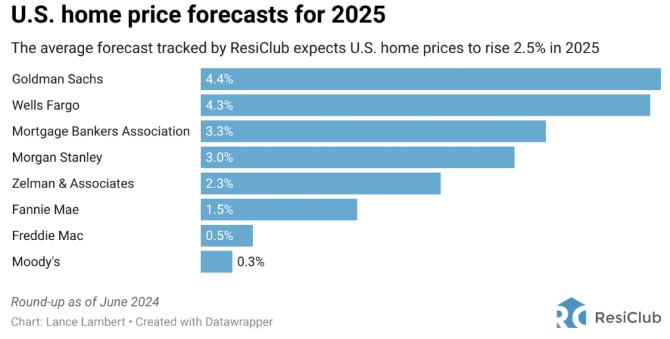
- Existing home Sales fell 5.9% Expectation 3.3%
- Median Home Price rose 1.7% to $403,700
- Inventory rose 8.1% to 1.33M up 20% from last year.
- 4-months supply. 3.5% higher than February.
- Home on market 36 days on average down from 42 days.
- First time home buyers 32%, Cash buyers 26% investors 15%
With that out of the way, it’s a mixed bag of solid and slightly surprising numbers. Home prices remain strong, largely due to historically low inventory levels.
In fact, inventory is still hovering near its lowest point in 26 years—below even the pre-pandemic norms from 2015 to 2020.
So get out there and buy a home—strike while the iron’s hot!
http://www.YourApplicationOnline.com soft credit pull nationwide
-
It’s about as Useful as a Chocolate Tea Pot.

Investors are on edge, caught between concerns about the ongoing trade tensions and uncertainty around the Federal Reserve’s next move. Over the past month, it feels like we’ve all been whipping our heads back and forth, trying to make sense of every economic indicator, policy comment, and market swing—like reading tea leaves in a hurricane.
Tariffs haven’t just rattled the stock and bond markets—they’ve shaken the confidence of anyone with a retirement account. It’s hard to chart a clear path forward when the ground beneath you keeps shifting. How do you make smart financial decisions when the rules seem to change overnight?
Treasury Secretary Scott Bessent spoke this morning, signaling a much softer stance on tariffs. The shift in tone helped ease investor concerns, leading to a modest improvement in interest rates and sparking a rally in the stock market.
“This too shall pass” express the idea that all situations—good or bad—are temporary.
online application Soft Credit pull nationwide http://www.YourApplicationOnline.com

-
OMG Redfin reported 13% Cancelations in March…. Except that’s the same for the last 4 years.
“57% of all statistics are made up.” Be careful where you get your info—especially from the news media and so-called “experts.”
Take this one: Redfin recently reported that 44% of home sellers offered concessions to buyers. That might sound like a lot, but it was actually higher in 2023 and pretty similar to what we saw before COVID. Context matters.
Right now, the housing market is strong, but the biggest challenge is inventory. That tight supply is keeping home values high, which is great for sellers, but it’s definitely tougher on first-time buyers and those looking to move up.
Shifting gears—literally—goods have to move by truck or ship (see what I did there?). This is a bit of a canary in the coal mine for the broader economy.
The April shipping reports show a sharp rise in “blank sailings”—canceled port stops. These happen occasionally, but this jump is significant: six weeks ago, 30,000 containers were canceled. Now? 370,000. That’s a massive slowdown.
Ports are also reporting a 12% increase in available capacity, which basically means less stuff is coming in.
Then there’s the wealth effect: when the stock market is up, people feel richer and spend more. When it drops—like it has recently—affluent buyers start pulling back on big purchases.
All signs point to a slowing economy, and the chances of a recession are rising.
But here’s the silver lining: mortgage rates are likely to fall.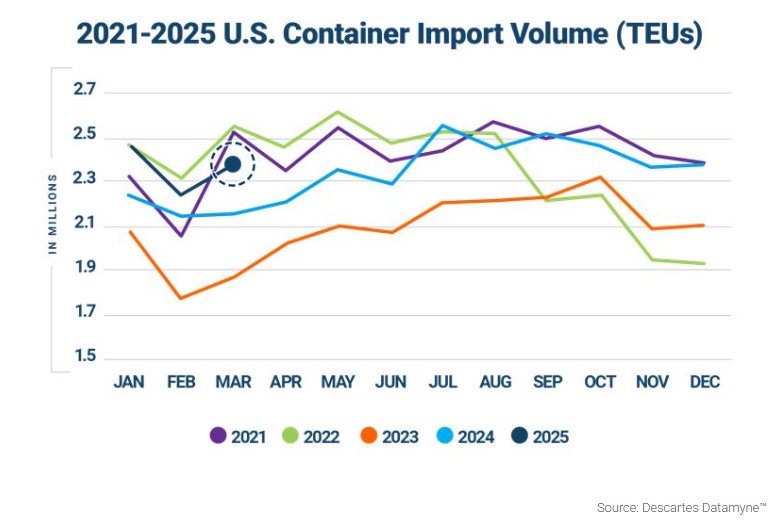
-
Rate Cuts are on the Table but its a very Large Table – Austan Goolsbee Chicago Fed Pres.
The Fed has acknowledged that its policy remains restrictive and that the impact of tariffs will likely be a one-time bump in prices.
Overall, the U.S. economy appears to be in solid shape heading into the new tariff environment. We’re near full employment, and inflation has come down meaningfully over the past two years, now hovering around 2.5%.
Goolsbee remains optimistic, suggesting the economy will stabilize and rates will likely come down next year.
Still, I can’t help but wonder if the Fed is navigating by looking in the rearview mirror. At this point, it feels like the cure may be doing more harm than the disease.
J.P. Morgan “The probability of a recession remains at 60% up from 40%”.
http://www.YourApplicationOnline.com

-
“Without price stability, we cannot achieve the long periods of strong labor market conditions that benefit all Americans.” – Fed Chair Powell
Remember the Hawk verses Dove view. Powell was pretty hawkish and indicated that inflation is more important than labor.
He denied that the FED would help the Stock market but if things got bad enough, he may change his mind.
In response to Powell’s comments, Trump posted on Truth Social and said, “Powell’s termination cannot come fast enough.”
Housing Starts and Permits – Bottom line – more demand than supply.
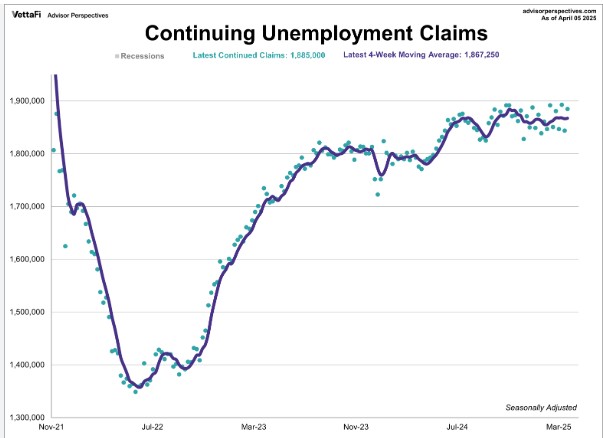
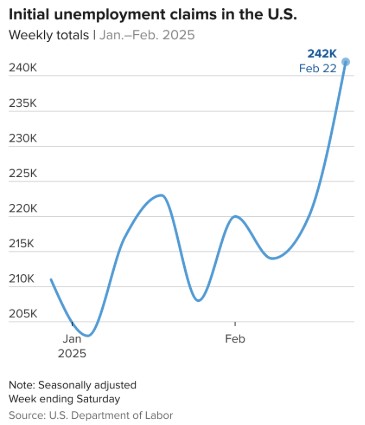
Initial Jobless Claims fell for the first time 9,000 to 215,000
Continuing Claims rose 41,000 to 1.885M
The housing market continues to support home prices into the future. The Tariffs are going to have a significant impact moving forward including inflation, Jobless claims, PCE, CPI and so on.
Stay tuned rates will go down, and up and down….
http://www.YourApplicationOnline.com
-
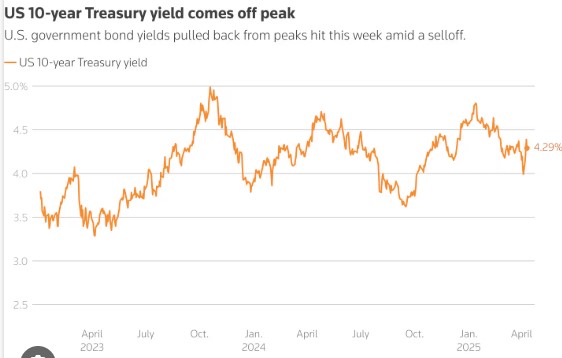
Flight to Safety, Bond Market improves but why?
The Bank of America Global Fund Manager Survey revealed that nearly half of respondents expect a global recession, while a majority anticipate a mild recession in the U.S.
As a result, a record number of global portfolio managers plan to reduce their exposure to U.S. equities. Historically, this shift tends to redirect capital into the bond market, which can help push yields lower.
We have an interesting week ahead with Powell speaking tomorrow at 1:30pm and the Retail Sales report.
This is a short one today and will be in training tomorrow.
http://www.YourApplicationOnline.com
-
The reports of my death have been greatly exaggerated – Mark Twain.
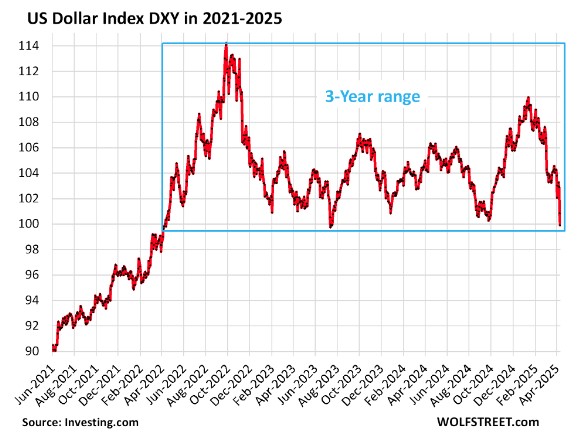
First I am a bit Graph Happy today but it helps.
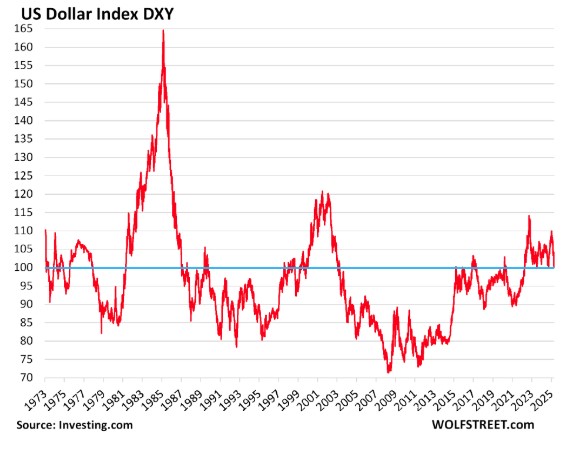
Former Fed Chair and Treasury Secretary, Janet Yellen said the dynamic rise in Treasury yields, simultaneous with the decline in the dollar suggests the investors are beginning to shun dollar based assets.
While it is true that the US dollar moved sharply lower last week and is at its lowest level in three years, its not unprecedented, in fact a few months ago late 2024 the complaint was that the dollar was too strong.
Chaos is never good and right now that is what we have. Money Managers hate chaos and uncertainty.
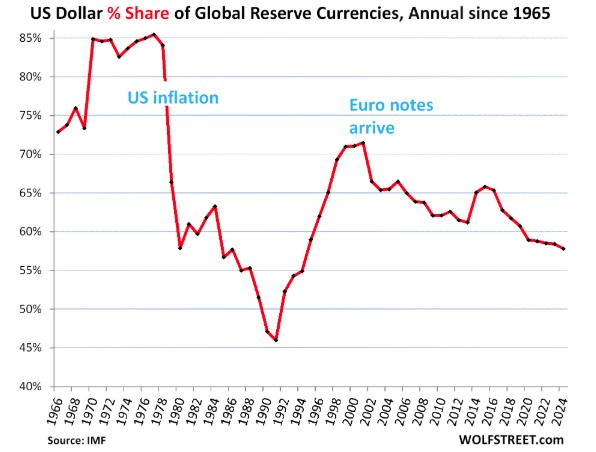
The US dollar is the dominant reserve currency, with 58.7% ahead of the next one in line. The euro share is 20%. see last graph.
http://www.YourApplicationOnline.com
-
Subscribe
Subscribed
Have a WordPress.com account? Log in now.

