-
CPI is like stepping on the scale after vacation—you’re hoping for good news, but deep down, you know that extra guac is about to show up in the numbers.

The April Consumer Price Index (CPI) showed overall inflation rising 0.2%, slightly below the expected 0.3%. Year-over-year, inflation edged down from 2.4% to 2.3%.
However, it appears the impact of recent tariffs hasn’t been fully reflected yet. Overall, inflation remains in a relatively flat range.
So what’s a Federal Reserve to do? Well do what they do best. Wait, and wait some more.
Here’s the problem: a huge chunk of homeowners are sitting pretty with sub-3.25% mortgage rates. And really, who wants to trade their cozy low-rate castle for an identical one at double the cost? Not many. Meanwhile, builders are grinning ear to ear—they’ve got brand-new homes with no rate baggage, and they know they’re the only game in town!
Ok, off my soap box and back to work. Lets get you or your clients pre-approved, soft credit pull http://www.YourApplicationOnline.com
-
Elvis was Abducted by Aliens. I found an old article.
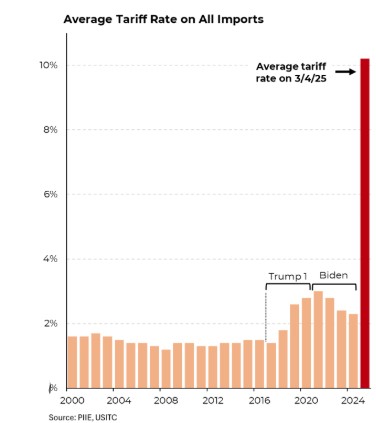
This week’s key economic news includes the Consumer Price Index (CPI) and Producer Price Index (PPI), both set to be released Tuesday and Thursday respectively.
Expectations are for moderate readings, with tariff impacts only beginning to appear. A clearer economic picture has yet to emerge.
Stocks are higher with Mortgage Bonds lower after the US and China 90 day agreement.
Rates remain relatively flat, with the mid-6% range likely to be the norm for the foreseeable future. If you’re holding out for a drop in both home prices and interest rates, you may be waiting a long time.
Home prices continue to climb, with the exception of some more volatile markets—particularly in Texas and the Florida condo sector.
We’ll get more insight on Friday when the Housing Starts and Building Permits reports are released.
Online application http://www.YourApplicationOnline.com
-
Stocks and Bonds are like Siblings on a Road Trip

How a Trade War Can Hurt Bonds
A trade war can cause trouble for the bond market, mostly by pushing bond yields up and prices down. Here’s how that happens:
- Prices Go Up: Tariffs make imported goods more expensive, which can lead to higher inflation.
- Interest Rates Rise: To fight inflation, central banks may raise interest rates. Higher rates make borrowing more expensive and can hurt bond values.
- Less Foreign Buying: Trade tensions can scare off foreign investors, leading to lower demand for government bonds and even higher yields.
- Bonds Feel Less Safe: Normally, government bonds are considered safe during uncertain times. But in a trade war, confidence may drop, and investors might sell off bonds.
- Warning Sign of Recession: Trade wars can also lead to an “inverted yield curve,” where short-term bonds pay more than long-term ones—often a red flag for a coming recession.
-
70% of the US GDP is Consumer Spending. Spending is up but Consumers are scared.

The economy appears to be on stable ground—job growth remains steady, unemployment is near historic lows, and inflation is tracking at 2.4%.
But how is the average American consumer really feeling?
To answer that, we look at both hard data—like unemployment and inflation—and soft data, such as consumer surveys and sentiment polls. One widely used measure is the Consumer Confidence Index, which captures both current conditions and future expectations.
As of the end of April, the Present Situation Index stood at 133, significantly above the historical average of 103, indicating consumers feel confident about the current economy. However, the Expectations Index—which reflects outlook over the next six months—fell to just 54, marking its lowest level since 2011.
This stark contrast suggests that while consumers recognize today’s relative strength, uncertainty about the future is growing.
Mortgage rates holding steady. Lets get you pre-approved, soft credit pull.
http://www.YourApplicationOnline.com
-
What’s a Corporation to Do? Raise Prices Only on Tariffed Goods—or Across the Board?

Corporations typically focus on maintaining profitability, so while they can raise just the prices on tariff-impacted goods, they often take a broader approach. Here’s how it usually breaks down:
- Direct Tariff Pass-Through: Companies may increase prices only on products directly affected by tariffs, especially if those items are clearly traceable to specific materials or imports (e.g., a particular electronics part or imported steel).
- Blended Price Increases: Many businesses choose to spread the cost of tariffs across a broader range of products. This avoids sharp spikes on a few items and softens the blow to consumer demand—basically, hiding the increase across a wider product line.
- Strategic Price Hikes: Some corporations take advantage of tariff news to raise prices on unrelated items under the cover of “inflationary pressures” or “supply chain disruptions.” This can quietly boost margins.
So, while they could limit price increases to just tariffed goods, in practice, companies often raise prices more broadly—especially if the market will bear it.
The Feds meet this afternoon to talk rates. The challenge is uncertainty with regards to inflation.
http://www.YourApplicationOnline.com Soft Credit Pull
-
The Relationship of time Unemployed and the Unemployment Rate.
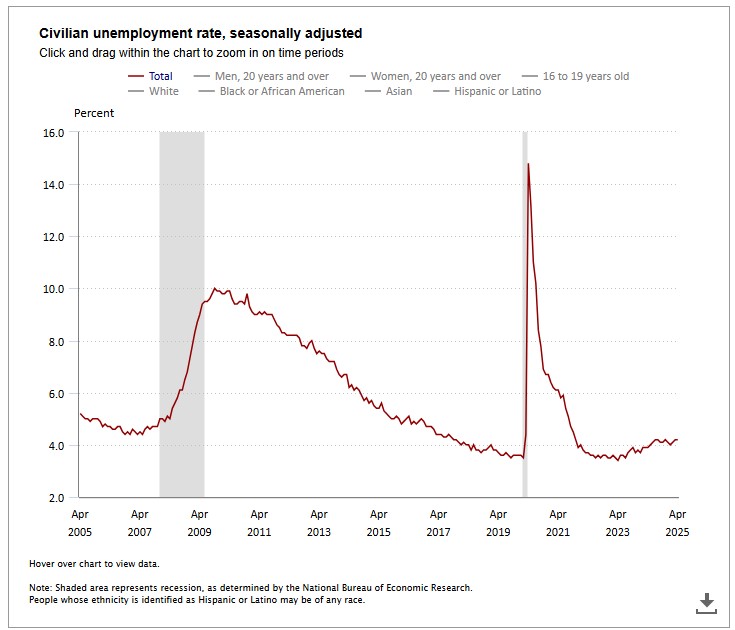
Unemployment benefits currently extend up to 26 weeks. The share of individuals unemployed for 27 weeks or more has increased from 21.3% to 23.5%—the highest level in three years. This means nearly one in four unemployed workers are no longer eligible for benefits, adding further strain to the economy.
Additionally, the median duration of unemployment rose to 10.4 weeks, up from 9.8 weeks, indicating a broader slowdown in job recovery.
Current Unemployment rate remains at 4.2% but we see a reasonable scenario where the rate rises to 4.4 to 4.5%. The Feds cannot ignore the obvious signs of a slowing economy.
Translation; Mortgage Rates will drop.
Website http://www.YourApplicationOnline.com soft credit pull.
-
It’s like Opening a Can with no Label. You don’t know what you’re going to Find.

Imagine reaching into your pantry and pulling out a food can with no label. No ingredients, no expiry date, no clue what’s inside. It could be soup, peaches, or dog food — you just don’t know until you open it. That’s what tariffs can feel like in the economy.
When tariffs are imposed, especially suddenly or unpredictably, businesses and consumers are left guessing. Will prices go up? Will supply chains break down? What country will retaliate next? It’s like opening that mystery can: you’re not sure what you’re going to get, but you know it might not be good.
Tariffs are meant to protect domestic industries, but they often come with unintended consequences — higher costs, limited choices, and economic uncertainty. For small businesses and everyday families, that uncertainty can make budgeting, planning, and even grocery shopping feel like a gamble.
In the end, whether it’s dinner or a policy decision, people like to know what they’re getting into. With tariffs, as with unlabeled cans, a little transparency could go a long way.
Rates are holding steady. OPEC+ is increasing their production by 411,000 barrels per day roughly 1% of total production. Potentially lowering gas prices and helping inflation.
Lets get you or your clients pre-approved. http://www.YourApplicationOnline.com Soft Credit pull.
-
Jobs Reports but Revisions ensue. Why is it so difficult to get this number right and why is it always revised lower?
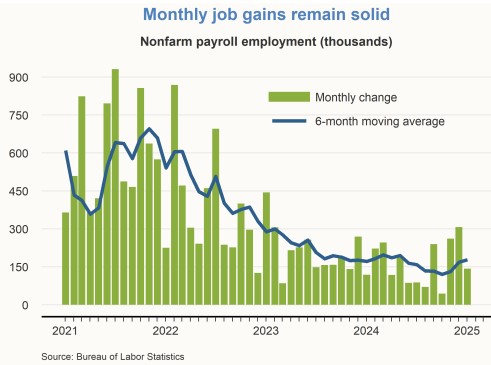
BLS Jobs reported 177,000 jobs created in April expectation was 130,000, but March and February revies down over 58,000. Aprils report will have the same revision next month.
The market understands this and is why the stock and bond markets did not reacted as you might expect.
Sample Survey: The Bureau of Labor Statistics (BLS) uses a sample survey to estimate job growth, which means the initial numbers are based on a subset of businesses and may not perfectly reflect the entire economy.
Incomplete Reporting:The initial report relies on data from businesses that respond quickly, but some businesses may not report in time for the initial release.
Annual Benchmark Revisions:Once a year, the BLS revises the monthly data to align with more comprehensive administrative data from Unemployment Insurance programs, which provides a more complete picture of employment.
Revised Estimates:When businesses not initially included in the sample provide data, the initial estimate may be adjusted downward if the change in employment for those businesses is different from what was initially reported.
Bottom line: take it with a grain of salt. Rates remain persistently in the 6% range on average. While that marks progress compared to last year—when rates were in the 7% range—it’s simply not improving as quickly as we’d like.
http://www.YourApplicationOnline.com Soft Credit Pull
-
American Economic $8T Export Colonization you are not aware of.
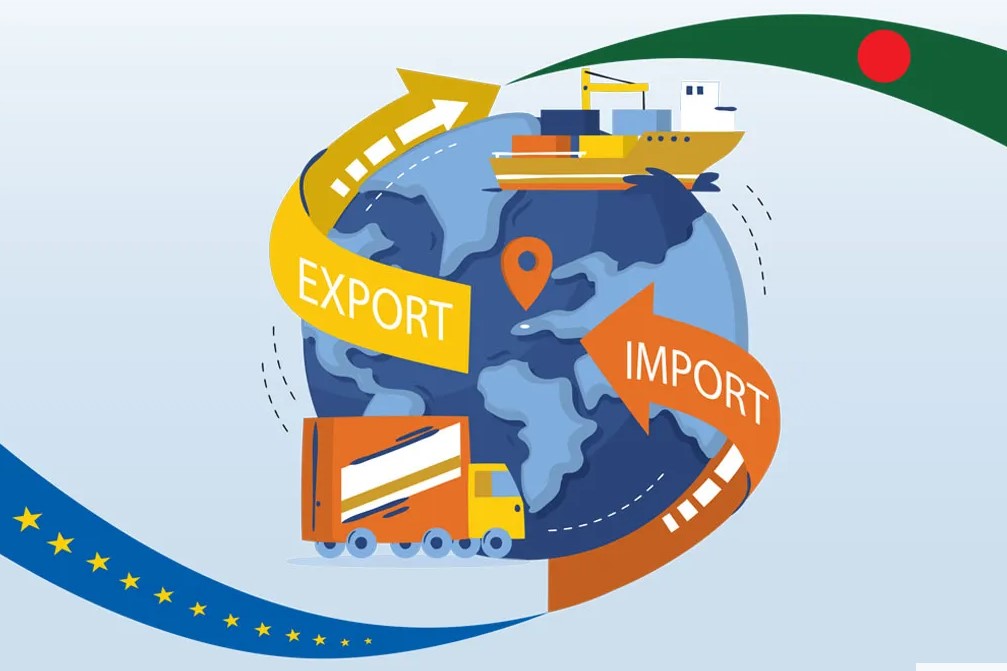
While trade data provides valuable insights, it does not capture the full scope of the U.S. economic footprint abroad. U.S. exports combined with affiliated sales from American companies operating internationally amount to over $8 trillion.
The United States leads the world in what can be described as economic export-driven influence. Consider the global presence of companies like Starbucks, major fast-food chains, and U.S.-based manufacturers with local operations overseas. Firms such as Ford, Intel, Apple, and Nike exemplify this expansive reach.
Although there is a desire to bring more manufacturing back to the U.S., tariff structures often hinder such efforts. As a result, many companies strategically establish production facilities in foreign markets—particularly in Europe—to mitigate the impact of trade barriers.
Moreover, American software giants like Microsoft continue to drive international economic influence through widespread software licensing and services.
Global trade is highly complex, and focusing solely on a $1 trillion trade deficit oversimplifies the situation. U.S. companies excel at leveraging global markets, showcasing a powerful model of economic engagement that extends well beyond traditional trade statistics.
http://www.YourApplicationOnline.com soft credit pull no harm
-
The Dust needs to settle before we can see what the numbers really mean.
A Mixed Bag of Economic Data Leaves Markets Guessing
The latest Personal Consumption Expenditures (PCE) data surprised to the upside, with headline PCE rising 0.7% in March—beating the 0.5% forecast. Incomes also rose more than expected, up 0.5% versus the 0.4% estimate, signaling continued consumer strength. Encouragingly, the Core PCE, the Fed’s preferred inflation gauge, eased to 2.3% year-over-year, down from 2.7%, offering a glimmer of hope on the inflation front.
However, the broader economic picture remains cloudy. Q1 GDP came in at -0.3%, marking the second consecutive quarter of negative growth—technically meeting the definition of a recession. Meanwhile, headline PCE inflation for the year jumped 3.7%, above the 3.1% forecast, keeping inflation concerns alive.
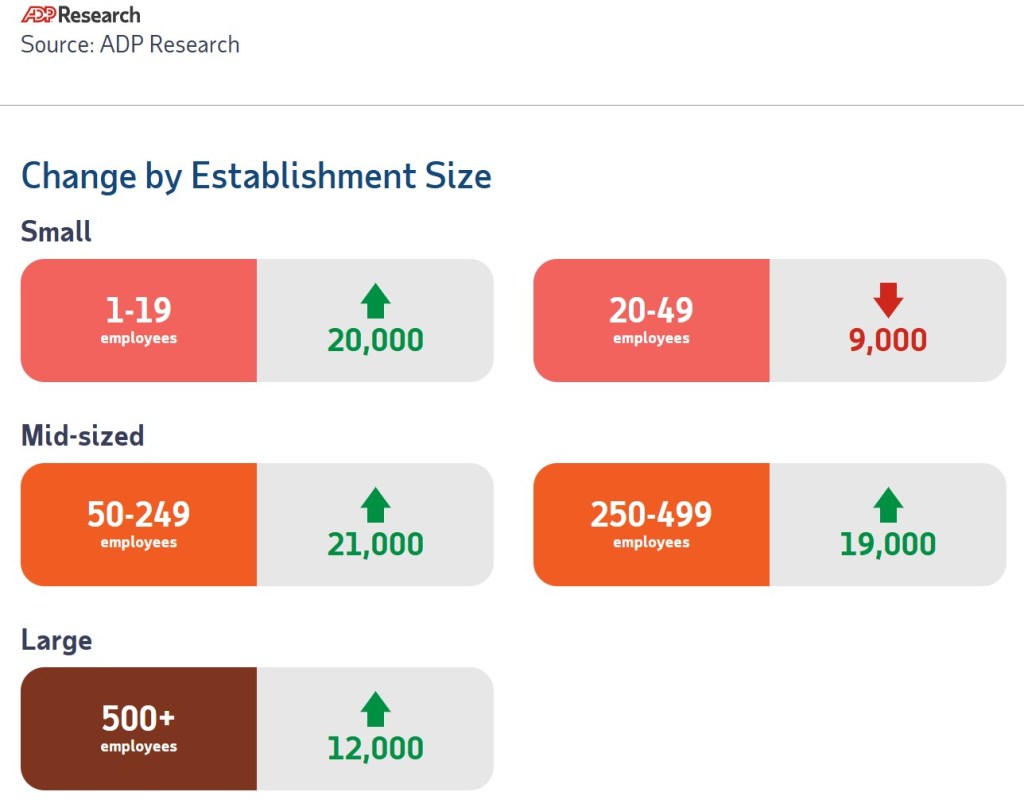
On the labor front, the ADP Employment Report showed just 62,000 jobs created in April—well below the 120,000 expected—adding to the uncertainty.
So, what does all this mean? It’s hard to say. Q1 data was likely distorted by pre-tariff stockpiling and global hedging strategies, making it difficult to read true underlying trends.
The bond market is caught in the crossfire of mixed signals. On one hand, softer job numbers and cooling core inflation support lower rates. On the other, rising headline inflation and whispers of foreign central banks, like China, reassessing their U.S. bond holdings could push yields higher. It’s a tug-of-war with no clear winner—at least for now.
http://www.YourApplicationOnline.com soft credit pull
-
Subscribe
Subscribed
Have a WordPress.com account? Log in now.

