-
What Happens when Fannie and Freddie go Public? And my take.
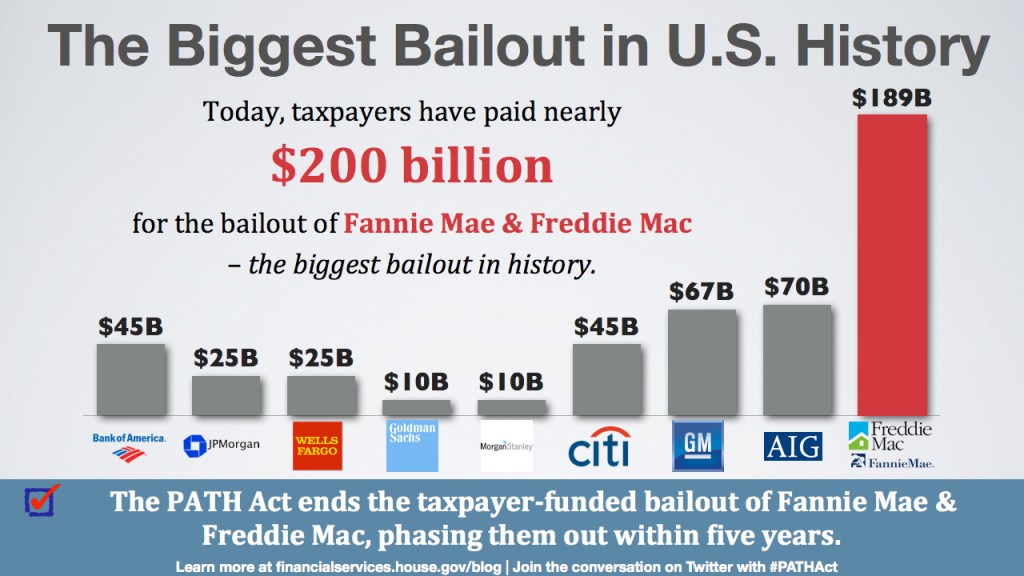
With a new prospect of Fannie Mae and Freddie Mac exiting conservatorship and potentially going public has sparked both fear and excitement.
Lets do a quick breakdown:
Positive Impacts:
- Windfall for U.S. Government – recoup bailout funds from 2008.
- Increased Market Efficiency – market driven decision making, competition and innovation.
- Reduced Government Risk – shifting losses to private investors.
- Capital Market Benefits – raise capital and enhance their financial stability.
Negative Impacts:
- Increase in Mortgage Rates – Privatization to higher returns and higher rates.
- Reduced Access to Credit – impacts to less qualified borrowers with higher credit standards.
- Market Disruption – Government to Private is complex and disruptive.
- Financial Instability – if mismanaged could destabilize housing market.
My Take:
I lived through the 2008 financial crisis and saw firsthand both the positives and the pitfalls when Fannie and Freddie began competing with subprime lenders for market share.
It was a fun ride — until it wasn’t.
Healthy competition is a good thing, and this move has the potential to spark innovation and open up the marketplace. That said, with the government still retaining a degree of control, the guardrails remain in place — and that’s reassuring.
Soft credit pull. YourApplicationOnline.com
-
FNMA ie Fannie Mae rate forecast end of year 2026 5.875%.
Fannie Mae lowered their rate forecast for 2025 to 6.2% to 6.1% and for end of year 2026 from 6% to 5.8%.
There are more than 4M borrowers with rates over 7% right now so this is welcome news. We can get you pre-qualified and ready to go when rates start dropping.
Soft credit pull http://www.YourApplicationOnline.com
Housing report Case-Shiller
Home prices rose 3.4% year over year. What’s interesting is the big cities 10-20 city indices were higher nationwide, showing that big cities are outperforming. the 10-city index is up 4.8% with the 20-city up 4.1%.
Durable Goods Orders
Fell 6.3% in April but less than the -7.8% expected. Tariffs are the Culprit.
With summer just around the corner, I thought I would share a Disneyland pic from last year.

-
Remember the “Flight to Safety” blog I did? lets recap. And to those who Sacrificed and serviced our Nation.
Tariffs, tariffs everywhere — but not a drop to drink.
Tensions escalated with more talk of a potential 50% tariff on the EU, as trade negotiations continue to stall.
The stock market didn’t take it well and responded with a selloff. As usual, when equities take a hit, bonds often benefit. It’s the classic flight to safety.
We’re seeing a bit of rate improvement this morning as a result.
Consumer debt and breakdown:
- Mortgage Debt $13T
- Autos $1.6T
- Student loans $1.6T
- Credit cards $1.2T
- Total Household Debt $18.2T
http://www.YourApplicationOnline.com

-
Just Sold my Homing Pigeon on eBay for the 22nd time. Seriously let’s talk Debt Ceiling.
Let’s jump right in!
Yesterday’s weak 20-year Treasury auction led to a selloff in the bond market, which pushed mortgage rates higher.
We’re also seeing upward pressure on global yields, and Moody’s recent credit rating downgrade for the U.S. certainly isn’t helping the situation.
On top of that, the House just passed a new budget—essentially a tax and spending bill—which is making bond markets nervous. Why? More spending means more debt, and that translates to more Treasury issuance. The market has to absorb all of that.
Looking ahead, August is shaping up to be critical. That’s when we’re projected to hit the X-date—the point at which the Treasury may no longer be able to fund the government or service our debt.
With all of that in play, the ripple effect showed up in April’s Existing Home Sales, which dipped 0.5% — coming in below expectations.
There’s clearly pent-up demand in the market, but with rates moving higher, many buyers are hitting pause and waiting for conditions to improve.
When rates drop, look-out it will get very busy very fast.
http://www.YourApplicationOnline.com

-
Supply and Demand, the Global Bond Market — one big happy family… and a Where’s Waldo picture.
Japan’s weak Treasury bond auction is casting a shadow over upcoming debt sales next week. Lower demand typically means higher yields — and that pushes rates up.
Meanwhile, the UK surprised markets with hotter-than-expected inflation. Investors were expecting a drop, but instead, the 10-year gilt yield moved higher.
Since we’re all part of a globally connected bond market, U.S. yields are rising in sympathy — though the reaction here has been relatively muted.
As for the nine Fed members who spoke yesterday, they focused on rising unemployment, persistent inflation, and ongoing uncertainty around tariffs.
No indication of a Fed rate drop just yet.
http://www.YourApplicationOnline.com soft credit pull

-
Let’s pull the Band-Aid off and pull up our bootstraps.
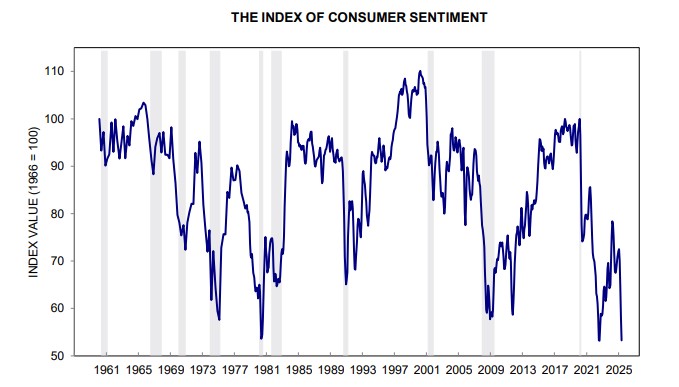
The University of Michigan reported that Consumer Sentiment fell to 50.8% in May, the second lowest reading since 1952 hen the tracking metric started.
Consumers expect inflation to rise to 7.3% over he next year.
Over 60% of respondents are expecting more unemployment over the next year.
To note: the survey was done prior to OK and China trade talks.
There will be 7 Fed speakers throughout the day. lets see what tomorrow brings.
http://www.YourApplicaitonOnline.com
-
Moody’s put me in a bad Mood, but good news it’s Picture day…
Stocks and Bonds are both lower following news that US was downgraded by Moody’s Ratings this weekend due to US debt. The debt is 123% of GDP which is high compared to most other nations.
Rates are slightly higher this morning.
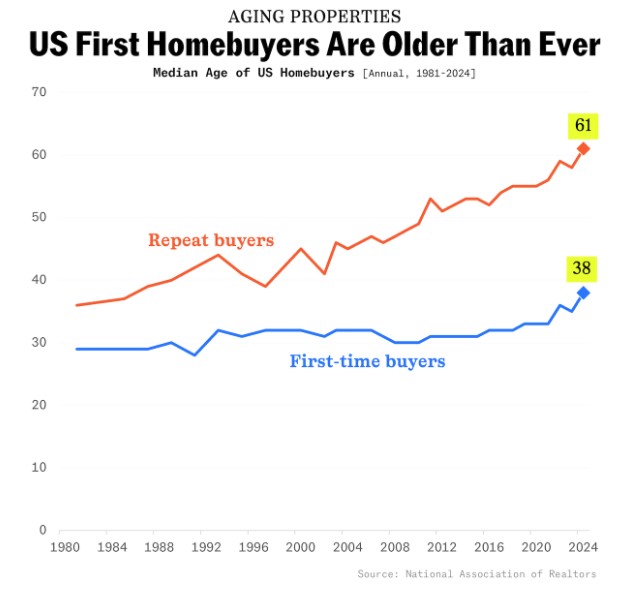
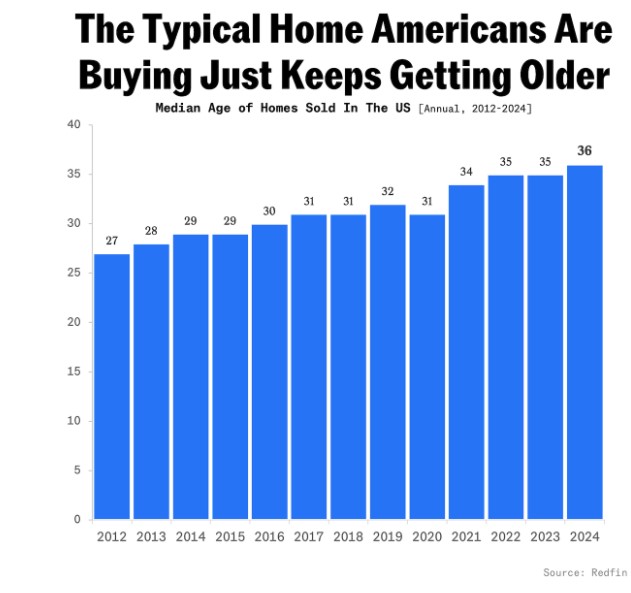
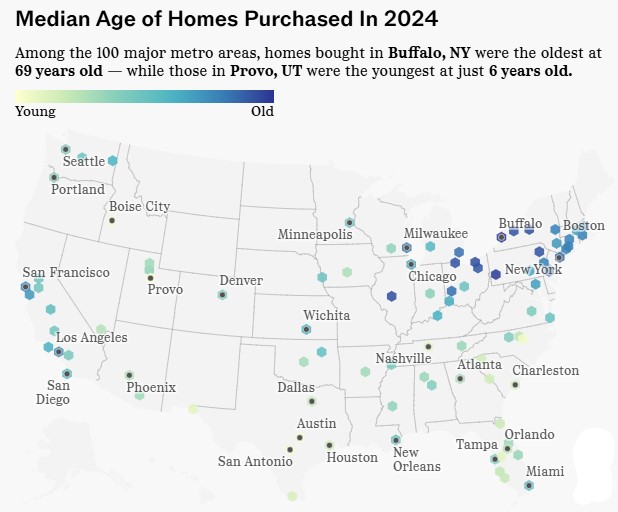
Interesting set of graphs below regarding age of buyers and homes across the US. Have a great week. http://www.YourApplicationOnline.com
-
What the Heck is a Bearish Engulfing Pattern, you may ask your self… Thanks Barry
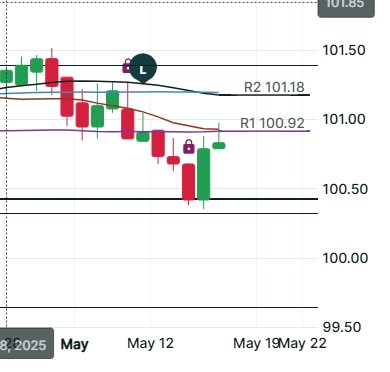
In trading terms, a Bearish Engulfing Pattern signals the start of a downtrend, which often indicates lower interest rates. To visualize it, think of a “V” shape: you slide down to the bottom, then quickly swing back up.
The image shows it best. We see this all the time but what is different is it comes off the heals of the PPI report yesterday and Japan’s GDP more negative than expected.
The global yields were lower in sympathy. Rates dropped.
Housing Starts and Permits
Housing Permits are forward looking indicator and its been trending lower. permits down 5%. Tariffs create uncertainty and builders are already on edge.
Housing Starts are a better read. They are relatively flat in April an annualized down 2%. Not a big drop.
Have a fantastic weekend and if any questions come up, feel free to reach out.
online mortgage application http://www.YourApplicationOnline.com
-
A Sponge can only hold so much Tariffs… I mean Water.

Walmart made a noteworthy observation, and the latest Producer Price Index (PPI) report backs it up.
While prices have remained relatively stable so far, Walmart pointed out that the full impact of the tariffs has yet to be felt at the consumer level.
The PPI data suggests that businesses are currently absorbing much of the cost, resulting in tighter margins. But that can’t last forever—eventually, those costs are likely to be passed on.
So even if inflation appears subdued for now, it’s clear that not all the pieces are in place. We haven’t herded all the cats into the barn just yet.
PPI came in at a negative 0.5% much cooler than the positive 0.2% expected.
Fed Chair Powell’s spoke this morning regarding reviewing their framework. Hum, not exactly sure what that means.
Inflation, Inflation, Inflation. the cure is worse than the disease. Lets drop the rates, restructure debt and let everyone take a deep breath. Just my opinion.
Let’s get you pre-qualified or your clients. http://www.YourApplicationOnline.com
-
Why do we keep pointing to the 10y Treasury Bond when talking rates? Trust me this is interesting.
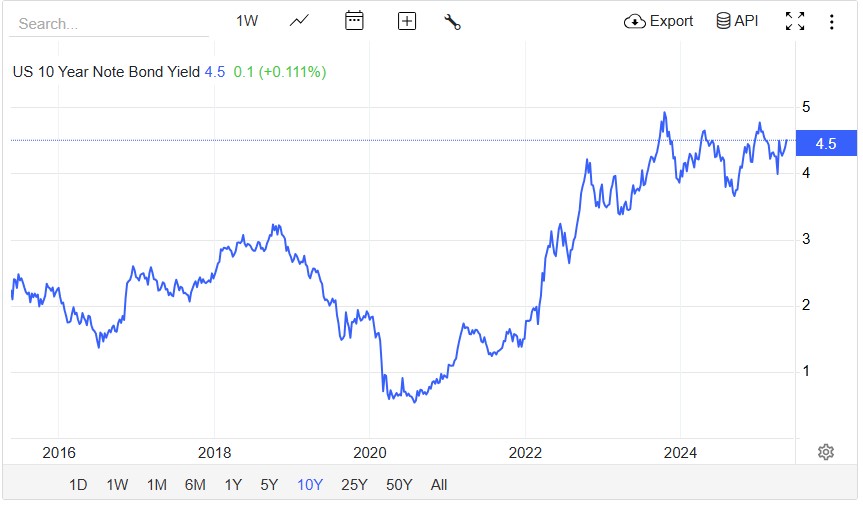
The 10-year Treasury bond and mortgage rates are closely linked because:
- Both represent long-term borrowing costs.
- Both compete for the same pool of investors.
When the 10-year Treasury yield rises, mortgage rates typically increase as well. This is because:
- Lenders must keep mortgages attractive compared to Treasury notes, which are seen as low-risk investments.
- Higher Treasury yields signal that borrowing is becoming more expensive overall.
In response, lenders raise mortgage rates to:
- Stay competitive with Treasury investments.
- Ensure they offer returns high enough to attract investors.
In a nutshell:
Lenders add a “spread” (a percentage point difference) on top of the yield to account for the higher risk of mortgages compared to Treasuries.
The 10-year Treasury yield acts as a benchmark for mortgage rates.
Online Mortgage application http://www.YourApplicationOnline.com
-
Subscribe
Subscribed
Have a WordPress.com account? Log in now.

