-
Trade deal behind us, Inflation Down, Powell are you awake or still sleeping?

It’s still unclear whether the full effect of the tariffs has hit the market yet.
Tomorrows Producer Price Index will probably tell us more in the next round of data since it tracks what businesses are paying for goods — which often shows inflation trends before they hit consumers.
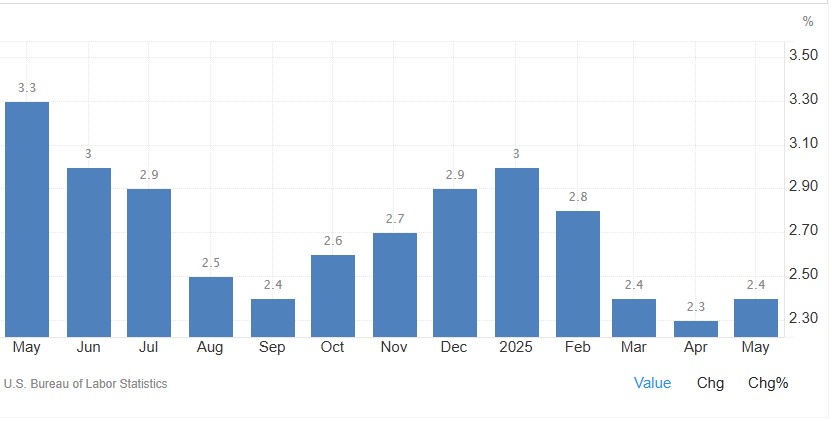
The Consumer Price Index (CPI) came in at just 0.1% — well below expectations. However, on a year-over-year basis, inflation still edged up slightly from 2.3% to 2.4%, just under the street’s forecast of 2.5%.
The World Bank lowered its global growth outlook from 2.7% to 2.3%, and cut U.S. growth projections from 2.3% to 1.4% — yet another sign of economic retraction.
Taken together with the softer-than-expected inflation numbers, this could give the Fed additional incentive to move toward rate cuts sooner rather than later.
Let’s get you financially tuned up and ready to buy, sell or refinance. http://www.YourApplicationOnline.com
-
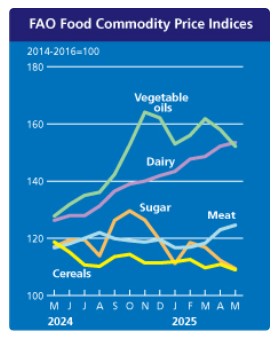
Tomorrow’s CPI inflation Report. Food Price Index from a different perspective. (Graphs, Yay graphs)
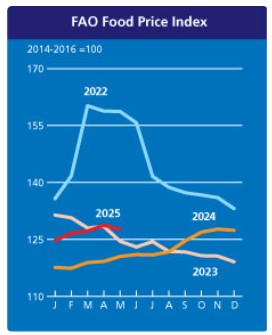
These two graphs highlight the commodity price of goods. An interesting data point.
Bonds remain on edge as trade negotiations between the US and China continue. Positive developments have sparked a rally in stocks, which is coming at the expense of bonds.
The CPI report is scheduled for release tomorrow. This marks the first month potentially affected by tariffs, though the market expects only a minimal impact.
A key point in the deregulation debate centers on the required capital ratios banks need to uphold. Treasuries are not expected to affect these ratios. Market consensus anticipates a potential drop in rates of 50 to 70 basis points—roughly equivalent to a 3/8 to 1/2 percent decline.
Almost Wednesday… YourApplicationOnline.com soft credit pull.
-
Why Inflation Numbers are so Impactful to Bonds and Mortgage Rates.
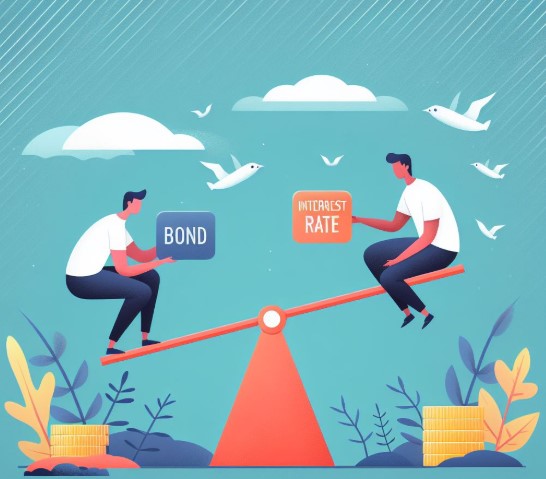
The Consumer Price Index (CPI) report is set to be released this Wednesday. This release is especially important because it will be the first month reflecting the early impact of the new tariffs.
Let’s talk impact of Inflation bonds and mortgage rates.
Inflation reduces the purchasing power of money over time — meaning a dollar today buys less in the future.
How this affects the bond market:
- Bond yields rise with inflation:
Investors want to be compensated for the loss of purchasing power. If inflation is rising, they’ll demand higher yields (interest rates) on bonds to make up for it. - Bond prices fall:
When yields go up, existing bond prices drop. This is because older bonds with lower fixed rates become less attractive compared to newer ones offering higher returns. - Longer-term bonds are hit harder:
The further out the maturity, the more inflation can eat away at returns. So long-term bonds typically drop more in price when inflation expectations rise.
In short:
Inflation = higher yields = lower bond prices.
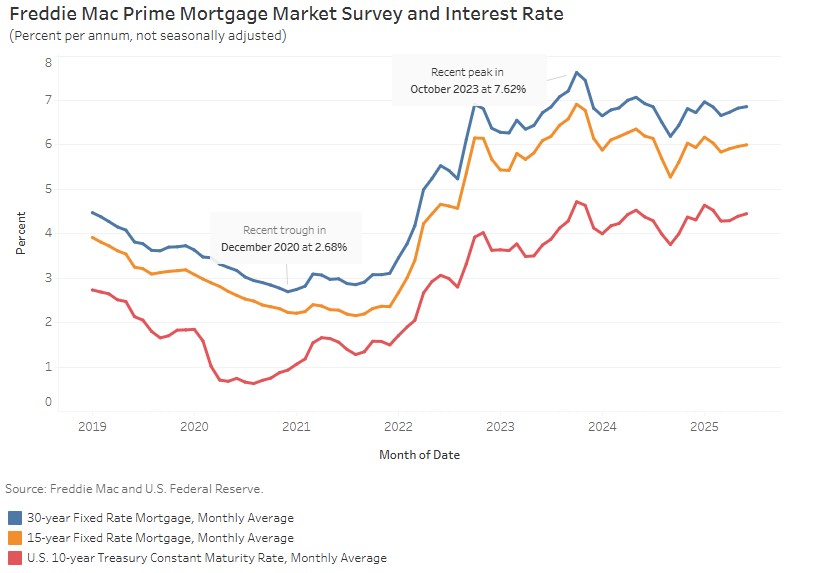
And since mortgage rates are closely tied to the bond market (especially the 10-year Treasury), inflation often means higher mortgage rates too.http://www.YourApplicationOnline.com
- Bond yields rise with inflation:
-

The Bureau of Labor Statistics (BLS) reported that 139,000 jobs were created in May, above the 125,000 expected.
However, the challenge with these reports is that they are consistently revised downward after the initial release.
- March was revised down by 65,000, bringing the total to 120,000.
- April was revised down by 30,000 to 147,000.
Despite the pattern, the initial headlines do the damage, while the quieter revisions often go unnoticed — or perhaps bond traders just have short memories.
Let’s dig into the details for a moment.
The Quarterly Census of Employment and Wages (QCEW) for Q1 revealed that the Bureau of Labor Statistics (BLS) overstated job growth by 500,000 jobs.
Yes — half a million jobs. Let that sink in.
This raises real questions about the accuracy of headline employment numbers and their impact on markets.
Bond market did not like this report but rates are holding onto gains this last week. http://www.YourApplicationOnline.com
The top photo captures my wife’s shoes catching the morning sun — a quiet, golden moment.
Have a fantastic weekend!

-
Is BLS BS? Garbage in Garbage out.

Speaking from my Engineering days, If the data collected is inaccurate, incomplete, or low quality (“garbage in”), any analysis, insights, or decisions made using that data will also be flawed or misleading (“garbage out”).
The Wall Street Journal article spoke to the staffing shortages at the Bureau of Labor and Statistics -BLS a U.S. Government agency hit by staffing cuts.
The BLS Report is utilized to calculate the inflation rate. These are actual people or statisticians going out and physically checking prices on groceries and other commodities. With less staff they have to guess or substitute.
Other Headlines:
- Challenger Job Cuts: Announced layoffs are up 80% compared to this time last year.
- Beige Book: Reports declining economic activity across several regions.
- Initial Jobless Claims: Increased by 8,000 to a total of 247,000.
My Take:
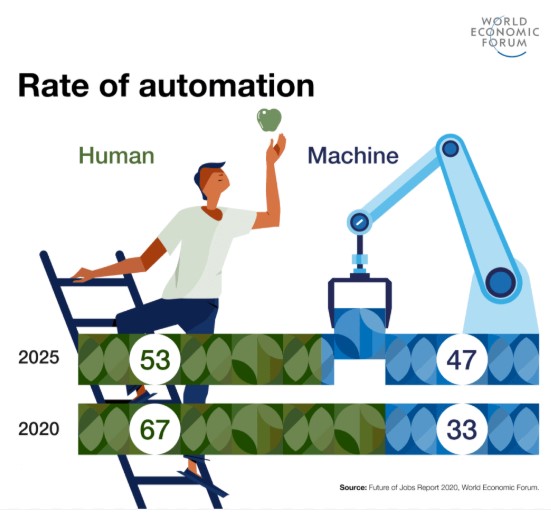
While these headlines may seem negative at first glance, they actually signal positive movement for interest rates. Slower job growth and economic softening tend to ease inflation concerns — a key focus for rate policy.With the BLS report due tomorrow, expectations are for a cooling labor market, marked by slower hiring and a potential uptick in unemployment.
If that plays out, we could see rates begin to trend downward — possibly meaningfully — as we move into summer.
http://www.YourApplicationOnline.com soft credit pull.
-
What does Deflation look like in real time. And Only 37,000 jobs created.

Those of us who’ve been around the block a few times — say, 12 years ago — remember what deflation looked like.
It was a magical time when:
- Steak night turned into “Hey, chicken’s great too!”
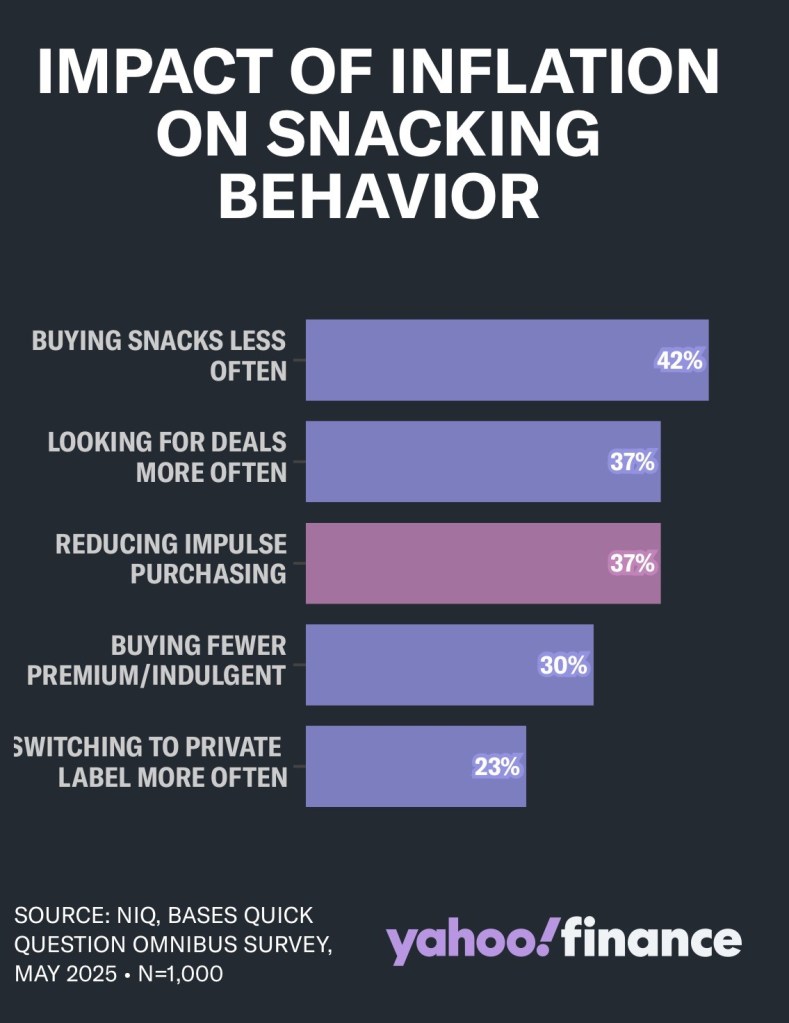
- That snack your kids love? Suddenly it was, “Let’s try something similar… and half the price.”
- Craving a soda? Congratulations! You’ve discovered the kitchen faucet — nature’s original soft drink, now with 100% fewer bubbles and all the hydration.
Deflation wasn’t just economic — it was a lifestyle.
The May ADP Jobs Report came in well below expectations, with just 37,000 jobs created versus the 115,000 forecasted. The sharpest weakness was seen among small businesses (1–49 employees).
In a notable detail, goods-producing businesses lost 2,000 jobs — a potential canary in the coal mine for broader economic trends.
My take:
If job growth continues to decline, we’re likely to see bond yields fall, which in turn puts downward pressure on interest rates. A softer labor market typically supports rate relief.Have a fantastic rest of your week and always feel free to reach out to our team. http://www.YourApplicationOnline.com.
-
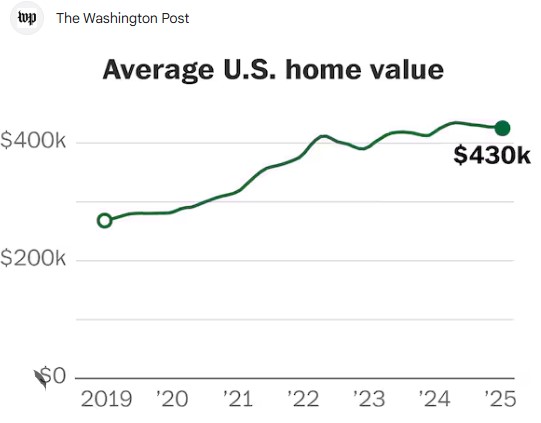
Just one year of 4% appreciation turns a $500,000 home into a $520,000 asset.

Your home (or future home) is a solid, appreciating asset.
- Home prices rose 0.6% in March.
- April data projects a 5.3% growth in home values over the next 12 months.
Job market highlights:
The Leisure and Hospitality sector saw a decline for the third consecutive month, removing 92,000 job openings in April alone.
Job openings increased by 191,000, reaching 7.39 million — well above estimates.
The quits rate fell to 2%, a historic low — indicating fewer people are confident enough to leave their current jobs.
Most new job openings came from the Professional and Business Services sector.
While the bond market moved in a rate-friendly direction, it’s clearly staying measured and reserved.
http://www.YourApplicationOnline.com
-
The Wealth Effect Cuts Both Ways: It’s Impact on Today’s Market and what’s up Redfin?

Not one to shy away from a clicky headline myself, but I think Redfin might be playing fast and loose with their math — or borrowing a calculator from a toddler.
They claim there are 1.94 million sellers and 1.45 million buyers… which sounds impressive until you remember that current inventory is 1.45 million, and about 500,000 of those are already under contract. That leaves just 960,000 active listings.
So unless we’ve entered a parallel universe where sellers are cloning homes or buyers are invisible, something doesn’t quite add up.
Front-Running and the GDP
There’s an old adage: “History is written by the winners.” In this case, we saw a spike in inventory driven by front-running — companies buying ahead of the anticipated tariffs.It’s a reminder that information is often presented by those in control, not necessarily those most affected. The GDP data may show a temporary boost, but it’s not always the full story — sometimes it’s just the version told by the ones holding the pen.
My Take
Tariffs impact more than just the cost of goods — they also weigh heavily on consumer confidence. The unpredictable, on-again/off-again nature of tariff policies creates uncertainty, which is never good for anyone — whether you’re a business owner or a consumer. Stability and clarity are key to sustained economic confidence.
http://www.YourApplicationOnline.com Soft Credit pull get qualified.

-
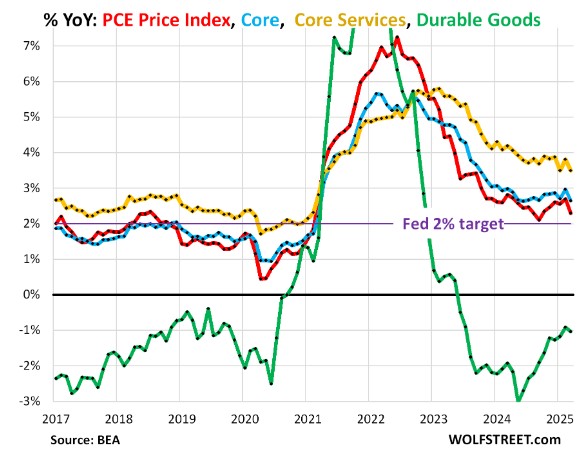
Inflation drops to 2.1%. Powell are you listening or still looking in the rearview mirror? Just asking.

A face-to-face meeting between Fed Chair Powell and the President — described as cordial at best.
We’re all hoping for mortgage rates to come down. Elevated rates are putting pressure on the housing market, keeping millions of homeowners locked into sub-3.25% mortgages and discouraging them from selling. This dynamic contributes to historically low inventory and, in turn, continues to push home prices higher.
At some point the cure is worse than the disease.
Personal Consumption Expenditures (PCE) rose 0.2% as expected
- Personal Consumption Expenditures (PCE) rose 0.2% as expected
- Incomes rose 0.8% expected as 0.3%
- Social Security payments rose 6.9%
- Trend for PCE continues to move down. Good News.
Have a fantastic weekend. we feel the tide shifting in the right direction.
http://www.YourApplicationOnline.com
-
An interesting thing happened on the way to the Forum – grocery store. And Tariff reprieve
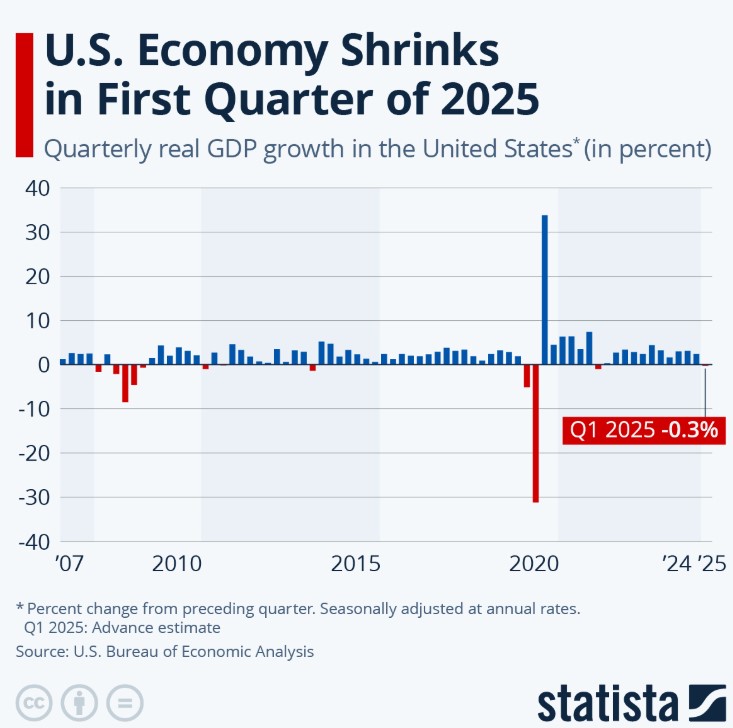
Q1 GDP came in at -0.2%, slightly better than the expected -0.3%, but still reflects a slowdown—particularly in personal spending, which rose just 1.3% compared to the 1.8% estimate.
This points to weaker consumer demand, which in turn eases pricing pressure. With fewer buyers in the market, retailers are often forced to lower prices to attract spending—ultimately helping to bring inflation down.
The power of the consumer at work.
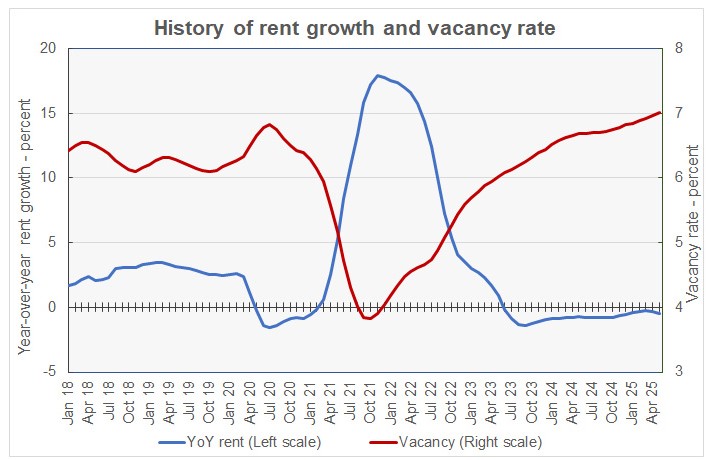
Another sign of slower consumer spending comes from the latest Apartment List Rent Report, which showed new rents rose just 0.4% in May, while rents are actually down 0.5% year-over-year.
This is especially notable because May is typically a peak season for rentals, when demand — and prices — usually trend higher.
Also worth noting: the national vacancy rate is holding at a historically low 7%, a key factor we haven’t touched on before.
The halt on Tariffs has had a positive impact not only to the stock market but the bond market as well.
http://www.YourApplicaitonOnline.com
-
Subscribe
Subscribed
Have a WordPress.com account? Log in now.

