-
No Rate Cut but Dissent for the first time. This is Important.

For the first time since 1993, we have two dissenters — Waller and Bowman — both favoring a 0.25% rate cut.
The key shift in language: “The growth of the economy has moderated,” replacing previous references to “expanded,” signals a more cautious tone.
A growing number of Fed members are leaning dovish, pushing for a rate cut sooner rather than later.
Personal Consumption Expenditures (PCE), the Fed’s preferred inflation gauge, rose 0.3% — right in line with expectations.
However, the 3-month annualized rate jumped from 2.0% to 2.6%, a clear sign that tariffs are starting to have an impact.
My take: Powell needs to ease up. These high rates hit everyday people, not the big guys. I get the Fed’s fear of an overheated economy—but from where I’m standing, it doesn’t look like we’re anywhere close. Why not cut now?
-
JOLTS got a Jolt. Job Opening down, rates down as well.
JOLTS Report – Job Openings and Labor Turnover Survey
The latest JOLTS report showed hiring fell by 275,000, coming in 113,000 below expectations. The hiring rate declined from 3.4% to 3.3%, marking the lowest level since 2013 (excluding the COVID period). This points to a clear slowdown in hiring activity.
Quits rate also remained low at 2% meaning less people changing jobs.
Markets responded accordingly, with interest rates moving lower on the news.
Consumer Confidence: Feeling Good… Kinda
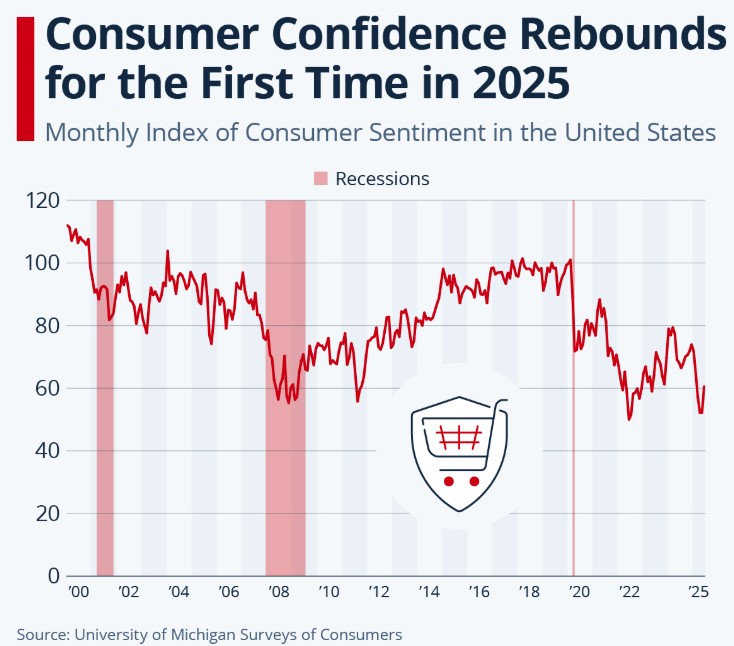
Consumer confidence rose from 95.2 to 97.2 a 2-point boost! 🎉
But before we throw a parade, the expectations component is still dragging below 80.
Translation? Americans are basically saying:
“I feel good today… but ask me about next week and I’ll be hiding under my desk with snacks.”Lets get you pre-approved. Soft credit pull http://www.YourApplicationOnline.com
-
Tariffs are on Import Cost not Total Cost of Goods. I’ll explain why it matters.

I recently went to a clothing store and bought a pair of khaki pants for $76. They were tan, fit well, but I digress. That $76 represents the Total Cost of Goods.
In the context of importing, the Import Cost refers specifically to the price paid to a foreign supplier for the goods themselves. The Total Cost of Goods, however, includes all expenses incurred to get those goods to their final destination, ready for sale. These expenses may include:
- Initial purchase price
- Shipping
- Customs duties
- Insurance
Understanding the full cost is key to knowing where tariffs actually apply.
In my example, the new 15% tariff recently signed between the EU and the U.S. applies only to the cost of goods estimating around $21, not the retail price of $76. That means the tariff is based on a much lower dollar amount—specifically, the price paid to the foreign supplier, not the final selling price to the consumer.
It’s a huge week for inflation, jobs report and the Feds meet.
Lets get you approved. http://www.YourApplicationOnline.com
-
After Yesterday, Less of a chance Powell finishes his term. And Reflective Pic.

After yesterday’s meeting between the President and Fed Chair Powell, the anticipated fireworks didn’t quite materialize—but make no mistake, Powell’s days may be numbered. What that means for rates? We don’t know yet, but the implications could be significant.
Durable Goods Orders dropped 9.3%, but don’t let that headline mislead you, it’s almost entirely due to last month’s spike in large aircraft orders. Context matters.
Looking ahead: next week brings some heavy hitters, Jobs numbers, Q2 GDP, and PCE inflation. Markets are watching unemployment closely, with expectations for a slight uptick from 4.1% to 4.2%.
Found this image yesterday, worth a pause. A reminder to consider the gap between how we project ourselves and who we truly are.
Lets get you pre-approved for a purchase or refi. Soft credit pull. http://www.YourApplicationOnline.com
-
57.8% of statistics are made-up Median Home Price Dropped or is it fuzzy math at work.
The median home price was reported at $401,800, a decline of nearly 5% from $422,700.
This shift isn’t necessarily due to falling home values. There were 5,000 fewer homes sold over $500K and 5,000 more homes sold under $400K. This change in the mix of homes sold likely influenced the median.
Initial jobless claims fell by 4,000 to 217,000, signaling some resilience in the labor market. However, continuing claims remain elevated, hovering around levels last seen in 2021, suggesting that while layoffs may be slowing, re-employment is taking longer.
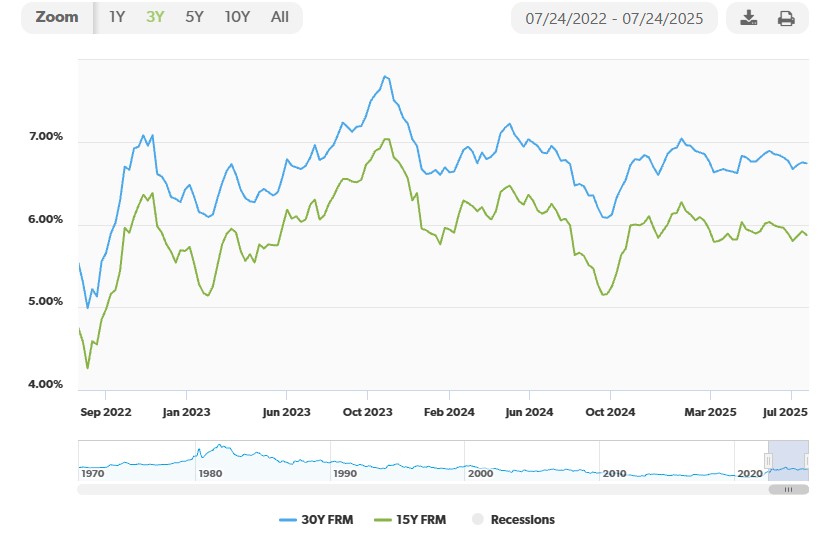
National Average Mortgage Rates:
- 30-year fixed: 6.77%
- 15-year fixed: 6.01%
- 30-year fixed refinance: 6.87%
- 15-year fixed refinance: 6.22%
Freddie Mac July 2025
http://www.YourApplicationOnline.com
-
Existing Home Sales Fell 2.7% expected 0.7% . Why? Rates, I’ll explain.
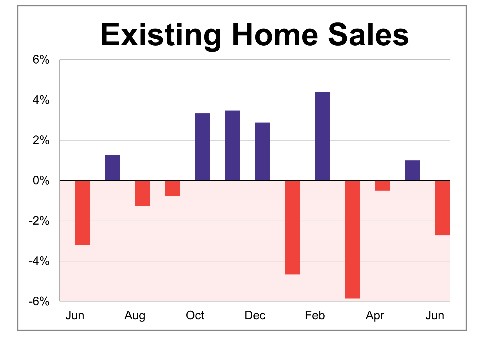
Closings in June reflect contracts written back in April and May, when interest rates were at their highest levels since last year. At first glance, the numbers might make you say “OMG,” but it’s important to dig deeper.
Despite the headline reaction, there’s still a strong case for lower rates ahead and increasing inventory. Yes, inventory has been ticking up—but so have rates. The market remains in flux, and understanding the timing behind the data is key.
In a strained housing market, rising inventory tends to bring buyers off the sidelines. Combine that with lower interest rates, and you’ve got the ingredients for a real frenzy.
My thoughts and insight:
Housing prices aren’t going down—they’ve likely stabilized and become more in line with reality. That’s not a bubble bursting; it’s normalization.
Even in some of the hardest-hit areas like Florida and Texas, where we’ve seen price declines, values are still significantly higher than they were in 2019. The long-term fundamentals of the housing market remain strong.
Get pre-qualified, get your clients pre-qualified soft credit pull http://www.YourApplicationOnline.com
-
How the New Bill Impacts Real Estate Agents, Buyers, Sellers, and First-Time Homeowners Why This Matters More Than You Think
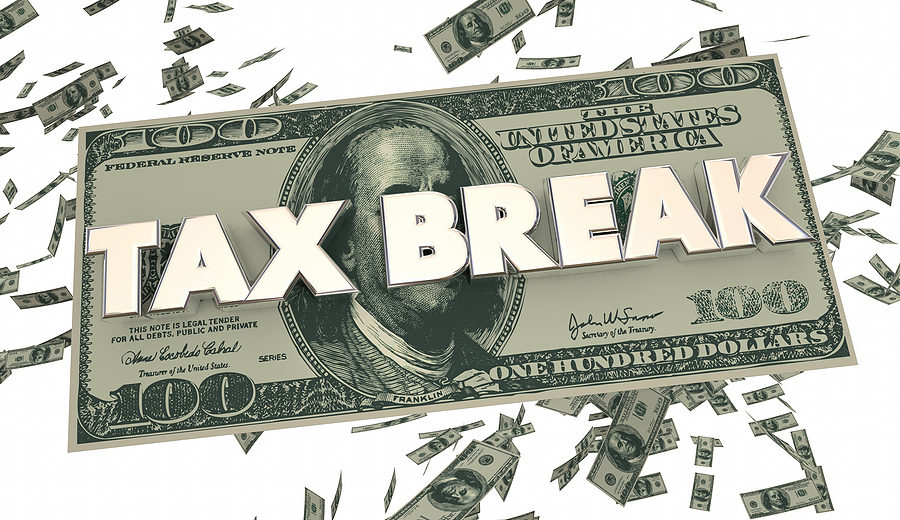
Let’s take a closer look at the relevant provisions:
Permanent extension of the 2017 (Tax Cuts and Jobs Act) personal income tax rates, which were scheduled to sunset after 2025. The highest marginal tax rate will remain at 37%, with inflation adjustments (protecting more income from taxes) for the 10%, 12% and 22% brackets. The standard deduction was also permanently increased (nearly doubled!) to $15,750 for single filers and $31,500 for joint filers. There is an additional $6,000 deduction for seniors through 2028.
Permanent protection for mortgage interest deduction. This significant tax benefit for homeowners (especially in the early years of a mortgage), is now unassailable. The maximum mortgage debt (on which all mortgage interest is deductible) remains set at $750,000.
A temporary (5-year) quadrupling of State and Local Tax (“SALT”) deductions. The previous SALT deduction was $10,000. Now most people will be able to use up to $40,000 of state and local taxes paid to reduce federal taxable income. If you own a big home in a state/municipality with high property tax rates, this could be a major benefit.
Permanent protection for 1031 exchanges. These ‘like kind’ exchanges – used extensively by property investors – allow for the deferral of capital gains taxes on properties sold, if a home of equal or greater value is purchased within a few months of the sale date.
Permanent enhancement of the Low-Income Housing Tax Credit. The LIHTC program encourages private-sector investment in affordable housing by offering a 10-year stream of tax credits, reducing reliance on government-financed construction. Under the OBBBA, the total amount of tax credits available was significantly expanded.
Permanent protection for qualified business income deductions. Small business owners, gig workers and real estate agents can continue to deduct up to 20% of their ‘qualified business income’ from federally taxable income. This deduction was set to expire after 2025. Now it’s permanent.
online application http://www.YourApplicationOnline.com Soft credit pull
-
Rate Improvement and some mixed signals on Tariff deadline.

We’re seeing encouraging rate improvements today following comments from Treasury Secretary Bessent, who emphasized that the quality of the proposed tariffs matters more than meeting the August 1st deadline.
This contrasts with Commerce Secretary Lutnick’s firm stance that the deadline is fixed.
On the housing front, completions are down 25% from the August 2024 peak, but construction hiring is on the rise, making up roughly one-sixth of all public sector job gains.
For the week, we’re floating rates for our clients and advising refinance clients to get their documents ready.
If rates drop later this summer as expected, there will be a surge of activity—and being prepared now means you’ll be first in line when the window opens.
http://www.YourApplicationOnline.com Soft Credit Pull.
-
Fed’s Waller Signals July Rate Cut: “Time to Stop Restricting”

Waller is a respected Fed Governor, a current voting member, and even considered a top candidate for the next Fed Chair.
His recent comments point to softening inflation, questionable BLS jobs data, and, echoing my biggest frustration, the need to move away from an overly restrictive policy stance.
He also noted that the Fed is currently 1.25% to 1.5% above the neutral rate signaling that monetary policy remains overly restrictive. A return to neutral would bring the Fed Funds rate down to around 3%, which typically translates to mortgage rates about 1.5% higher.
Housing news:
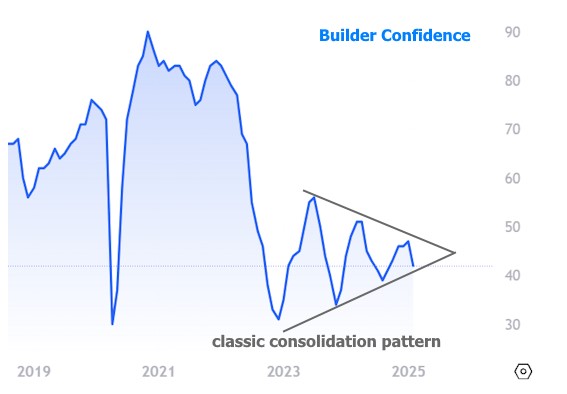
Builder sentiment, while still below average, ticked up to 33 remaining under the neutral level of 50. Housing permits held steady, but overall inventory remains tight, continuing to put pressure on supply.
That’s all for this week. Any open houses or questions, feel free to reach out anytime. 800-424-9293 http://www.YourApplicationOnline.com
-
Home Builders Slashing Prices. At Highest rate in 3 years.

Big News This Morning: Builder Confidence
Builders don’t just think about today, they’re looking 1, 2, even 3 to 10 years ahead. They’re creating homes that must be sold before the paint dries.So when builder confidence ticks up or down, it says a lot about where they believe the market is heading.
This isn’t guesswork, it’s money on the line.
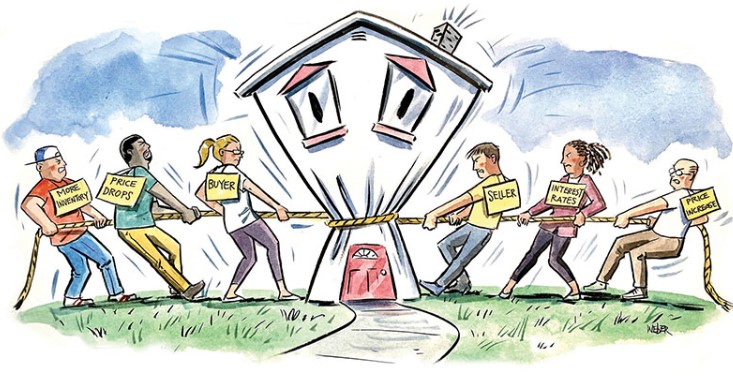
Anecdotally, we’re hearing that buyers are holding out for lower rates, while sellers, though cooperative, are hesitant to drop their prices.
My thoughts:
Watch the dog, not the tail.
Focusing too closely on one data point can give a false read on the bigger picture.Inventory is rising and that trend looks set to continue. Rates, while still higher than we’d like, are starting to ease.
Buyers may be sitting on the sidelines for now, but make no mistake—there are plenty of them, and they’re watching closely.
Apply now http://www.YourApplicationOnline.com
-
Subscribe
Subscribed
Have a WordPress.com account? Log in now.

