The S&P Global Manufacturing report showed the economy running hotter than expected, triggering expectations for more policy tightening.
Comments on inflation regarding average input costs for goods and services, which surged higher (oil) hit their highest level since 2022.
Comments from Iran’s President at the UN, which were inflammatory.
Fed Governor Michael Barr also contributed to the bond selloff, stating that further rate hikes are likely to be needed.
Suffice to say, it was a bad day yesterday, and today is shaping up to be the same.
Some good news: New Home Sales, signed contracts on new homes rose 6.4% in August, with an annualized rate of 684,000, much stronger than the 620,000 estimate.
Part of this may be due to builders incentivizing buyers with massive rate buydowns and lower prices to move inventory.
If rates remain high, a lot of buyers will stay on the sidelines. Inventory is up, and most markets are softening, meaning there are opportunities to snag a great home at a fantastic price, which can help offset higher interest rates.
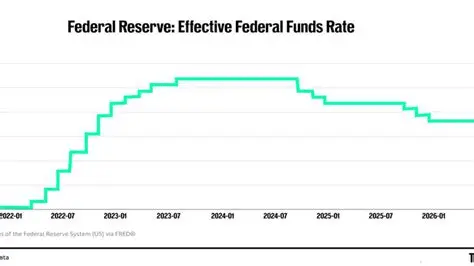
The Federal Reserve is expected to hike rates 25bp this Wednesday. The bond market has been on a tear, dragging mortgage rates along for the ride like an unwilling dance partner.
The 10-year Treasury yield is sitting at 4.99%, just a hair below the scary 5.00% mark. For context: back in late February, the 10-year was comfortably under 4.00%. That’s not just a 1-point difference in yield, it’s translated into more than a 1-point rise in actual mortgage rates.
Here’s the part nobody explains well: as rates climb, lenders get nervous about refinances, so any loan made now has a shorter expected life.
That uncertainty gets priced in as an extra spread on top of the Treasury yield, widening the gap between the 10-year and your actual mortgage rate.
In English: it’s not just what the 10-year is doing, it’s thegap between the 10-year and the mortgage rate that decides your payment, and right now, that gap isn’t doing anyone any favors.
Well, That Escalated Quickly
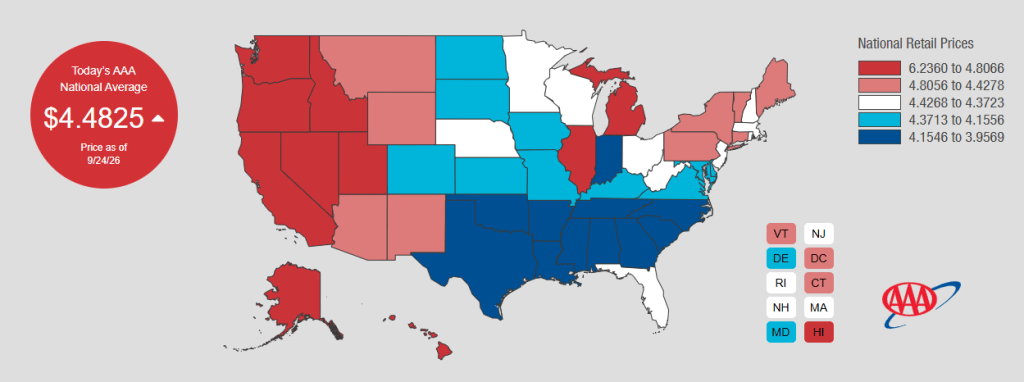
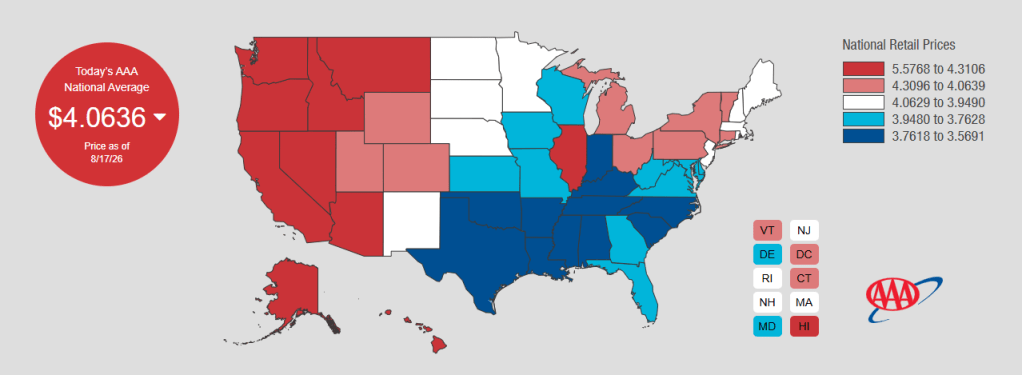
There’s a lot happening in the Middle East right now, and none of it is good news for your gas tank.
Saudi Arabia has shut down its East-West pipeline, the 7-million-barrel-a-day workaround built specifically to bypass the Strait of Hormuz, after a drone strike hit the line near Medina. So the backup plan for the backup plan just took itself offline. That’s not a great sign when you’re already down to Plan C.
The Houthis have seized Perim Island, a strategic chokepoint sitting right in the middle of the Bab el-Mandeb Strait, the “Gate of Tears” at the mouth of the Red Sea. Translation: they now have another lever to squeeze oil shipping, right as the Hormuz route was already struggling. The Red Sea and the Gulf are basically tag-teaming the global oil supply at this point.
My Take
The Fed is expected to raise rates because CPI inflation is running hot, but that inflation print is almost entirely a function of oil and diesel prices, with diesel now sitting at record highs. Diesel isn’t just a “gas at the pump” story either; it’s the backbone of trucking, shipping, farming, and manufacturing. When diesel spikes, everything that touches a truck gets more expensive.
Here’s the problem: raising rates doesn’t fix any of that. The economy is already slowing. This isn’t a “too much demand” inflation problem, it’s an oil supply problem, and the Fed doesn’t have a lever for pipelines getting droned or islands getting seized. Hiking rates into an oil-driven inflation spike is like turning up the AC because the house is on fire.
The bond market has a reason to be nervous today. The 60-day U.S.-Iran ceasefire framework has expired without a final agreement, and negotiations remain stalled. Both sides have accused the other of violating the agreement, while the biggest sticking point remains the Strait of Hormuz.
And this matters to mortgage rates.
The market had been hoping that a lasting agreement would remove some of the geopolitical and oil-price risk that has been pushing inflation expectations and long-term interest rates higher. A genuine de-escalation could take some pressure off bonds. In fact, analysts have noted that resolving the conflict could remove an energy-risk premium, although it wouldn’t automatically send mortgage rates lower.
But today, we’re back to the big question:
What’s next?
If negotiations restart and we see a credible agreement to reopen the Strait of Hormuz, we could see oil prices and inflation expectations move lower—and that could be very positive for bonds and mortgage rates.
If tensions escalate, however, the opposite could happen. Higher oil prices create renewed inflation concerns, and investors could demand higher yields to compensate for that risk. Shipping through Hormuz has already fallen dramatically from pre-war levels, keeping the market on edge.
The good news is that we also have some powerful economic forces working in the opposite direction: weak employment, softer CPI, weaker PPI and slowing consumer spending. Those are all arguments for lower rates.
So right now, we’re watching two competing stories:
📉 Economic data says rates should move lower. 📈 Geopolitical uncertainty says be careful.
That’s why the bond market is nervous.
The next major move in mortgage rates may come down to whether the Iran conflict moves toward resolution or escalation. For borrowers, this is another reminder that markets can change quickly.
The data is giving us reasons to be optimistic. Now we need the geopolitical picture to cooperate.
Home sales are pushing higher despite rising interest rates, largely driven by the ongoing shortage of available inventory.
At the same time, builders have started adjusting prices to keep sales moving, but overall, the median home price has remained relatively stable, highlighting the balance between limited supply and steady demand.
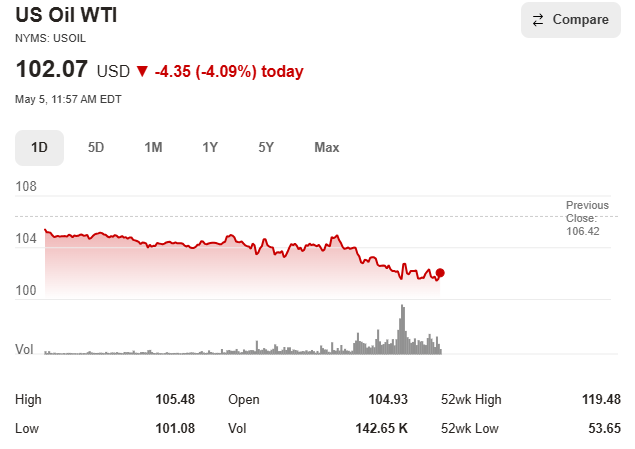
Oil is now trading well over $100 a barrel with no clear signs of meaningful easing. Just two months ago, we saw prices dip below $60, and mortgage rates followed, briefly dropping under 6%.
Since then, the conflict with Iran has changed the entire trajectory.
Oil has surged to multi-year highs due to supply disruptions and ongoing tension in the Middle East, particularly around the Strait of Hormuz. That matters because energy prices feed directly into inflation, and inflation is the single biggest driver of interest rates.
Here’s the chain reaction playing out in real time:
Conflict disrupts oil supply
Oil prices spike
Inflation expectations rise
The Fed stays higher for longer
Bond yields increase
Mortgage rates move up
We saw this almost immediately, rates jumped from below 6% to the mid-6% range as the conflict escalated.
And the longer this conflict drags on, the more it shifts from a short-term shock to a structural issue. The IMF is already warning that prolonged conflict could push oil toward $125 and keep inflation elevated globally.