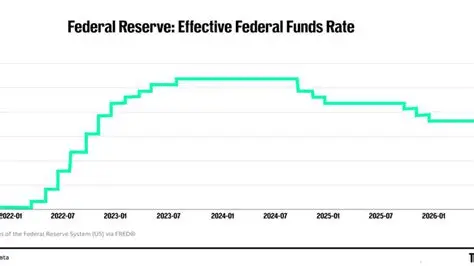
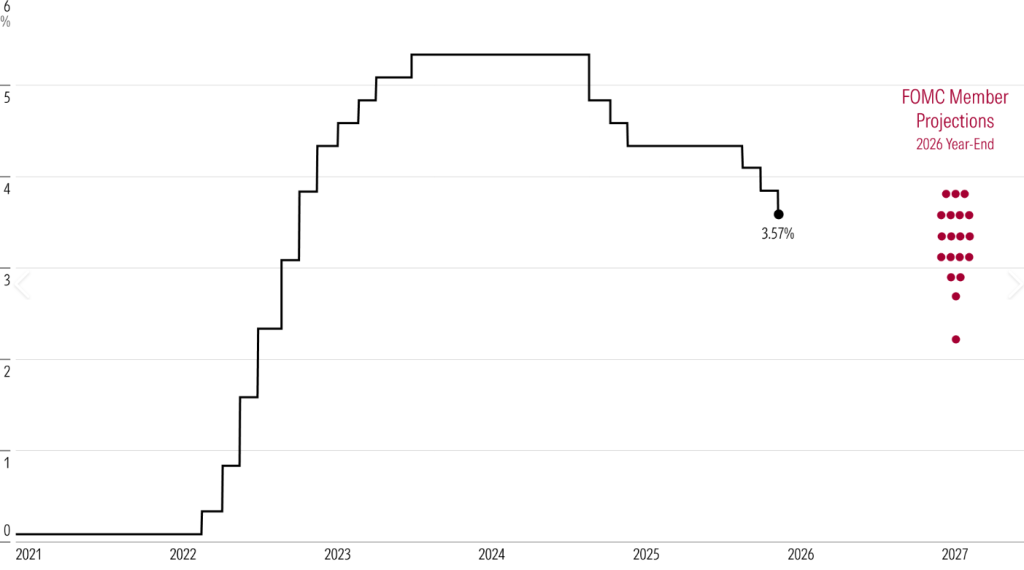
Fed President John Williams: “There is no need for urgency, and the Fed has time to gather more information.”
Translation: A rate hike is unlikely.
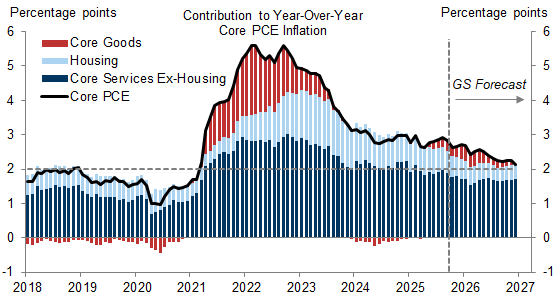
Personal Consumption Expenditures (PCE) came in at 0.3% last month, one-tenth lighter than expected. Year-over-year, it dropped from 3.7% to 3.4% headed in the right direction at this point.
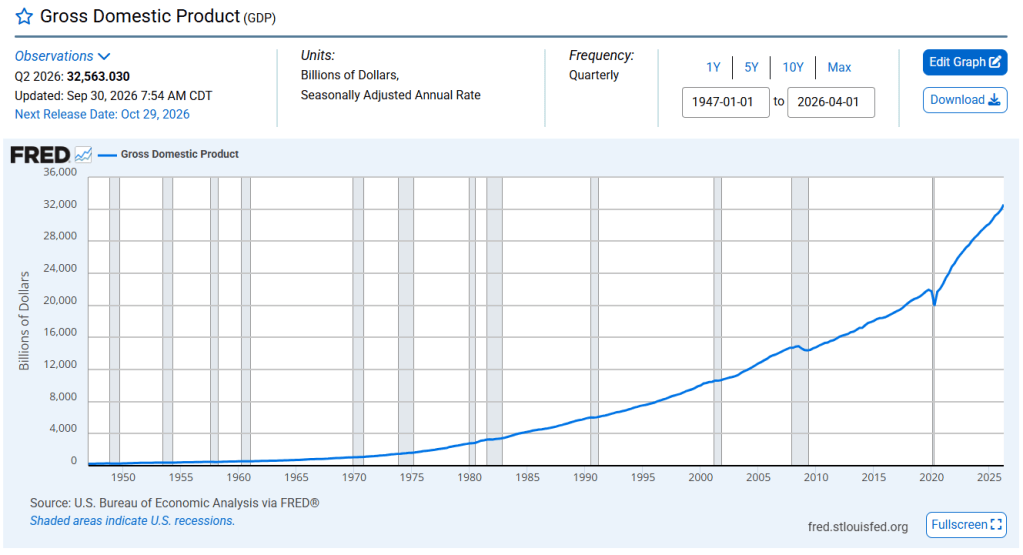
Q2 GDP came in at 2.2%, versus the 1.5% expected.
The ADP Employment Report showed 90,000 jobs created, versus 70,000 expected.
Mortgage applications were down, as expected, with rates still on the rise. Refinances made up 38% of transactions, with most being cash-out.
That’s a bit of a worrying sign. With rates as high as they are, and over one-third of applications being cash-out refinances, something is up. Time will tell.
Mortgage Bonds are continuing lower, with yields higher, meaning mortgage rates keep climbing.
The housing market is stable for now, the way a Jenga tower is stable right before someone pulls the wrong piece. Rising rates mean shrinking approval amounts, and that pressure has to land somewhere, namely home values, as buying power quietly evaporates.
Until tariffs are removed, the Iran conflict ends, and fuel prices drop, we’re stuck standing on a chair missing a leg. Something has to give. Or everything does, all at once, which is the outcome nobody wants.
Job openings in August fell 256,000 to 7.08 million, missing estimates of 7.23 million. The labor market, politely declining to cooperate.
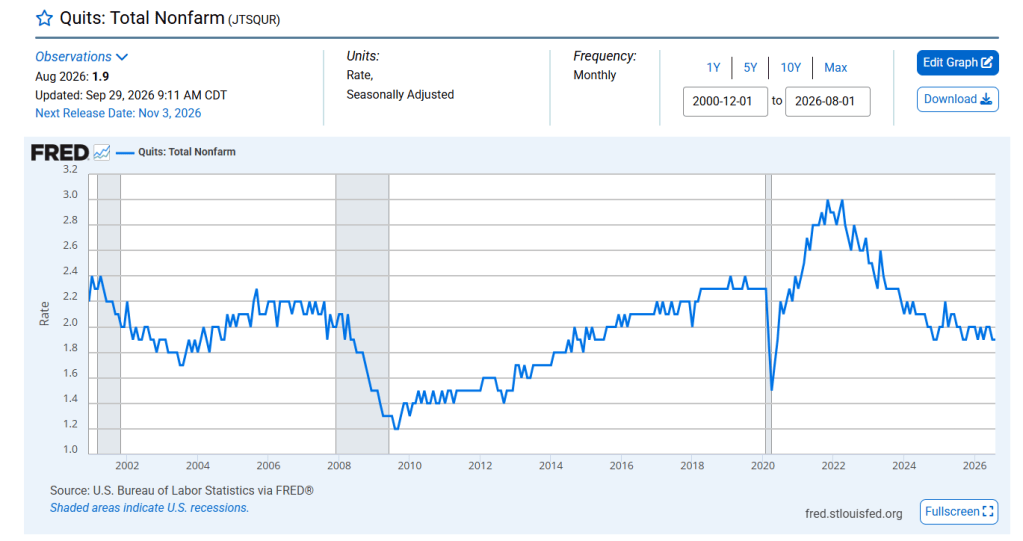
The telling number is the quits rate, still stuck at 1.9%, a measure of people confident enough to voluntarily change jobs. This low, it’s basically everyone deciding to sit very still, a strong signal of a weak job market.
The S&P Global Manufacturing report showed the economy running hotter than expected, triggering expectations for more policy tightening.
Comments on inflation regarding average input costs for goods and services, which surged higher (oil) hit their highest level since 2022.
Comments from Iran’s President at the UN, which were inflammatory.
Fed Governor Michael Barr also contributed to the bond selloff, stating that further rate hikes are likely to be needed.
Suffice to say, it was a bad day yesterday, and today is shaping up to be the same.
Some good news: New Home Sales, signed contracts on new homes rose 6.4% in August, with an annualized rate of 684,000, much stronger than the 620,000 estimate.
Part of this may be due to builders incentivizing buyers with massive rate buydowns and lower prices to move inventory.
If rates remain high, a lot of buyers will stay on the sidelines. Inventory is up, and most markets are softening, meaning there are opportunities to snag a great home at a fantastic price, which can help offset higher interest rates.
Demand Destruction: The Fed’s Favorite Party Trick
Let’s talk about “demand destruction”, which sounds like a Marvel villain’s origin story, but is actually just the Federal Reserve’s fancy way of saying “we’re going to make your life expensive enough that you stop buying stuff.”
That’s it. That’s the whole plan. No lasers, no secret lair, just interest rates, quietly turning your daily cup of coffee into a five-year financial decision.
Wait, What Even Is Demand Destruction?
In economist-speak: demand destruction happens when higher prices or higher borrowing costs cause people to buy less of something, which (in theory) cools off inflation.
On to other news…
Oil is down below $94 a barrel, Saudi Arabia may reopen their critical East to West pipeline.
There is increased economic pressure on Iran from the US, effectively shutting down their Airlines. The President is flying to NY to the US and we could have direct talks.
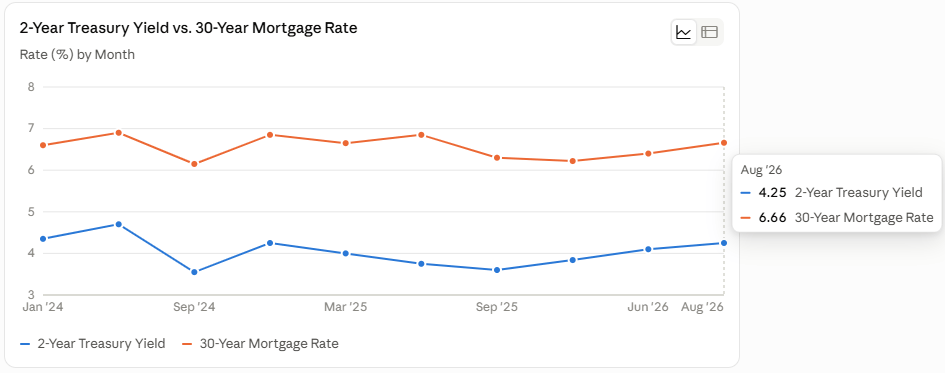
Graph below shows the relationship of the 2y bond to mortgage rates. Wonder what the rates are going to do? look at the 2y bond.
The Federal Reserve made a mistake, again. Raising rates in this environment doesn’t fight inflation. It fights the economy, while the actual source of inflation keeps burning in plain sight: oil.
This Isn’t Demand-Driven Inflation. It’s an Energy Shock.
Rate hikes are a blunt tool designed for one job: cooling off an overheating economy where too much money is chasing too few goods and services. That is not what’s happening right now.
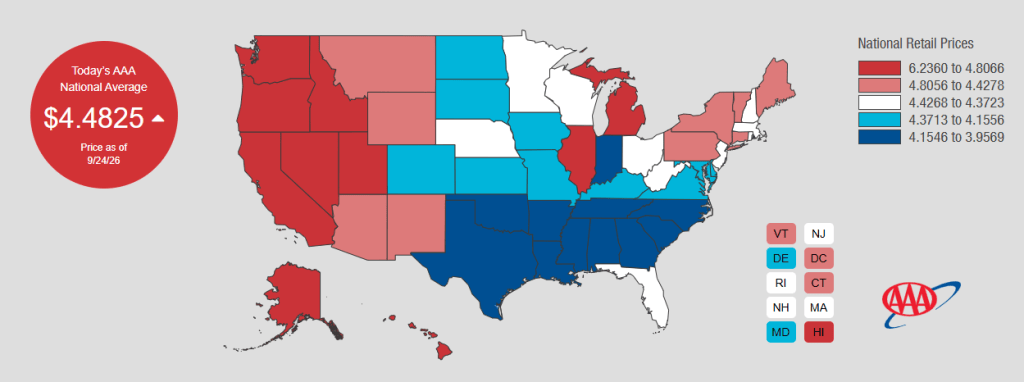
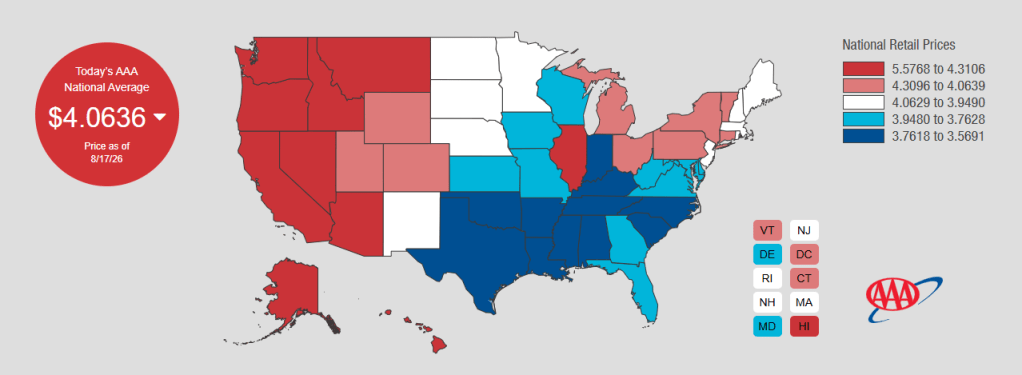
What’s happening right now is a supply shock. Oil is trading well above $90 a barrel, diesel has hit record highs, and the ripple effects are showing up everywhere, trucking costs, shipping costs, food costs, manufacturing costs. Diesel isn’t a niche input. It’s the fuel that moves nearly everything in the economy from a warehouse to a store shelf. When diesel spikes, the cost gets baked into the price of almost everything downstream, whether or not consumer demand has changed at all.
Raising interest rates does nothing to lower the price of oil. It doesn’t reopen a shipping lane, repair a damaged pipeline, or negotiate a ceasefire. What it does do is make it more expensive for businesses to borrow, expand, hire, and invest, piling a self-inflicted wound on top of an external one. The Fed is treating a supply-side energy problem with a demand-side hammer, and the only thing that gets nailed is the consumer and the labor market.
The Jobs Data the Fed Is Leaning On Is Softer Than It Looks
Here’s the part that should really give the Fed pause: the labor market data it’s using to justify staying hawkish is not as solid as it’s being treated.
The BLS jobs report is built on a survey, businesses filling out forms, self-reporting headcounts, with the data collected through phone, fax, and electronic questionnaires. It’s a well-constructed survey, but it’s still a survey, and it comes with real limitations: sampling error, non-response, and a track record of large revisions after the fact. We’ve watched this play out repeatedly, a headline number gets reported, markets and policymakers react to it, and months later it gets quietly revised by tens or even hundreds of thousands of jobs.
ADP’s employment report works differently. Rather than asking businesses to self-report on a form, it’s built from actual payroll processing data, real transactions covering tens of millions of workers who are actually being paid, in real time, through ADP’s systems. It’s not a business estimating its own headcount on a questionnaire; it’s the payroll data itself.
That distinction matters. A survey response and a processed paycheck are not the same category of evidence, and treating them as interchangeable, while giving the survey-based number outsized weight in a rate decision, is exactly the kind of thing that leads to policy mistakes getting locked in before the real picture becomes clear.
The Bottom Line
Inflation right now has an address, and it’s the pump, not the paycheck. Raising rates to fight oil-driven inflation doesn’t lower oil prices, it just slows down an economy that’s already showing cracks, using labor market data that deserves more skepticism than it’s getting. The Fed isn’t wrong to worry about inflation. It’s wrong about the cure.
SIDE NOTE: To be fair, there’s a case for the Fed’s approach too: even supply-driven inflation can become embedded if consumers and businesses start expecting higher prices to persist, and some economists argue that raising rates helps anchor those expectations regardless of the initial cause. There’s also a reasonable argument that the BLS survey, despite its revisions, still benefits from a larger and more consistently structured business sample than ADP’s payroll-based data, and that the two measures are best used together rather than one replacing the other. Reasonable people disagree on how much weight the Fed should put on an energy-driven inflation spike versus the risk of letting inflation expectations drift.
The Federal Reserve is expected to hike rates 25bp this Wednesday. The bond market has been on a tear, dragging mortgage rates along for the ride like an unwilling dance partner.
The 10-year Treasury yield is sitting at 4.99%, just a hair below the scary 5.00% mark. For context: back in late February, the 10-year was comfortably under 4.00%. That’s not just a 1-point difference in yield, it’s translated into more than a 1-point rise in actual mortgage rates.
Here’s the part nobody explains well: as rates climb, lenders get nervous about refinances, so any loan made now has a shorter expected life.
That uncertainty gets priced in as an extra spread on top of the Treasury yield, widening the gap between the 10-year and your actual mortgage rate.
In English: it’s not just what the 10-year is doing, it’s thegap between the 10-year and the mortgage rate that decides your payment, and right now, that gap isn’t doing anyone any favors.
Well, That Escalated Quickly
There’s a lot happening in the Middle East right now, and none of it is good news for your gas tank.
Saudi Arabia has shut down its East-West pipeline, the 7-million-barrel-a-day workaround built specifically to bypass the Strait of Hormuz, after a drone strike hit the line near Medina. So the backup plan for the backup plan just took itself offline. That’s not a great sign when you’re already down to Plan C.
The Houthis have seized Perim Island, a strategic chokepoint sitting right in the middle of the Bab el-Mandeb Strait, the “Gate of Tears” at the mouth of the Red Sea. Translation: they now have another lever to squeeze oil shipping, right as the Hormuz route was already struggling. The Red Sea and the Gulf are basically tag-teaming the global oil supply at this point.
My Take
The Fed is expected to raise rates because CPI inflation is running hot, but that inflation print is almost entirely a function of oil and diesel prices, with diesel now sitting at record highs. Diesel isn’t just a “gas at the pump” story either; it’s the backbone of trucking, shipping, farming, and manufacturing. When diesel spikes, everything that touches a truck gets more expensive.
Here’s the problem: raising rates doesn’t fix any of that. The economy is already slowing. This isn’t a “too much demand” inflation problem, it’s an oil supply problem, and the Fed doesn’t have a lever for pipelines getting droned or islands getting seized. Hiking rates into an oil-driven inflation spike is like turning up the AC because the house is on fire.
The bond market has a reason to be nervous today. The 60-day U.S.-Iran ceasefire framework has expired without a final agreement, and negotiations remain stalled. Both sides have accused the other of violating the agreement, while the biggest sticking point remains the Strait of Hormuz.
And this matters to mortgage rates.
The market had been hoping that a lasting agreement would remove some of the geopolitical and oil-price risk that has been pushing inflation expectations and long-term interest rates higher. A genuine de-escalation could take some pressure off bonds. In fact, analysts have noted that resolving the conflict could remove an energy-risk premium, although it wouldn’t automatically send mortgage rates lower.
But today, we’re back to the big question:
What’s next?
If negotiations restart and we see a credible agreement to reopen the Strait of Hormuz, we could see oil prices and inflation expectations move lower—and that could be very positive for bonds and mortgage rates.
If tensions escalate, however, the opposite could happen. Higher oil prices create renewed inflation concerns, and investors could demand higher yields to compensate for that risk. Shipping through Hormuz has already fallen dramatically from pre-war levels, keeping the market on edge.
The good news is that we also have some powerful economic forces working in the opposite direction: weak employment, softer CPI, weaker PPI and slowing consumer spending. Those are all arguments for lower rates.
So right now, we’re watching two competing stories:
📉 Economic data says rates should move lower. 📈 Geopolitical uncertainty says be careful.
That’s why the bond market is nervous.
The next major move in mortgage rates may come down to whether the Iran conflict moves toward resolution or escalation. For borrowers, this is another reminder that markets can change quickly.
The data is giving us reasons to be optimistic. Now we need the geopolitical picture to cooperate.
This is generally a good report for the Fed and potentially good news for mortgage rates, but there is an important wrinkle.
July retail sales fell 0.6%, versus expectations for a 0.1% gain. It was the first monthly decline in nine months. More importantly, the control group, which is used as an input into GDP calculations, fell 0.4%.
What does it mean?
1. The consumer is starting to slow down. Consumer spending has been one of the stronger parts of the economy. A significant miss like this suggests households may be becoming more cautious with their money.
2. This adds to the argument that the economy is cooling. Put this together with the weak July jobs report—23,000 jobs lost and the downward revisions to May and June, and we have several indicators pointing toward a softer economy.
3. That’s potentially good news for the Fed. The Fed has been concerned about inflation, but it also has a mandate to support employment. If inflation is coming down while employment and consumer spending are weakening, the argument for keeping rates elevated becomes less compelling.
4. And that’s where mortgage rates come in. The Fed doesn’t directly set mortgage rates, but expectations for future Fed policy influence Treasury yields and mortgage-backed securities. A cooling economy can ultimately create a more favorable environment for mortgage rates.
But here’s the catch…
The market didn’t simply look at the headline and say, “Great, rates are going down.” Some of the weakness was influenced by lower gasoline prices, the timing of Amazon Prime Day moving into June, and other temporary factors. Retail sales are also measured in dollar terms and aren’t adjusted for inflation.
So I would characterize today’s report as:
Weak consumer + weak jobs + cooling inflation = increasingly difficult argument for Fed rate hikes.
But it doesn’t guarantee lower mortgage rates immediately. The market still has to weigh inflation expectations, Treasury supply, geopolitical risk, and what the Fed believes the data means.
For your mortgage commentary, the clean takeaway is:
The Consumer Is Finally Showing Some Cracks. Retail sales were expected to rise 0.1%. Instead, they fell 0.6%. Combine that with weak employment numbers and cooling inflation, and the economy is sending the Fed a pretty clear message: the consumer is slowing down.
That’s exactly what we need to see if we’re looking for a path toward lower Fed rates and eventually, lower mortgage rates.
Have a fantastic weekend and always feel free to reach out to our team.
The Bureau of Labor Statistics (BLS) released its July Jobs Report this morning, and it came in much weaker than expected. The economy lost 23,000 jobs, compared to expectations for an 80,000-job gain. In addition, payrolls for May and June were revised lower by a combined 103,000 jobs, reinforcing the view that the labor market has been slowing for several months.
In my opinion, this is exactly the type of data the Federal Reserve needs to acknowledge. The labor market is no longer showing the same level of strength it did a year ago.
The Fed’s dual mandate is to promote maximum employment and price stability. As inflation has moderated and the labor market has softened, the argument for maintaining, or even raising the federal funds rate becomes less compelling.
We also saw just how sensitive the bond market is to geopolitical headlines.
Mortgage rates had been improving over the past week, helped by renewed optimism surrounding a potential ceasefire agreement with Iran. Then, yesterday, reports surfaced that Iran and Oman were discussing changes to transit through the Strait of Hormuz, including the possibility of restricting U.S. and Israeli passage. Whether such restrictions could actually be implemented is highly uncertain, but the headline alone was enough to unsettle investors and temporarily push bond yields higher.
For borrowers waiting on the sidelines, today’s jobs report is encouraging. It doesn’t guarantee lower mortgage rates tomorrow, but it does strengthen the longer-term case that rates have room to move lower as the economy continues to cool.
As I mentioned earlier this week, a few Federal Reserve members stated that the labor market remains robust and even voted in favor of raising the Fed funds rate. Looking at the recent data, I struggle to see the same level of strength.
Tomorrow’s Bureau of Labor Statistics (BLS) jobs report will be a key market-moving event and could play an important role in shaping the Fed’s thinking on whether to hike, hold, or eventually lower the Fed funds rate.
Recent employment data has pointed toward a labor market that is slowing rather than accelerating:
ADP reported only 44,000 jobs added in July.
Revelio Labs estimated approximately 79,000 new jobs, with 28,000 of those in healthcare, suggesting job growth may be concentrated in a limited number of sectors.
ZipRecruiter, one of the nation’s largest job platforms, noted in its recent earnings report that while the first quarter was relatively stable, hiring activity softened noticeably in the second quarter.
Interesting trends beneath the surface. Hiring rates and quit rates have fallen to levels not seen in many years. That aligns with what job platforms are reporting: fewer openings and a more cautious hiring environment.
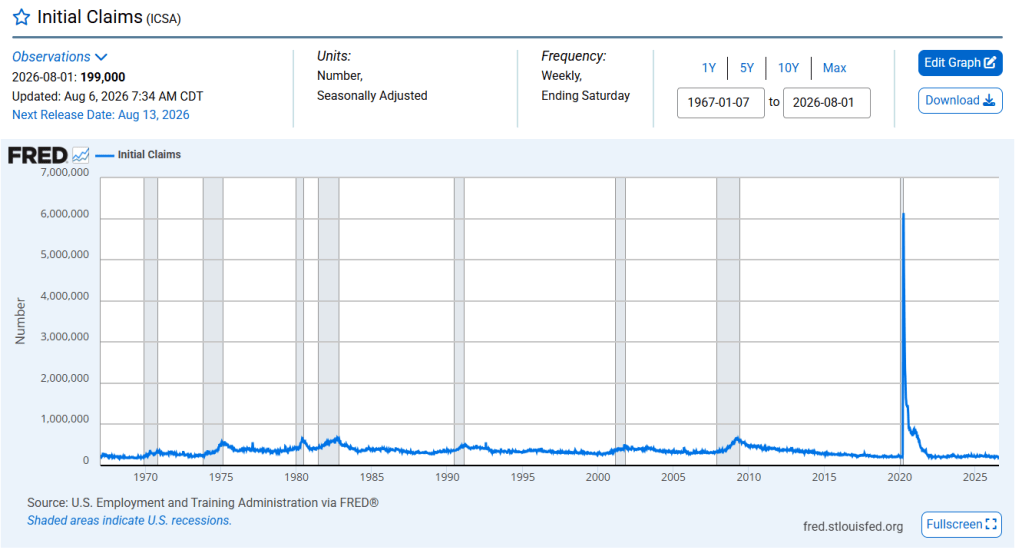
At first glance, lower jobless claims and fewer layoffs may suggest a healthy labor market, but it is important to dig deeper. Employers appear to be holding onto existing workers after years of labor shortages, resulting in fewer new job openings. At the same time, workers may be less willing to leave their current jobs because finding a new opportunity has become more difficult.
In other words, the labor market may not be strong…it may simply be frozen.
That is why tomorrow’s BLS report is so important. It will help answer a key question: Is the labor market truly resilient, or is it gradually losing momentum beneath the surface? The answer could have a significant impact on bond markets, mortgage rates, and the Federal Reserve’s next move.