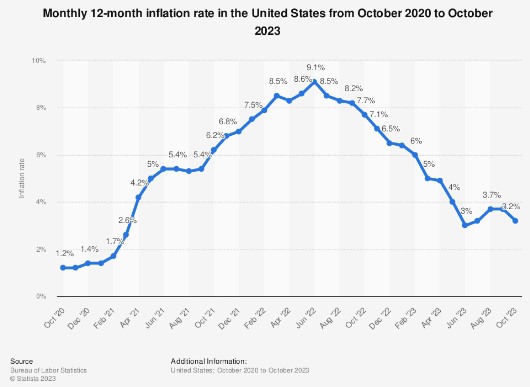
PCE, Personal Consumption Expenditures is the Fed’s favorite measure of inflation year over year, the index decreased from 3.4% to 3%. CPI as we mentioned yesterday was down as well.
Looking at the last 6 months of core readings (strips our food and energy), which Powell mentioned at the last meeting shows the core inflation at 2.4%.
What this means is the rates will likely continue to drop. The Fed’s may cut rates as soon a March. Three months ago, this was not even on the radar.
If you are looking to sell or ready to buy, get prepared. If your a Realtor, get your clients pre-approved and ready to go.
We are here to help with the pre-approval process.
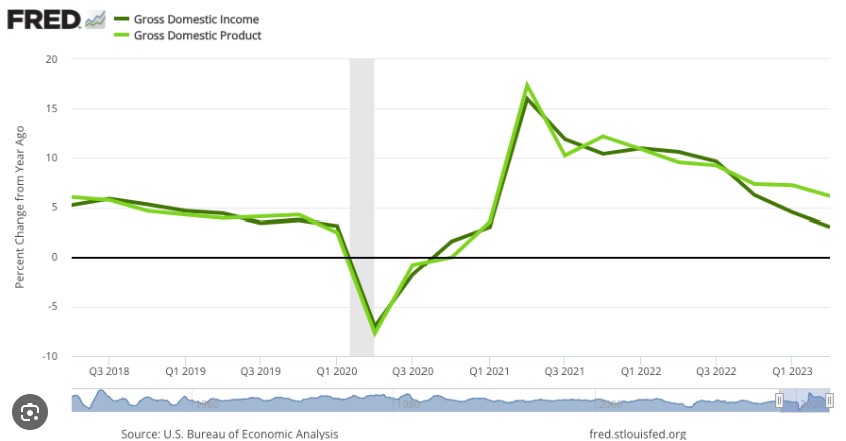
The Gross Domestic Product (GDP) increased by 5.2%. Why does this matter? The data from the July to September period serves as another indicator pointing to a booming or robust economy, defying gloomy warnings of a slowdown.
GDP measures the value of the final goods and services produced in the United States.
What else is going on? The Q3 data reflects stronger spending by corporations. It also shows increased state and local government spending and imports.
Here’s the kicker: Gross Domestic Income (GDI) increased rapidly compared to the second quarter, with GDP increasing by 1.5%, a full percentage point above the last quarter.
GDI stands for Gross Domestic Income, representing the total income generated by all sectors of an economy within a specified time period. This includes employee wages, profits from businesses, taxes, and costs incurred in production.
How does this affect mortgage rates? Surprisingly, bond market yields have been dropping, as have rates.
The Case Shiller Home Price Index, considered the ‘gold standard’ for home appreciation, indicates a 0.7% increase in home prices in September, marking a 3.9% rise from last year. The index is on track for a 6% appreciation this year.
Apartment List Rental Data’s November Rental Report reveals a 0.9% decline in new rents for November, down 1.1% from the previous year. This marks the fourth consecutive monthly drop.
This is referred to as a Shelter Cost, a substantial component of inflation, similar to the drop in oil prices this year.
What does it all mean? Inflation is continuing to decrease, surpassing the Federal Reserve’s expectations. As we reflect, we might find ourselves thinking, ‘I wish I had been more prepared for 2024.’ Consider me your time-travel buddy; 2024 has yet to arrive, so you still have time.
Below is the link to a Buy vs. Rent video I created, illustrating the advantages of purchasing a home. I’m sharing the longer 4-minute video, but the 2-minute version is also available. Feel free to forward .
The new year is almost upon us. As I woke up this morning I couldn’t help but wonder where the year went.
There is a foundation being built beneath our feet that most of us are blind to, ignore, or have succumbed to a bit of apathy.
It’s been a tough couple of years for the mortgage and real estate industry as a whole. Inventory is down, rates are up, and affordability is a challenge.
But still, the foundation continues. Rates and inflation are dropping, the job market is strong, and builders are thriving. The forecast of a Fed rate cut looms large and may happen sooner than later. We have come around the corner, but the challenge is that the corner is bigger than we thought.
When the Fed members talk like Hawks, they are signaling Fed rate hikes or a pause. When the Doves are speaking, its about pausing and cutting the Fed rate.
The Hawks are starting to get outnumbered, and this is a good thing.
Quantitative Tightening is when the Fed sells off its balance sheet. This is what they have been doing for the past two years.
Quantitative Easing involves the purchase of Mortgage-Backed Securities (MBS) and Treasuries, which was happening after the 2008 great recession.
All this bodes well for lower rates in 2024.
On a personal note, I want to thank everyone for your support and celebrate our continued success. Have a great rest of your week and Thanksgiving.
When the Fed members talk like Hawks, they are signaling Fed rate hikes or a pause. When the Doves are speaking, it’s about pausing and cutting the Fed rate.
The Hawks are starting to get outnumbered, and this is a good thing.
Quantitative Tightening is when the Fed sells off its balance sheet. This is what they have been doing for the past two years.
Quantitative Easing involves the purchase of Mortgage-Backed Securities (MBS) and Treasuries, which was happening after the 2008 great recession.
All of this bodes well for lower rates in 2024.
On a personal note, I want to thank everyone for your support and celebrate our continued success. Have a great rest of your week and Thanksgiving
As we navigate the sometimes humorous, sometimes chaotic events of the last few years, we have to remind ourselves: this too shall pass.
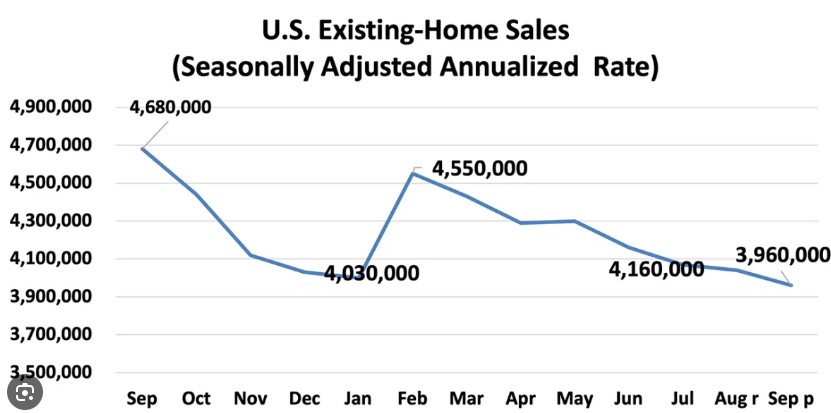
Rates continue to improve this week, but what was a bit of a surprise was the decrease in Existing Home Sales, down 4.1%. Supply was also down 5.7% from a year ago.
With that said, the median existing-home price was $391,800 in October, reflecting a gain of 3.4% from last year.
Good Morning. Lets look at the hard numbers when it comes to renting or buying. The YouTube link below goes through a typical Southern California home purchase or rent.
If you live in an area with half the rent and half the home price, the numbers still work; just half the net gain. Even in this high Mortgage Rate environment we are still seeing the advantage of buying over renting.
I spent the better part of yesterday driving from Palm Springs, CA, to Newport Beach to help my two young adults move into their new apartment.
The reason I bring this up is more about the process than the finish line. Weeks of effort have gone into searching for the right place at the right price, packing, unpacking, and repacking for the trip.
My daughter made a comment after everything was done about how quickly we unloaded the U-Haul. I stopped to think; there has to be a life lesson here.
Being prepared is not just the foresight to anticipate an obstacle or challenge, but to put in place those things and processes that turn a mountain into a molehill.
We had the luxury of time, and we did not squander it. We spent the time tossing out what was once valuable, finding the important items, and keeping those close. We turned on utilities and cable so that when we arrived, all we had to do was unload far fewer boxes than we started with weeks earlier.
The life lesson is to be prepared not just in your head but with your finances. Get in touch with us or your lender and find out exactly where you are in the process. Take advantage of this time and our time.
When you decide to sell, buy, or just look, you will know exactly what you can do and be able to act on it quickly and accurately.
Thank you for listening to my Ted Talk. Have a great weekend.
We have additional data pointing towards lower prices, with indicators in shipping and production all suggesting a trend towards reduced inflation, lower interest rates, and a potential decrease in the Fed Rate in early 2024.
In the job market, actual jobless claims stand at 231K, slightly higher than the forecasted 220K, and continuing claims increased to 1.865M, slightly surpassing the estimate. While this might seem concerning, these numbers reflect a return to more ‘normal’ figures.
Retailers, particularly Walmart, are exercising caution due to concerns about consumer spending, which can contribute to price stability. We may be entering a period of deflation over the next four months.
The key takeaway here is normalization. Take action now – start exploring homes, get pre-qualified, and if you’re considering selling your home, reach out to your real estate agent. If you’re a first-time homebuyer, let’s have a conversation and guide you through the process.

 Mortgage News