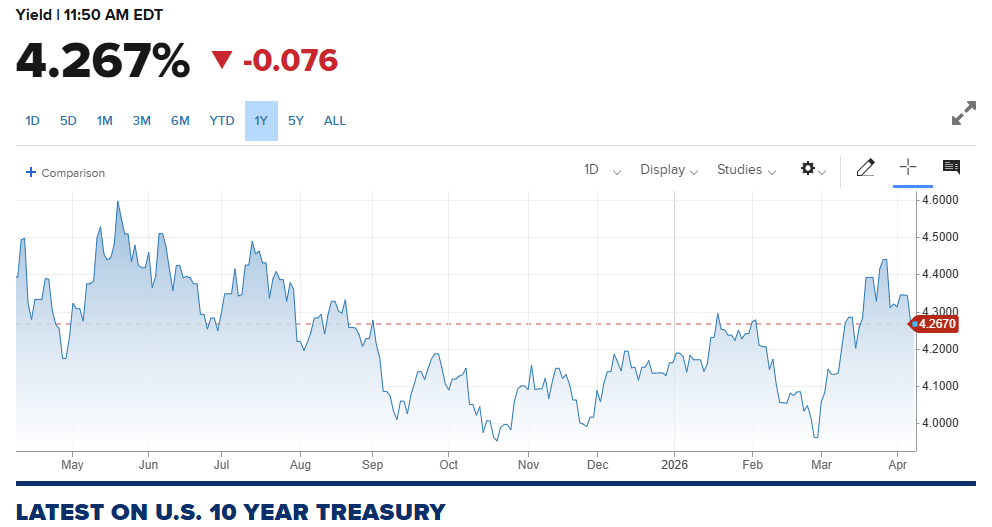
When yields begin to fall, demand for higher-yielding bonds increases significantly. Investors would rather lock in stronger returns today than sit on the sidelines and risk watching yields drop further.
That shift in behavior creates increased buying pressure in the bond market, which pushes bond prices higher and yields even lower.
This dynamic directly benefits mortgage rates.
Mortgage rates are closely tied to bond yields (especially the 10-year Treasury) and are also influenced by broader inflation drivers like oil prices. As yields decline and inflation pressures ease, mortgage rates typically follow in the same direction.
In short:
Lower yields → more bond buying → lower rates.
It’s a chain reaction, and when it gains momentum, rate improvements can happen quickly.
A two-week ceasefire and the reopening of the Strait of Hormuz, if it holds, should help push oil prices back toward the $65/barrel range and bring the 10-year Treasury yield below 4.00%.
That’s the key level.
If you’re considering a refinance, sub-4% on the 10-year is the “magic number” where we typically see meaningful improvement in mortgage rates.
Stability drives confidence.
Confidence drives lower rates.
http://www.YourApplication online.com